Loading... Please wait...
 USD
USD


Blog
Recent Posts
The Ultimate Diamond Color Scale Guide: Maximizing Beauty and Value in 2026
Posted on
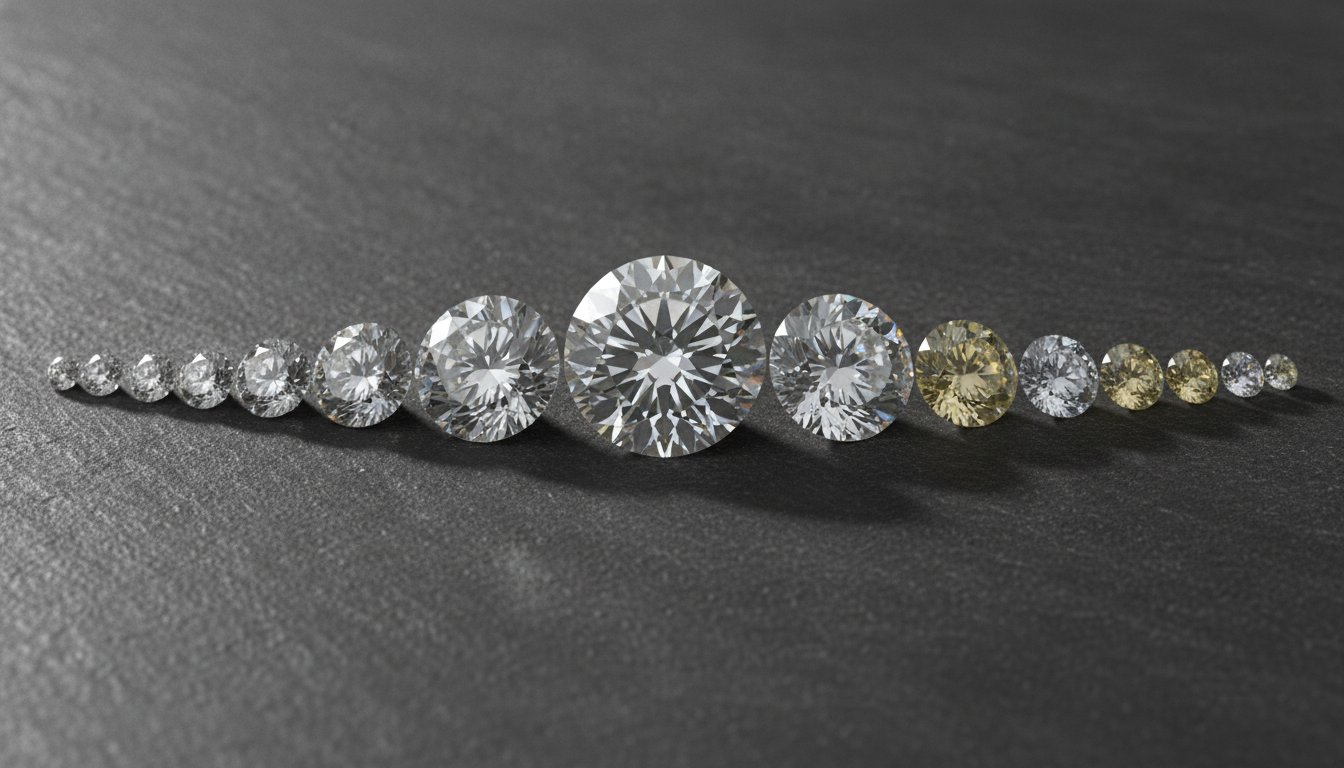
Most buyers believe a diamond must be graded "D" to appear perfectly white, but paying for technical perfection is often the most expensive mistake you can make. It's completely normal to feel overwhelmed when looking at the diamond color scale, especially when you see prices jump by thousands of dollars between grades that look identical to the naked eye. You want a stone that radiates pure light, and the fear of accidentally buying a "yellow" diamond often leads to overspending on features you'll never actually see.
At Superlight Diamonds, we've spent over 20 years helping tens of thousands of customers find incredible value in natural, earth-mined stones, including beautiful clarity enhanced options that offer more sparkle for your dollar. This guide will help you master the diamond color scale to find a stunning stone that looks colorless without the technical premium. You'll learn how to save 30% to 50% by selecting grades like J or K that face up white in the right setting. We'll also explain how to use high-magnification 360° videos and IGL certification to buy with total confidence. By the end, you'll know exactly how to maximize your budget for a diamond that looks spectacular on your hand, not just on a grading report.
Key Takeaways
- Understand how the diamond color scale measures rarity rather than beauty, letting you prioritize visual whiteness over expensive letter grades.
- Identify the specific "price cliffs" in the grading system where costs drop significantly even when the stone looks identical to the naked eye.
- Discover why viewing 360 degree high magnification videos of the actual stone is more reliable for assessing color than relying on a certificate alone.
- Learn how to select the right metal setting to naturally mask subtle tints in stones graded J or K, helping you maximize your overall value.
- Maximize your budget by choosing natural earth-mined diamonds with clarity enhancement, which allows you to secure a larger and whiter stone for a better price.
What is the Diamond Color Scale? Understanding the D-to-Z Range
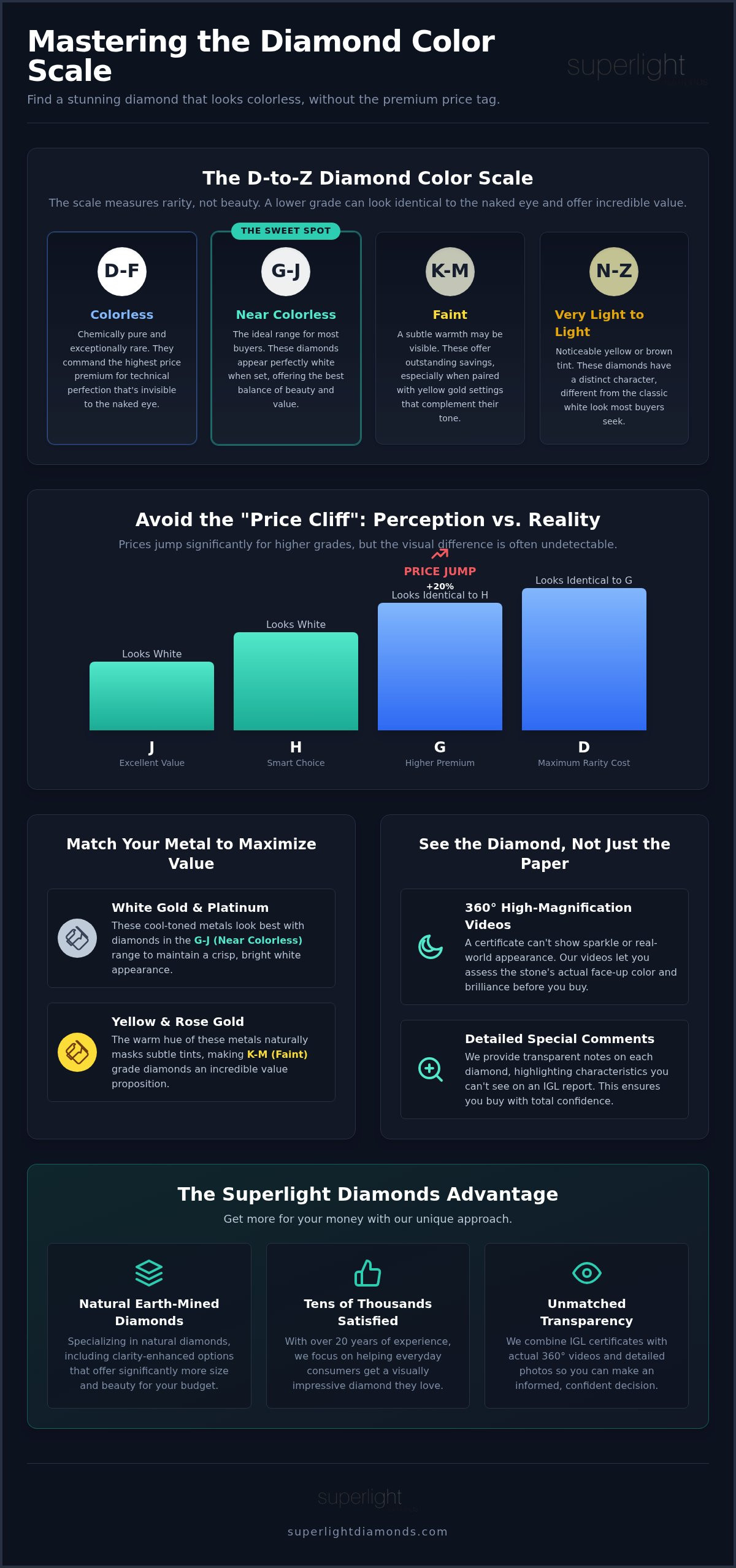
The diamond color scale is the industry standard for evaluating the absence of color in a natural stone. This range begins at D, representing a completely colorless diamond, and continues through the alphabet to Z, which indicates a light yellow or brown tint. Most consumers assume a higher letter grade automatically means a more beautiful diamond, but the scale actually measures rarity. A D grade is exceptionally rare in nature, making it the most expensive; however, a J or K stone can look equally stunning to the naked eye when selected carefully.
You might wonder why the scale doesn't start with A. Before the modern system was established, retailers used inconsistent labels like A, AA, or even Blue White. To eliminate confusion and start fresh, the industry adopted the D-to-Z system. This ensured there was no association with the old, unreliable grading tiers. It's a technical measure of what isn't there, rather than a ranking of visual appeal. A stone's position on the scale tells you how much it should cost based on market scarcity, but it doesn't always dictate how much it will sparkle on a ring.
The Five Main Categories of Diamond Color
Understanding these groupings helps you target the best value for your budget without overpaying for invisible traits.
- Colorless (D-F): These stones are chemically pure and show no color even under magnification. They command a significant premium due to their scarcity.
- Near Colorless (G-J): This is the ideal range for most buyers. These diamonds appear white when set in jewelry. Choosing a clarity enhanced stone in this range allows you to maximize size and beauty without the high cost of traditional natural stones.
- Faint (K-M): A subtle warmth is often visible, especially in larger stones. These offer incredible savings, particularly when paired with yellow gold settings that mask the tint.
- Very Light to Light (N-Z): These diamonds have a noticeable yellow or brown character that is distinct from the white look most engagement ring buyers seek.
How Grading Labs View Color
Professional gemologists at labs like IGL evaluate stones under highly controlled conditions. The diamond is placed pavilion-side up against a neutral white background. This position allows the grader to see the body color without the distraction of sparkle or light return. They compare the stone to a set of master stones with pre-determined color values to ensure accuracy. While this technical process is rigorous, it doesn't account for how a diamond looks in motion or in real-world lighting.
At Superlight Diamonds, we believe IGL certification provides an objective baseline for value-conscious buyers. However, we also supplement these reports with magnified 360° videos and Special Comments. These tools are vital because they show you the stone's actual personality and face-up whiteness. A single letter on the diamond color scale doesn't tell the whole story, so seeing the actual diamond helps you buy with total confidence. We focus on natural, earth-mined diamonds that look spectacular in person, ensuring you don't pay for technical details that remain invisible once the stone is on a finger.
Price vs. Perception: Why Technical Perfection is Overrated
Many shoppers get trapped in the pursuit of a "perfect" grade. They often pay a massive premium for a difference they can't even see. On the diamond color scale, jumping from a G to an F can increase the price by approximately 20%. This is what we call the "Price Cliff." To the naked eye, these two stones look identical once set in a ring. Technical perfection is rare; however, it shouldn't be the standard for beauty. Most people can't distinguish between an E and an H color stone in a side-by-side comparison. The return on investment for those higher letters drops off quickly.
Size also plays a significant role in how we perceive color. Larger diamonds, particularly those over 1.5 carats, have more body mass and show color more easily than smaller stones. If you're buying a larger stone, you might want to stay slightly higher on the scale to ensure it looks crisp. Selecting a stone from the "Near Colorless" range is the most strategic choice for 90% of buyers because it balances a bright white appearance with significant cost savings.
Finding the Sweet Spot on the Color Scale
The G-H range is a professional's favorite for a reason. These stones offer a crisp, white look without the "colorless" price tag. If your goal is to maximize carat weight, considering an I-J stone is a smart move. These diamonds still face up white but allow you to afford a much larger stone. Choosing clarity enhanced diamonds is another excellent way to prioritize color. Because these natural stones are more affordable, you can often step up a few grades on the diamond color scale while staying within your budget. You can browse our natural diamond inventory to see how these grades look in real-world conditions.
Fluorescence: The Hidden Factor in Color Appearance
Fluorescence is a diamond's reaction to UV light. Many people fear it, but it can be a buyer's best friend. Blue fluorescence can actually make a faint yellow stone, such as those in the J-L range, look whiter when viewed in sunlight. It acts as a natural counterbalance to the tint. You just need to avoid the "milky" or "oily" look that can occur with very strong fluorescence. This is where our 360 degree videos become essential. You can see exactly how the stone reacts to light and ensure it remains clear and vibrant before you buy. Our "Special Comments" also highlight these nuances so you never have to rely solely on a certificate.
The Impact of Diamond Cut and Shape on Color
A diamond's cut quality is the most effective tool for masking its natural body color. We often refer to this as the "Sparkle Shield." When a stone is cut with precision, it reflects a high volume of white light back to the eye, which effectively hides subtle yellowish tints found lower on the diamond color scale. This light performance is why two stones with the identical color grade can look completely different. A well-cut stone will face up bright and white, while a poorly cut stone may appear dull and allow the natural tint to become more obvious.
The geometry of different diamond shapes also dictates how color is distributed and perceived. Brilliant cut facets are designed to break up light into thousands of tiny reflections, which is excellent for camouflaging color. In contrast, certain fancy shapes and "crushed ice" styles, like some Radiant or Cushion cuts, tend to trap and concentrate color within the stone. If you are shopping for a round brilliant loose diamond, the intense light return allows you to safely drop one or two color grades without sacrificing a white appearance. This strategy is one of the most effective ways to maximize your budget for a larger, more impressive stone.
Shapes that Hide Color Best
The Round Brilliant is the undisputed leader for masking color. Its symmetrical facet arrangement is optimized for maximum light return, making it the most forgiving shape on the diamond color scale. You can often choose a J or K color round diamond that looks perfectly white once set in a ring. Princess cuts also perform well, though you should inspect the corners closely using our 360 degree magnified videos. Color tends to concentrate in the pointed corners of a Princess cut, so ensuring those areas look clear is vital. Cushion cuts are beautiful but known for holding onto color; for a truly white look in a Cushion, we generally recommend staying at a G grade or higher.
Shapes where Color is Most Visible
Step cuts, such as Emerald and Asscher shapes, have large, open facets that act like windows into the diamond's body. These shapes lack the "sparkle shield" of brilliant cuts, meaning any natural tint is much more visible. Similarly, elongated shapes like Pears, Marquises, and Ovals often show color concentration at their narrow tips. This is known as the "end-effect," where the shallow facets at the points trap more body color than the center of the stone. Because these shapes don't hide tint well, they typically require a higher investment in the color scale to maintain a crisp, colorless appearance. When buying these shapes, reviewing the actual stone's video is more important than the certificate alone to ensure the tips don't show a distracting yellow character.
Matching Diamond Color to Your Metal Setting
The metal you choose for your setting is just as influential as the stone's grade. We call this the Reflection Principle. Because diamonds are essentially mirrors, they pick up the color of the objects around them. This includes the prongs and the band. If you understand how metal interacts with the diamond color scale, you can save thousands of dollars without sacrificing the bright white look you desire. The metal acts like a mirror. It can either highlight a diamond's purity or hide its natural warmth.
Setting a diamond in white gold or platinum creates a cool, icy aesthetic. These metals provide a high-contrast background that highlights any natural tint. For this reason, we typically recommend stones in the D to J range for white settings. If you drop lower, the yellowish character of the stone may become noticeable against the bright white metal. It's a technical mismatch that most people want to avoid.
Yellow gold offers a strategic advantage for value-conscious buyers. The warm yellow metal reflects through the stone, which actually helps mask a faint yellow tint. This allows you to choose diamonds in the K to M range that still appear white to the casual observer. Rose gold acts as a unique middle ground. Its pinkish hue is very forgiving. It's an excellent choice for stones with a faint color character that might otherwise look out of place. You can view our natural diamond collections to see how different grades look in various settings.
Recommended Color Grades by Metal Type
Choosing the right metal allows you to be more flexible with your budget. Use these guidelines to find the perfect match:
- Platinum and White Gold: Best for D through J grades. These metals require a whiter stone to maintain a crisp look.
- Yellow Gold: Ideal for J through M grades. The metal's warmth disguises the stone's tint, making it look whiter by comparison.
- Two-tone Settings: This is a smart compromise. Using white gold prongs on a yellow gold band keeps the stone looking white while maintaining the warmth of the band.
The Importance of Side Stones
Many buyers focus solely on the center stone and forget about the side diamonds. This leads to the "Contrast Trap." If you place an I-color center stone next to side stones graded D or E, the center stone will look yellow by comparison. The eye naturally picks up on the difference. Don't ignore the side stones. We recommend keeping your center stone within one or two color grades of any surrounding diamonds. This is especially true for halo or three-stone settings. A uniform appearance across the entire ring creates a much more expensive look, regardless of where the stones sit on the diamond color scale.
The Superlight Diamonds Advantage: Transparency Over Paper
Relying strictly on a certificate is a common pitfall for many buyers. While the diamond color scale provides a technical baseline, it doesn't capture the stone's life or personality. We've seen D-color stones that look "sleepy" and J-color stones that face up like pure ice. This is why we prioritize 360 degree high magnification video over a simple letter on a page. You deserve to see the actual fire and brilliance of the stone you're buying rather than guessing based on a report. Our goal is to provide visual evidence that confirms the stone's beauty in real-world conditions.
Why We Use Magnified Photography
Our 360 degree videos allow you to inspect the diamond from every angle. This transparency reveals the true face-up color, which is how the stone will actually look once it's set in a ring. We also include "Special Comments" on every listing to disclose details that a standard grading report might miss. These comments are essential for understanding how a stone's color presents in real-world lighting. Our curation process specifically filters for "Visual Whiteness," identifying stones that outperform their technical grade. This helps you avoid common issues that certificates don't always highlight:
- Diamonds that appear "dark" or "muddy" due to poor light performance.
- Stones with a "sleepy" appearance that lack crisp brilliance.
- Nuances in tint that are only visible from certain side angles.
- How the specific cut interacts with the stone's natural body color.
Maximizing Your Budget with Clarity Enhancement
Our unique business model focuses exclusively on natural, earth-mined diamonds. By choosing a clarity enhanced princess cut diamond, you can often afford a stone that sits higher on the diamond color scale than you originally planned. Clarity enhancement is a positive, honest way to get a larger and more eye-catching diamond for a significantly more affordable price. We use IGL (International Gemological Laboratories) certification because it offers a reliable and objective standard for value-seeking consumers. It provides the professional baseline you need while our videos provide the visual proof you want.
After 20 years and over 21,000 satisfied clients, we know that beauty is subjective. You shouldn't have to pay a premium for microscopic differences that only a gemologist can see under a microscope. Our philosophy is simple: we provide beautiful natural diamonds at honest, wholesale-direct prices. Trust your eyes and our detailed visual data over technical jargon. A diamond's true value isn't just a letter on a certificate; it's the sparkle and joy it brings to your life every single day.
Secure Your Perfect Diamond with Confidence
Mastering the diamond color scale isn't about chasing a D-grade certificate; it's about finding the visual "sweet spot" where your stone looks bright and white without the technical price tag. By choosing a high-quality cut and matching your stone to the right metal setting, you can maximize your budget to afford a larger, more impressive natural diamond. Technical grades only tell part of the story. The real beauty of a natural stone is found in how it performs in real-world lighting rather than under a lab microscope.
Since 2001, we've helped over 21,000 satisfied clients find incredible value through our transparent business model. We provide detailed "Special Comments" and no-reserve eBay auctions to ensure you get market-driven pricing on every stone. Don't rely on a letter on a page when you can see the actual sparkle for yourself. Browse our loose diamonds with 360° videos and expert color grading to find a stone that looks spectacular on your hand. You now have the tools and knowledge to buy with total certainty, ensuring your investment brings genuine joy for years to come.
Frequently Asked Questions
Is an H color diamond good for an engagement ring?
An H color diamond is an excellent choice for an engagement ring. It sits in the "Near Colorless" range, meaning it appears white to the naked eye once set in a ring. This grade offers a beautiful balance between a bright appearance and a much lower cost than the colorless D-F range. It is an ideal sweet spot for those who want a white natural stone without paying a premium for technical perfection.
Does diamond color really matter if the cut is excellent?
Cut quality is the most important factor because it can mask natural body color. A diamond with superior light performance reflects white light, which effectively hides a lower position on the diamond color scale. While color still exists, a high-quality cut makes it much harder to see. We always recommend prioritizing cut to ensure your stone faces up white and brilliant, regardless of its technical color grade or certification.
Can you see the difference between G and H color diamonds?
Most untrained observers cannot see a difference between G and H color diamonds, especially once they are mounted in jewelry. These grades are adjacent in the "Near Colorless" category. In a professional grading environment, a gemologist might see a microscopic difference, but for everyday wear, the two look nearly identical. Choosing an H instead of a G is a common strategy to save money for a larger carat weight.
What is the best color diamond for a yellow gold setting?
Diamonds in the J through M range are often the best choice for yellow gold settings. The warm yellow metal reflects through the stone, which naturally masks any faint yellow character in the diamond itself. Because of this, a stone with a slight tint can look white by comparison. This allows you to stay lower on the diamond color scale and invest those savings into a larger or more brilliant natural stone.
Will a J color diamond look yellow?
A J color diamond rarely looks yellow to the casual observer, particularly in round brilliant cuts. While it has a slight warm tint when viewed face-down against a white background, it typically faces up white. If you set it in yellow gold or rose gold, the tint becomes even less noticeable. Reviewing our 360 degree videos is the best way to verify that a specific J stone meets your personal whiteness standards before buying.
Does clarity enhancement change the diamond color grade?
Clarity enhancement does not change the technical color grade of a diamond. The process is designed to improve the stone's visual clarity by making internal inclusions less visible. However, by choosing a clarity enhanced stone, you can often afford a higher color grade within your existing budget. This allows you to secure a larger, whiter natural diamond that offers significantly more visual impact than a traditional stone of the same price point.
What color diamond offers the best value for money?
The I through J range generally offers the best value for money for most consumers. These stones provide a face-up white appearance but are priced much lower than the "Colorless" grades. When you combine an I or J grade with a high-quality cut, you get a beautiful natural diamond that looks identical to more expensive stones to the naked eye. This is the smartest way to maximize your budget for size and sparkle.
Is IGL certification as accurate as GIA for color grading?
IGL provides a reliable and objective standard for color grading that is trusted by value-conscious buyers worldwide. While different labs may have slight variations in their strictness, IGL uses the same established terminology and professional master stones for comparison. At Superlight Diamonds, we supplement IGL reports with magnified videos and Special Comments to ensure you have a complete, transparent understanding of the diamond's actual appearance before you make a purchase.