Loading... Please wait...
 USD



Recent Posts
How to Clean a Fracture-Filled Diamond Without Damage
Posted on
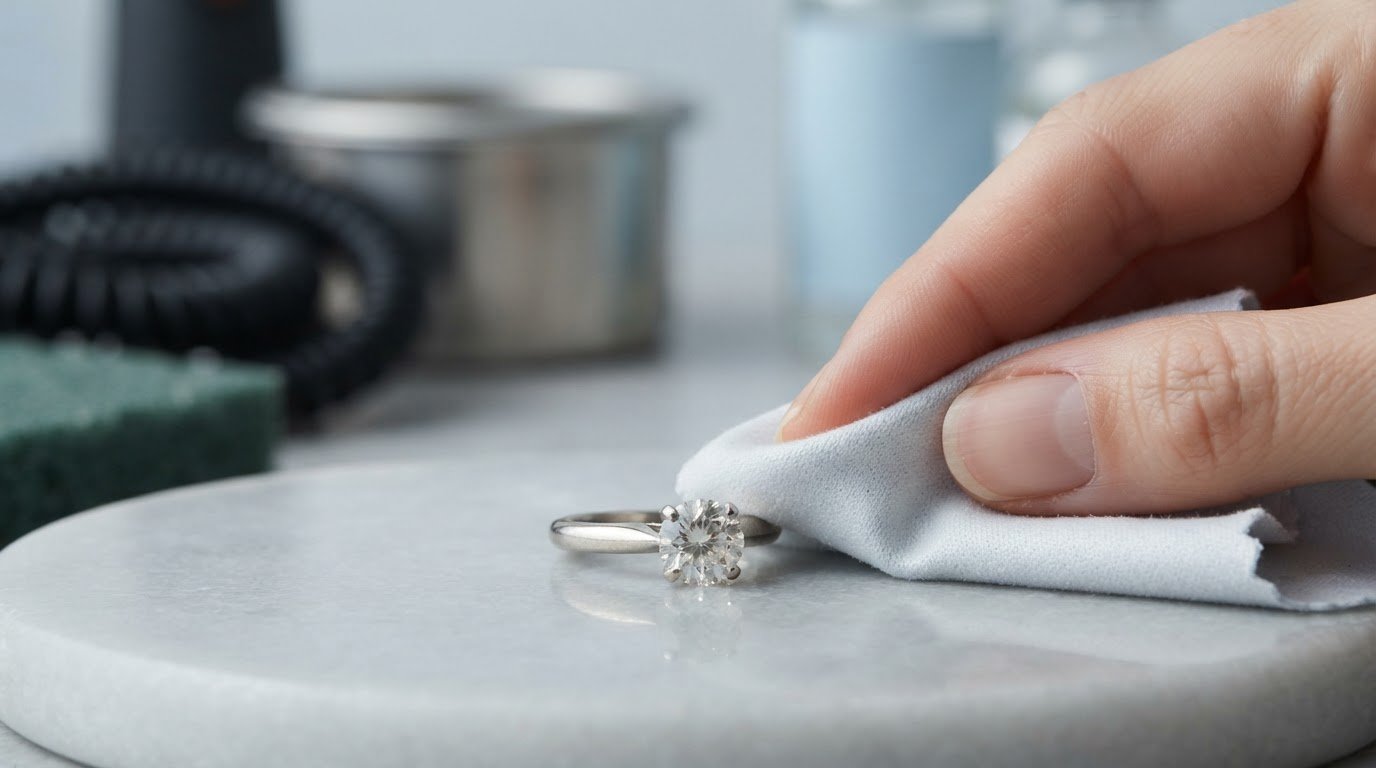
Skip the ultrasonic cleaner. The safest way to clean a fracture-filled diamond at home is to wipe it gently with a damp cloth. Don’t soak the stone or expose it to steam, high heat, or sudden temperature changes, which can affect the filler or loosen the diamond in its setting.
A clean diamond looks brighter, so it’s natural to want an easy way to restore its sparkle. But fracture-filled diamonds need gentler care than routine jewelry-cleaning advice often recommends. This guide explains how to clean one carefully, which household products and methods to avoid, and why ultrasonic and steam cleaners can put the filler and setting at risk. It also explains when professional handling matters, especially before repairs or other work that could disturb the stone.
Key Takeaways
- Keep acids, bleach, acetone, toothpaste, and baking soda away from the diamond and its setting; these can affect jewelry materials or cause surface damage.
- Before any jewelry repair or setting work, tell the jeweler the diamond is fracture-filled so the treatment can be considered during handling.
- Fracture filling can be vulnerable to impact, so avoid knocks and rough handling that could disturb the filler.
- Choose gentle cleaning based on the stone’s treatment, rather than assuming that methods suitable for ordinary diamond jewelry are appropriate.
Cleaning products and materials to avoid
If you’re learning how to clean a fracture filled diamond at home, first avoid products that can affect the filler or setting. Acids, especially sulfuric acid, are a risk: boiling a fracture-filled diamond in it can reverse the treatment. Vinegar can dull a ring’s shine and finish. Acetone in some nail polish removers can break down jewelry plating, while bleach can damage setting metal.
Abrasive products pose another risk. Toothpaste can scratch a ring’s metal and harm the diamond, while baking soda can scratch jewelry surfaces. Powdered household cleansers may abrade precious metals or leave residue in small setting crevices. Don’t use a rough cloth or brush on stubborn buildup, as friction can scratch the setting. Knowing how to clean a fracture filled diamond at home also means avoiding tools that scrape around its prongs.
- Skip boiling water. Extreme heat and sudden temperature changes can cause thermal shock, potentially creating fractures or enlarging existing ones. Hot water can also make ring metal expand and contract, which may loosen a stone.
- Avoid unverified cleaning liquids. A solution made for ordinary engagement rings may contain chemicals unsuitable for fracture filling. Avoid acidic or abrasive formulas.
- Keep products separate. Remove jewelry before using bleach, nail polish remover, toothpaste, or baking soda, preventing accidental contact with the stone or setting.
Professional cleaning and inspections serve different purposes: cleaning removes soil, while an inspection assesses the setting. A professional inspection every 6 months can help identify loose prongs before daily wear causes a stone to fall out.
Risk of loosening gemstones during ultrasonic or steam cleaning
For anyone asking how to clean a fracture filled diamond at home, an ultrasonic cleaner is not a safe choice. Its vibrations agitate the stone and setting, potentially loosening the diamond or disturbing its filler. A Gemological Institute of America study found fracture filling relatively stable during normal handling, but certain stresses could reverse the treatment. Even a ring that looks secure may be vulnerable to repeated vibration.
Steam cleaning poses a different risk. High heat may deteriorate or melt the glass filler, and temperature changes can stress the diamond. Steam can also loosen stones in their settings. On an engagement ring or wedding band, a loose small stone may be difficult to notice before it falls out.
- Avoid ultrasonic cycles. Don’t use one on a fracture-filled stone, even if the device is marketed for jewelry cleaning.
- Skip steam and abrupt cooling. Don’t put freshly steamed jewelry into cold water; a sudden temperature change adds stress.
- Keep chlorine away. Chlorine-based bleach can weaken jewelry metal and the setting that holds the gemstone.
A safer answer to how to clean a fracture filled diamond at home is to wipe it gently with a damp, lint-free cloth, then dry it with a clean cloth. If a stone moves, stop wearing the jewelry and arrange professional assessment. Tell the jeweler about the fracture filling before repair, since handling may disturb or remove the filler. For natural diamond details and disclosures, review the diamond listings.
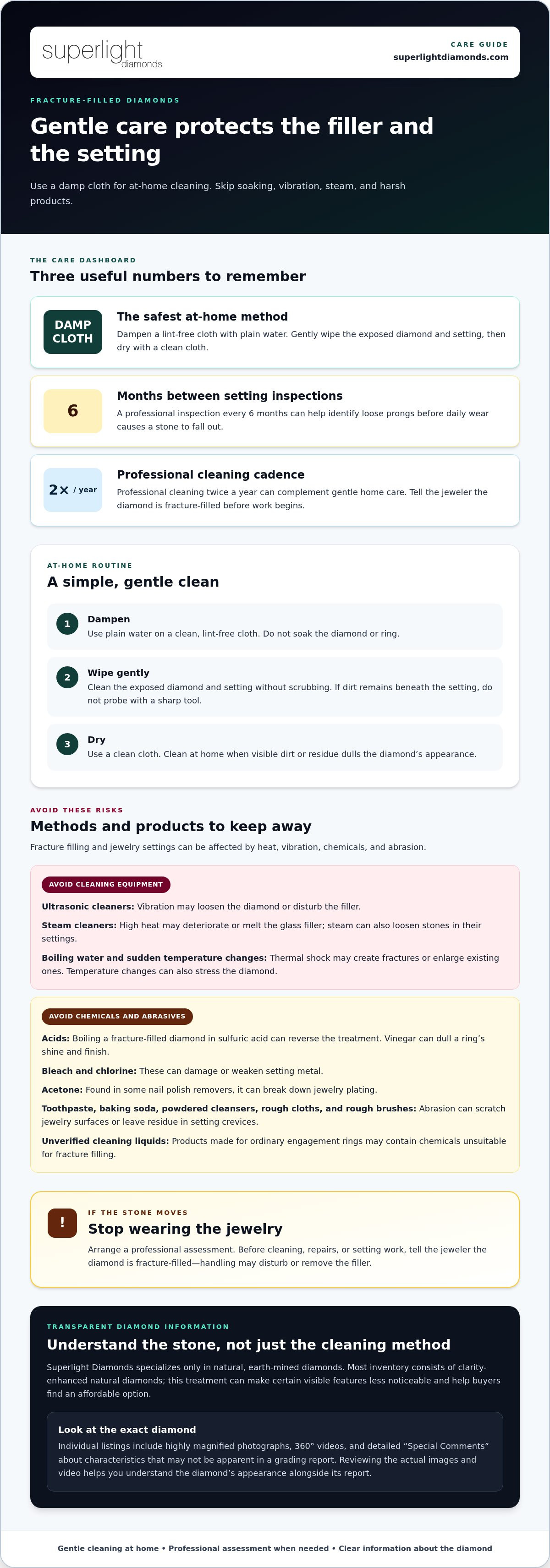
Cleaning fracture-filled diamonds
For a fracture-filled diamond, gentle surface cleaning is the safest approach at home. Avoid soaking the stone or using ultrasonic equipment.
Warm Water and Dish Soap Use
Use a clean, damp cloth rather than soaking a fracture-filled diamond ring in warm water and dish soap. Guidance for fracture-filled gemstones is to use only a damp cloth, since soaking and cleaning products may affect the filler.
Dampen a lint-free cloth with plain water, then gently wipe the exposed diamond and setting. Don’t scrub the stone or apply chemicals such as bleach. If dirt remains beneath the setting, don’t probe with a sharp tool, as it could damage the setting or disturb the filler. Tell a jeweler the diamond is fracture-filled before any cleaning or repair.
At-Home Cleaning Frequency
Clean the diamond at home when visible dirt or residue dulls its appearance, using the damp-cloth method. Avoid making soaking or ultrasonic cleaning part of your routine, even if other diamond rings in your household tolerate those methods.
Professional cleaning twice a year can complement gentle home care. Before work begins, tell the jeweler the stone is fracture-filled, since handling or repairs may disturb or remove the filler. A colorful flash that changes as the diamond turns can indicate fracture filling, but appearance alone can’t confirm it. GIA issues an identification report, rather than a full grading report, for diamonds it identifies as fracture-filled.
Superlight Diamonds: Round Brilliant Diamonds
Superlight Diamonds specializes in natural earth-mined diamonds, with beautiful stones offered at honest prices and outstanding value. Its selection includes Round Brilliant Diamonds and clarity-enhanced natural diamonds, where treatment can make certain visible features less noticeable and help buyers find an affordable option.
Transparency supports an informed choice. Individual listings include highly magnified photographs, 360° videos, and detailed “Special Comments” that disclose characteristics not always apparent in a grading report. Review the images and video of the exact diamond to understand its appearance and compare it with the report.
Superlight Diamonds also offers Princess Cut Diamonds and Cushion Cut Diamonds, giving you different shapes to consider as you weigh appearance, clarity, and budget.
Choose Your Next Step With Confidence
Good care starts with knowing a diamond’s treatment and choosing a cleaning method that respects it. If you’re deciding how to clean a fracture-filled diamond at home, keep care gentle and don’t treat it like jewelry with an unknown filler. The same attention to detail can guide your next diamond purchase: consider how shape, clarity, and appearance match your preferences, rather than focusing on a single grading term.
Superlight Diamonds offers Round Brilliant Diamonds, Princess Cut Diamonds, and Clarity Enhanced Diamonds. Comparing these options can help you focus on the look and value that matter to you. For your next step, contact Superlight Diamonds for advice and make your choice with confidence.
Frequently Asked Questions
Ultrasonic Cleaners: Should You Use One at Home?
No. A machine’s generic setting for diamond jewelry doesn’t establish that it’s suitable for a fracture-filled stone. The treatment matters, not just the gemstone label on the cleaner. If a piece contains different types of stones, their care needs may vary, so don’t assume one cleaning cycle is suitable for the whole piece.
How can I safely clean a fracture-filled diamond at home?
Limit home care to surface dirt. Use a water-dampened lint-free cloth, and don’t push beneath the prongs to reach inaccessible dirt. Work over a folded towel so the jewelry has a soft landing if it slips. If grime remains in a tight setting, stop rather than applying more pressure or using a pointed tool.
What cleaning solution is safe for fracture-filled diamonds?
Dampen the cloth with plain water; don’t prepare or apply a cleaning solution. A product labeled for diamond jewelry may be formulated for a different treatment or setting. Avoid mixing household cleaners, too, since the combination can introduce chemicals unsuitable for the diamond’s filler or the surrounding metal.
Can ultrasonic jewelry cleaners damage fracture-filled diamonds?
Yes. A diamond’s hardness doesn’t mean its fracture-filling treatment is equally resistant to every cleaning method. A diamond can be hard to scratch while its filler remains sensitive to stress. That’s why general advice about cleaning diamonds shouldn’t automatically apply to every treated diamond.
Can steam cleaners damage fracture-filled diamonds?
Yes. Don’t steam-clean a fracture-filled diamond, even if the ring appears secure. Avoid handling the piece while it’s hot, and let it return to room temperature naturally. Don’t put heated jewelry into cold water or against a cold surface, since a sudden temperature shift can add stress to the stone.