Loading... Please wait...
 USD



Recent Posts
How to Propose with a Loose Diamond and Make It Personal
Posted on
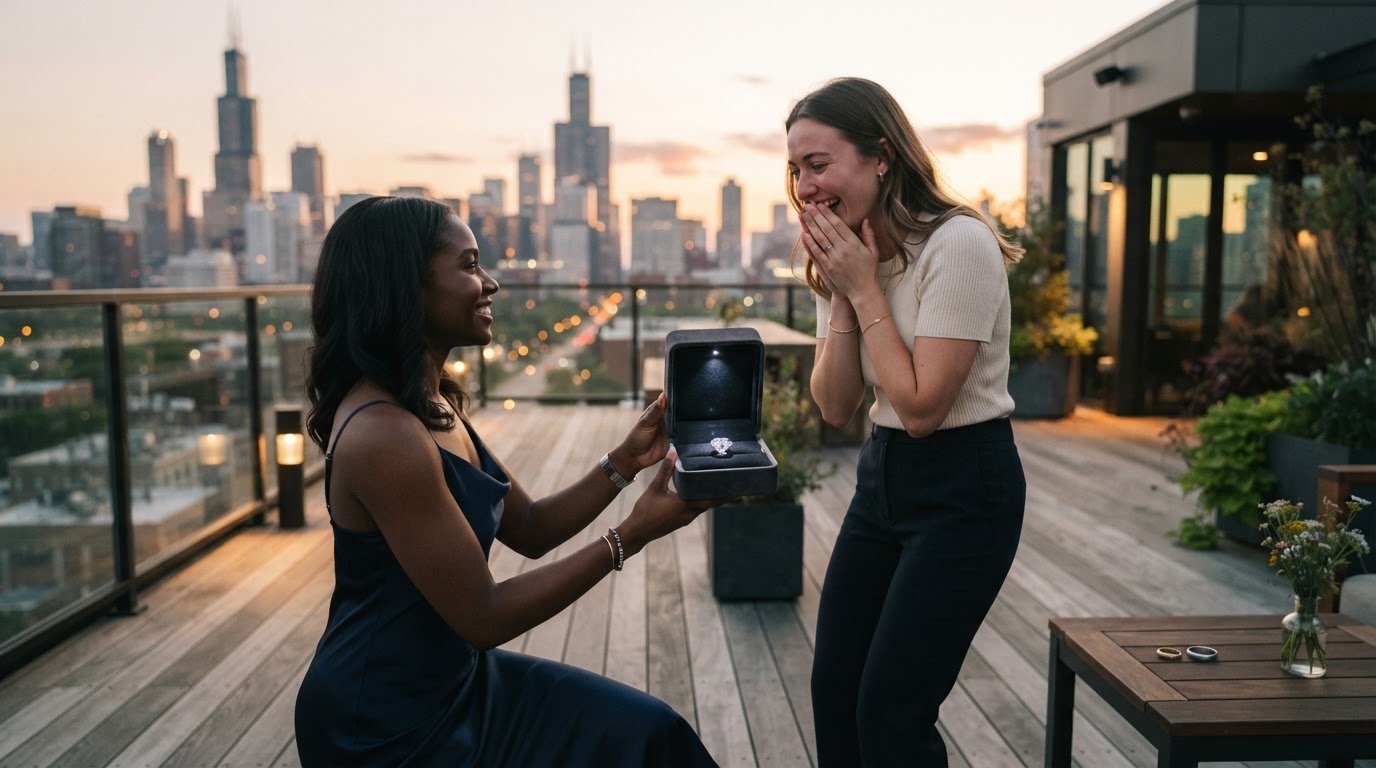
The ring doesn’t have to be finished for the proposal to feel complete. To understand how to propose with a loose diamond, present the stone during the engagement moment, then choose a setting together afterward. This separates the surprise from the design decisions, giving your partner a role in shaping a ring they’ll wear.
It makes sense to want a thoughtful proposal and a ring that reflects your partner’s taste. A loose diamond can help with both, but it isn’t right for everyone: if you want to reveal a finished ring immediately, a set ring may suit your plan better. Here’s how the loose-diamond approach works, how it can make the proposal more personal, and what to consider before deciding.
Key Takeaways
- Present the loose stone in a secure, well-fitted box so the moment feels intentional and the diamond stays in place.
- Make the proposal personal by pairing the surprise with a chance to choose the ring’s setting together.
- Consider this approach if you want to separate the proposal from decisions about ring style and fit.
- Explore natural earth-mined diamond shapes and clarity-enhanced options to find a stone that suits your priorities and budget.
How Can Proposing with a Loose Diamond Simplify Romance?
A loose diamond separates the proposal from the decisions involved in completing an engagement ring. Give the stone during the proposal, then choose the setting together afterward.
Presenting the Loose Diamond
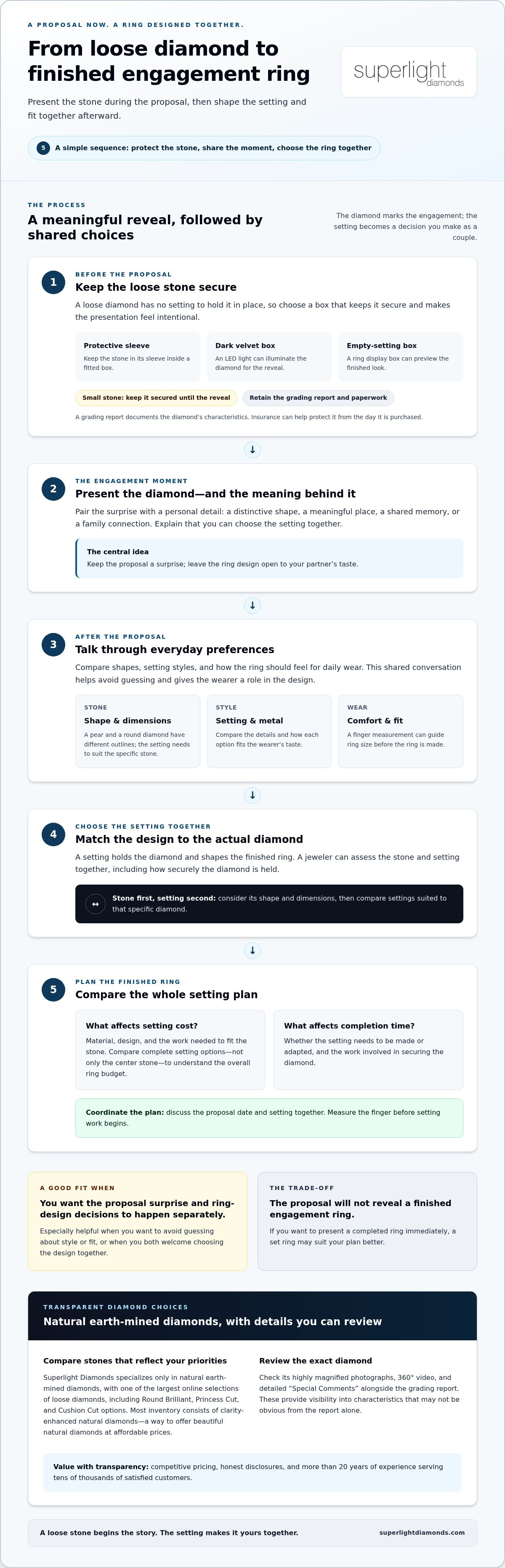
A presentation box gives a loose stone a secure, intentional place in the proposal. A standard ring box may let a diamond rattle because there’s no setting to hold it. Keep the stone in its protective sleeve inside a fitted box, or use a dark velvet box with an LED light. A box designed to display a ring with an empty setting can also preview the finished look.
As a gift, the diamond can mark the engagement while leaving the ring design open. The practical risk is dropping or misplacing a small stone, so keep it secured until the reveal and retain its paperwork afterward. A grading report documents the diamond’s characteristics; insurance can help protect it from the day it’s purchased.
Choosing an Engagement Ring Setting
A setting holds the diamond and shapes the finished engagement ring. Start with the stone’s shape and dimensions, then consider how your partner prefers to wear jewelry. For example, a pear-shaped stone and a round stone have different outlines, so the setting needs to suit the specific diamond, not just a style photograph.
After the proposal, compare setting styles, metal choices, and how the ring will fit your partner’s daily preferences. A jeweler can assess the stone and setting together, including how securely the diamond is held. This shared process turns the original gift into a ring that reflects both the chosen stone and the wearer’s taste.
Setting Costs and Timelines
The cost of setting a loose diamond depends on the setting’s material, design, and the work needed to fit the stone. A simple setting and a detailed design involve different components and labor, so compare complete setting options rather than considering the center stone alone. This makes it easier to understand how the setting affects the overall ring budget.
Completion time depends on the setting, whether it needs to be made or adapted, and the work involved in securing the diamond. Discuss the proposal date and setting plan together so the reveal and finished ring fit your schedule. After the proposal, a finger measurement can guide the ring size before setting work begins.
Personalizing the proposal
A loose diamond can make the proposal personal by separating the surprise from the ring design. Choose a stone that reflects something your partner values, such as a distinctive shape or family connection. Then explain that you can choose the setting together. This gives the proposal meaning while leaving room for your partner’s taste.
A family gift can also carry personal meaning: one family gave their son three diamonds to set in a necklace. The gemstone can connect to a shared memory or family tradition. These are ideas to adapt, not rules for every couple.
After the proposal, talk through what your partner likes in an engagement ring. Compare stone shapes, setting styles, and how the ring should feel for everyday wear. Your partner can have their finger measured to determine ring size before the ring is made. This avoids guessing and lets the finished ring reflect their preferences.
Keep the surprise focused on the moment, then make the design a shared decision. You might plan a conversation around favorite jewelry, preferred shapes, or meaningful family details. If you’re still considering the center stone, explore natural earth-mined diamonds and compare shapes that could suit your partner’s style.
Reasons to propose with a loose diamond
Yes. You can propose with a loose diamond, then choose the ring setting together. The proposal marks your commitment, while the finished engagement ring becomes a decision you shape as a couple.
This approach suits partners with different preferences or anyone who wants to avoid guessing. One person may favor a simple setting, while the other prefers more detail around the center stone. Choosing together lets the wearer compare those details before the diamond is set. It also makes the ring’s style a shared part of the engagement story, rather than a surprise.
A loose stone can make the proposal memorable without requiring a finished ring. For example, present the diamond during a meaningful walk or at a place connected to your relationship, then talk about the setting afterward. The stone anchors the moment; the later design choice connects it to the wearer’s everyday style.
There’s also a practical advantage: you can choose the center stone first, then make setting decisions with your remaining budget in mind. A couple might prioritize a larger, eye-catching diamond, then compare setting details to find a balance that feels right. The trade-off is that the proposal won’t reveal a finished engagement ring, so this approach works best when both of you welcome choosing the design together.
For a wedding story that begins with a personal choice, explore natural earth-mined diamond shapes and consider which stone could make the moment meaningful.
Superlight Diamonds: Round Brilliant Diamonds
Superlight Diamonds specializes in natural earth-mined diamonds and offers one of the largest online selections of loose diamonds, including Round Brilliant, Princess Cut, and Cushion Cut options. Most inventory consists of clarity-enhanced natural diamonds. The selection and competitive pricing help shoppers compare choices that fit their priorities, while honest disclosures support informed decisions.
Review the exact diamond’s highly magnified photographs, 360° video, and detailed “Special Comments” on its listing. These show the stone’s visible characteristics and can add context beyond its grading report, so consider the actual images and video alongside the report. Superlight Diamonds has more than 20 years of experience serving tens of thousands of customers.
Explore natural loose diamond options at Superlight Diamonds online.
Choose the Stone That Starts Your Story
Deciding how to propose with a loose diamond starts with what feels meaningful to you and your partner. Think about details that reflect your relationship, such as a shared memory, a favorite shape, or how your partner likes to wear jewelry. Those choices can make the proposal personal without requiring every ring detail to be settled in advance.
Before moving ahead, consider whether your partner would enjoy choosing the setting together after the proposal. If so, focus on selecting a stone that feels right and leave room for both of you to shape the finished ring. The best next step is the one that suits your relationship and your partner’s preferences.
If you’d like guidance as you consider your options, contact Superlight Diamonds. Take your time, choose with care, and create a proposal that feels true to you both.
Frequently Asked Questions
What’s the best way to ensure the ring size is right for the proposal?
Have your partner’s finger measured for the intended ring, then share that size when arranging the finished ring. If you want to preserve the surprise, a trusted friend can help coordinate a discreet measurement afterward. Confirm the correct hand and finger, since a measurement from another finger may not provide a suitable fit.
How do you propose with a loose diamond?
To propose with a loose diamond, explain why you chose that particular stone and what it represents to you. If it comes with grading paperwork, keep the document handy so you can match its identifying details to the diamond during later ring planning. This gives your partner both the personal reason behind your choice and useful information about the stone.
What are creative ways to present a loose diamond during a proposal?
Create a short clue trail based on shared milestones, with the final clue leading to the diamond and a card explaining why you chose its shape. Another idea is to reveal it at home, then use a jeweler’s loupe together to view the stone’s details. Choose an approach that fits your partner’s personality and keeps the moment comfortable.
How should you transport and protect a loose diamond during a proposal?
Use one designated, closed case and keep it with you throughout the day rather than moving it between bags at each stop. Plan where you’ll keep it before leaving, especially if your proposal includes several activities. To help preserve the surprise, tell no more than one person about your plan and give any helper a clear role.