Loading... Please wait...
 USD



Recent Posts
3-Carat Loose Diamond Price Expectations in 2026
Posted on
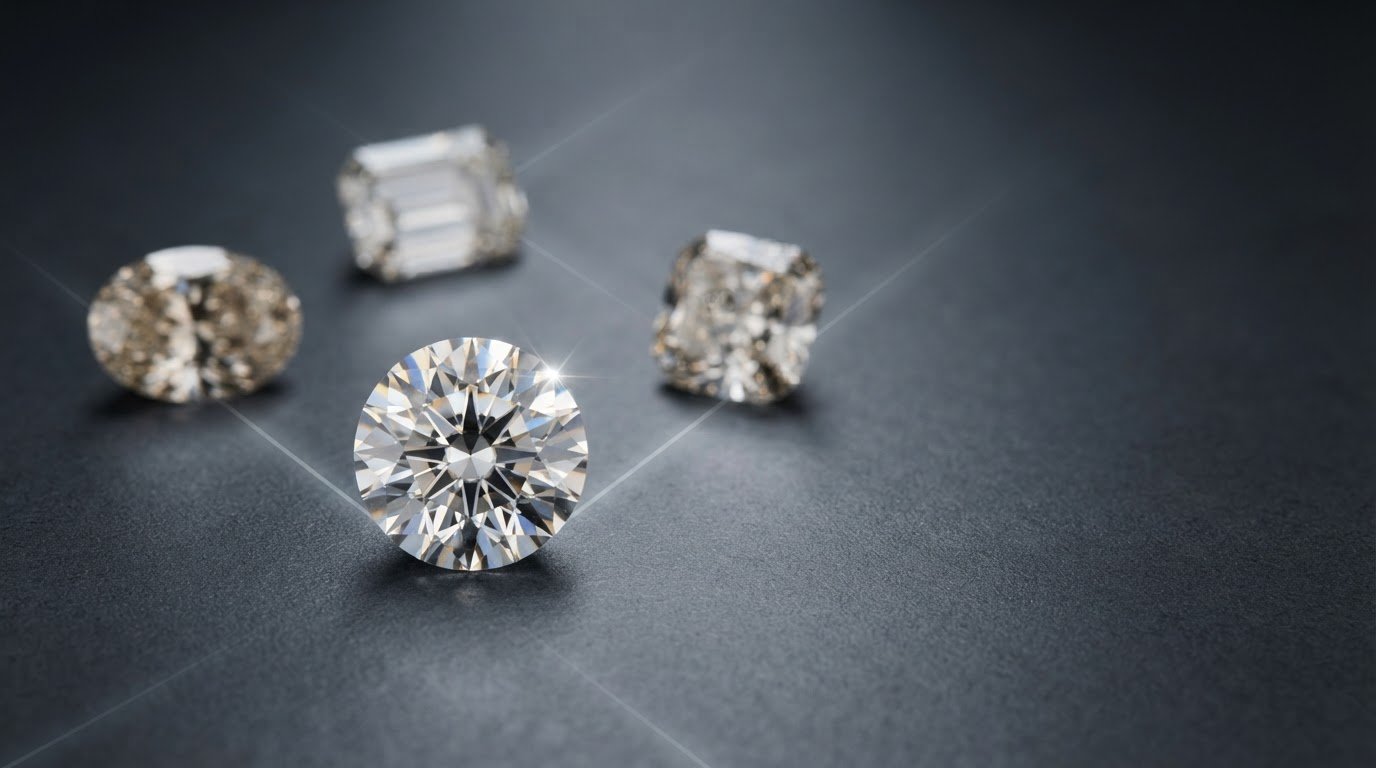
What if the right 3-carat diamond isn’t the one with the highest grades? A 3 carat loose diamond price expectation can be misleading if it treats every stone as comparable. Carat weight alone doesn’t explain why natural diamonds with the same weight can have different prices. To compare options usefully, look at each stone’s shape, cut, color, clarity, grading details, and listing price.
At Superlight Diamonds, we specialize in natural earth-mined diamonds, including clarity-enhanced stones that offer an affordable way to prioritize size and beauty. This guide explains what to compare and how to assess a specific diamond. Highly magnified photographs, 360° videos, and detailed Special Comments can show characteristics that a grading report alone may not capture.
Key Takeaways
- Use your 3 carat loose diamond price expectation as a starting point, not a price estimate for every stone. Grading details and listings differ.
- Compare carat weight, shape, cut, color, clarity, and grading details side by side to understand differences between stones.
- Decide which characteristics matter most to you, then weigh visible beauty and sparkle against grading differences that may be difficult to notice.
- Explore natural earth-mined diamonds through the Diamond Finder and no-reserve auctions to compare individual listings and find options that suit your budget.
What Should You Expect to Pay for a 3-Carat Loose Diamond?
Carat weight alone can’t establish the price of an individual 3-carat diamond. The price depends on the stone’s cut, color, clarity, shape, grading details, and specific listing. A single universal range can therefore create a misleading comparison. Instead, compare actual listing prices in USD and review each stone’s details. A no-reserve auction and a fixed-price listing also use different pricing formats, so compare the price shown for each listing on its own terms.
Why two 3-carat diamonds can have different prices
Carat weight tells you how much a diamond weighs, not exactly how large it appears or how it looks when viewed from above. A diamond’s measurements, shape, and cut affect how its weight is distributed and how much of the stone is visible face-up. Cut describes how the stone’s proportions and facets interact with light. Color grades how noticeable body color is, while clarity describes internal or surface characteristics.
Shape matters, too. A round brilliant and an emerald cut have different outlines and facet patterns, so equal weights won’t look identical. Grading information adds context about a particular stone, but a report alone can’t show every detail of its appearance. The Diamond overview explains the four Cs used in grading. Use them alongside the actual diamond’s images and video when comparing listings.
At Superlight Diamonds, we specialize exclusively in natural earth-mined diamonds, including clarity-enhanced natural diamonds. Clarity enhancement is a disclosed process that can help make beautiful natural diamonds more affordable. To understand an individual stone, review its grading details alongside the highly magnified photographs, 360° video, and Special Comments in its listing.
For a fair comparison, start with stones that have similar carat weights and the same shape. Then note differences in cut, color, clarity, and grading information. This gives you a practical way to weigh appearance against your budget instead of relying on a broad estimate.
How to Compare 3-Carat Diamond Prices Without Overpaying
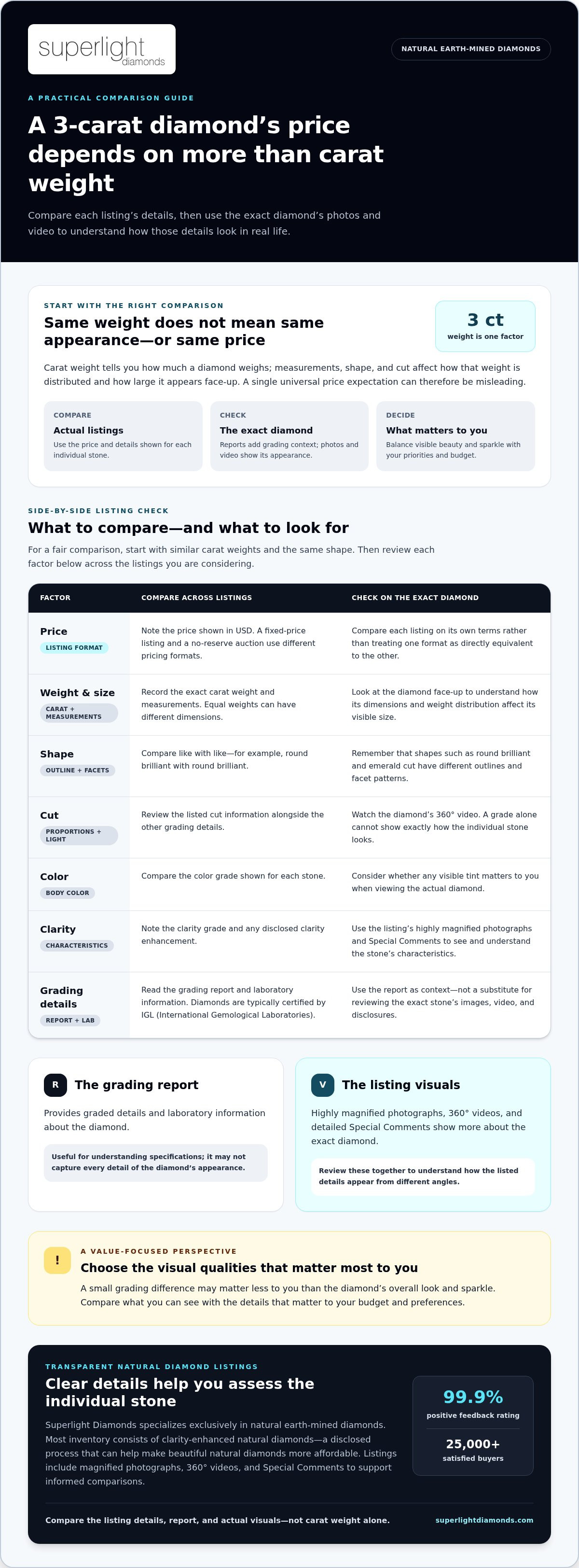
Compare listings on the same terms before deciding which offers the best value. Make a simple side-by-side note of each stone’s price, weight, shape, grades, and grading details. Then use the photographs and video to see how those specifications translate into appearance. This keeps your 3 carat loose diamond price expectation grounded in the actual diamond rather than a single grade.
- Carat weight: Note the exact weight and measurements. Diamonds with the same weight can have different dimensions and face-up appearances.
- Shape: Compare like with like, such as round brilliant with round brilliant. Outlines and facet patterns affect how a diamond looks.
- Cut: Review the listed cut information and look at how the diamond appears in its video. Don’t assume that a grade alone tells you how the exact stone will look.
- Color: Compare the grade, then consider whether any visible tint matters to you.
- Clarity: Note the grade and any disclosed clarity enhancement. Use the listing’s actual images to see the stone’s characteristics.
- Grading details: Read the grading report and laboratory information. Diamonds are typically certified by IGL (International Gemological Laboratories), but a lab name alone doesn’t tell you how the exact stone looks.
What should you inspect in a 3-carat diamond listing?
Read the report for the graded details, then review the listing’s highly magnified photographs, 360° video, and Special Comments. These comments can explain characteristics that may not be obvious from the report. The report describes graded features, while images and video show how those features appear in the exact diamond. Look at the stone from different angles and use the comments to understand any additional details before comparing it with another listing.
Prioritize the visual qualities that matter to you. A small grading difference may matter less to you than the diamond’s overall look and sparkle. That can help you focus on what suits your preferences and budget. Superlight Diamonds provides detailed listing information to support transparent comparisons. For broader information about natural diamond supply-chain integrity, see this diamond supply-chain resource. You can also compare natural diamond listings based on the details that matter most to you.
Where to Explore 3-Carat Natural Loose Diamonds Transparently
Superlight Diamonds specializes in natural earth-mined diamonds and offers one of the largest online selections of natural loose diamonds. Explore individual listings on our website and through our no-reserve auctions. The Diamond Finder helps you narrow your options and compare details such as shape and grading information. Prices are displayed in USD, so you can assess listings using a consistent currency.
How transparency helps you evaluate the exact stone
A grading report provides important information, but it can’t show the full visual impression of a particular diamond. Individual listings include highly magnified photographs, 360° videos, and detailed Special Comments that disclose characteristics that may not be obvious from the report. Review these materials together: observe the stone from different angles, note how it appears in the video, and read the comments for additional context before comparing it with another listing.
Listings identify clarity-enhanced diamonds, so you can include that detail in your comparison. Superlight Diamonds has a 99.9% positive feedback rating and over twenty-five thousand satisfied buyers. We provide clear listing details to help you make an informed choice based on the specific diamond.
As you assess a listing, compare its report and disclosures with what you see, then decide whether the diamond suits your priorities. Our guides to no-reserve diamond auctions and clarity-enhanced diamonds offer additional context as you explore. The Diamond Finder is a practical way to browse available stones and compare their individual details at your own pace.
Take the Next Step with Confidence
Before browsing, set a comfortable budget and decide which features are non-negotiable. You might prioritize a particular shape or the impression the diamond makes, while staying flexible on grading details that matter less to you. A short list of priorities makes it easier to compare listings and keep your search focused.
As you browse, note the details that matter most for each stone, including its price in USD, shape, grading information, and any clarity enhancement disclosure. Use the listing photos, video, and Special Comments to assess the exact diamond rather than relying on its weight or report alone. A considered decision should suit both your taste and your spending plan.
Ready to compare options? Explore natural loose diamonds with Superlight Diamonds using the Diamond Finder and review each listing’s details at your own pace.
Frequently Asked Questions
Does a 3-carat diamond always have the same price?
No. Two listings at the same carat weight can have different prices because their grading characteristics, shapes, and pricing formats may differ. Your 3 carat loose diamond price expectation is a guide, not a quote for a particular stone. For a useful comparison, note each listing’s price in USD and compare diamonds with similar specifications, taking account of whether the listing is fixed-price or offered through a no-reserve auction.
What does 3 carats mean for a loose diamond?
Three carats describes the diamond’s weight: one carat equals 0.2 grams, so a 3-carat diamond weighs 0.6 grams. “Loose” means the diamond is not set in a ring or other jewelry. Its weight applies to the diamond itself, rather than to a finished piece.
Can a clarity-enhanced 3-carat diamond be natural?
Yes. Clarity enhancement is a process applied to a natural diamond to improve its apparent clarity; it doesn’t change the diamond’s natural origin. Superlight Diamonds specializes in natural earth-mined diamonds, including clarity-enhanced stones. Review the listing’s disclosure and grading information so you understand the specific diamond and its characteristics before deciding.
How can I compare two 3-carat loose diamond listings?
Start by deciding which features are essential to you, then compare the stones against those priorities rather than focusing on one grade alone. Check that you’re comparing diamonds with the same shape and similar weights, and note each listing’s price in USD. Review the grading information, photographs, video, and Special Comments for both stones. If a grading difference is difficult to see, consider whether it matters to your preferences and budget.