Loading... Please wait...
 USD



Recent Posts
How to Save on Diamonds: 2026 Insider’s Guide
Posted on
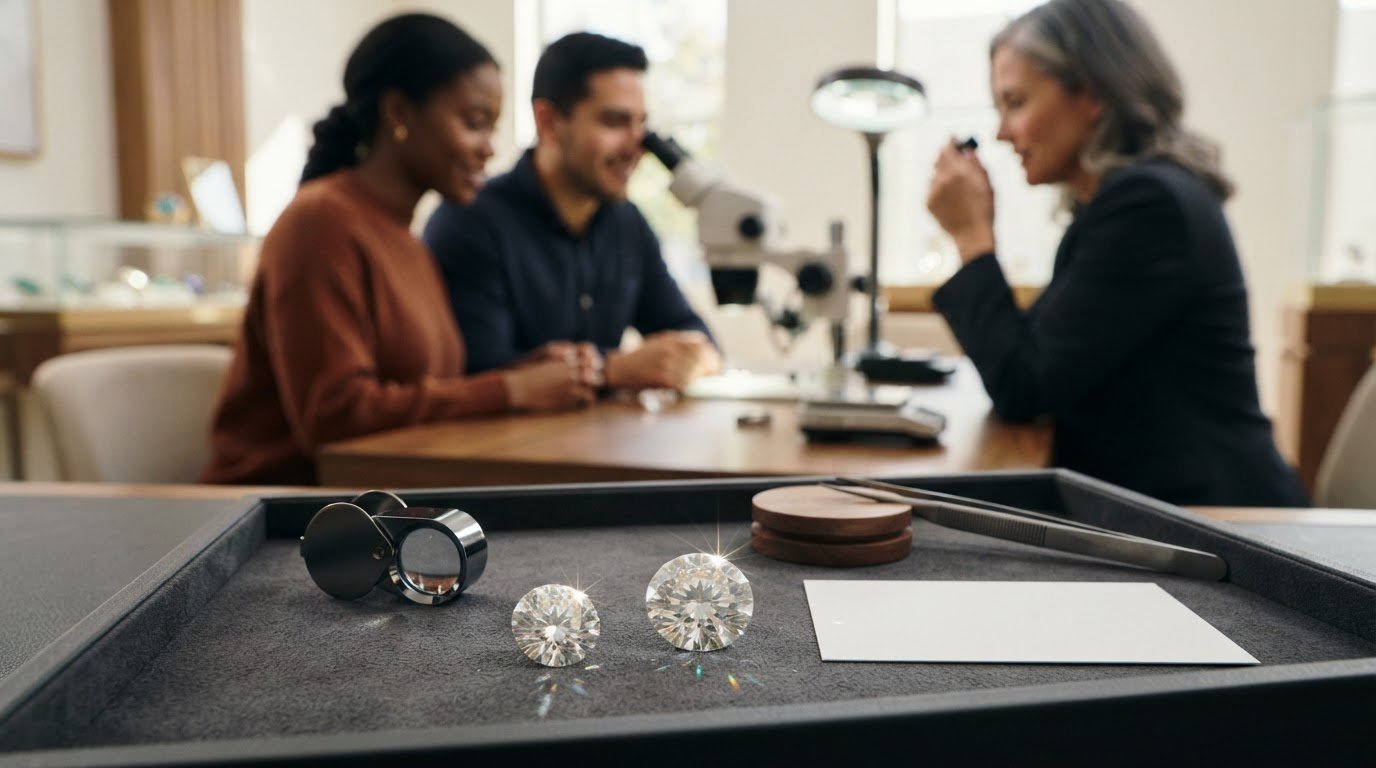
A diamond’s price can rise for details you may never see. If natural diamonds feel out of reach, learning how to save money on diamonds starts with prioritizing visible beauty over small grading differences. At Superlight Diamonds, we specialize exclusively in natural, earth-mined diamonds. We believe a thoughtful choice can help you find more size and sparkle within your budget.
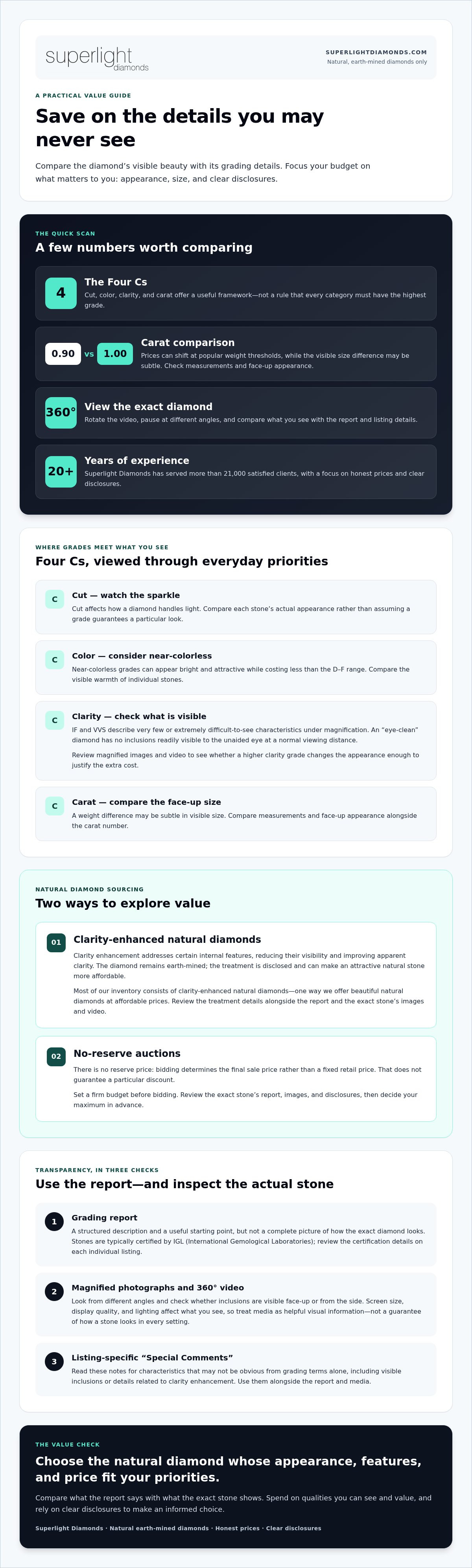
This guide explains how to compare the 4Cs, where a lower grade may make little visible difference, and how clarity enhancement can make a larger natural diamond more affordable. You’ll also learn to compare grading information with magnified photographs, 360° videos, and the detailed Special Comments on individual listings. Reviewing the exact stone, rather than relying on a report alone, helps you make a more informed choice. With more than 20 years of experience and over 21,000 satisfied clients, we focus on honest prices, clear disclosures, and outstanding value.
Key Takeaways
- To learn how to save money on diamonds, compare a stone’s visible appearance and sparkle, not just its grading letters.
- Consider clarity-enhanced natural diamonds as a way to choose a larger stone while keeping your budget in focus.
- No-reserve auctions offer a different way to buy than fixed-price listings, but the final price depends on bidding.
- Use the grading report as a starting point, then examine the exact diamond’s magnified photos, 360° video, and Special Comments.
Mastering the 4Cs for Real-World Savings
Diamond value depends on both technical grades and the beauty you see when a stone catches the light. The Four Cs of Diamonds offer a useful framework, but the highest grade in every category isn’t automatically the best fit for everyday wear. We specialize exclusively in natural, earth-mined diamonds and encourage buyers to focus on the features that matter most to them.
Clarity grades describe internal inclusions and surface blemishes. IF and VVS grades indicate very few or extremely difficult-to-see characteristics under magnification, but those differences may not be visible without magnification during normal wear. An “eye-clean” diamond has no inclusions readily visible to the unaided eye at a normal viewing distance. Compare the actual stone using its magnified images and video, and consider whether a higher clarity grade changes what you see enough to justify the extra cost.
Prioritising Cut and Color for Maximum Visual Impact
Cut affects how a diamond handles light, so it can have a direct influence on sparkle. Compare the actual appearance of each stone rather than assuming a grade alone guarantees a particular look. Color is another area where a practical compromise may make sense. Near-colorless grades can appear bright and attractive while costing less than the D-F range. Explore the diamond color scale to understand how grades relate to visible warmth.
- Compare sparkle and face-up appearance across stones, using their images and videos as well as their grading details.
- Compare a 0.90-carat diamond with a 1.00-carat option. Prices can shift at popular weight thresholds, while the visible size difference may be subtle. Check each stone’s measurements and face-up appearance before deciding.
These trade-offs are a practical starting point for how to save money on diamonds: spend on qualities you can see and value, rather than paying extra for refinements that don’t change the look you want.
Strategic Sourcing: Clarity Enhancement and Auctions
Smart sourcing can make a larger natural diamond more attainable while keeping disclosures clear. Clarity enhancement addresses certain internal features in a natural diamond, reducing their visibility and improving the stone’s apparent clarity. The diamond remains earth-mined; the treatment is disclosed and can make an attractive natural stone more affordable. Explore clarity enhanced diamonds to learn about the process and what to review in a listing.
Read the grading report and treatment details together. We specialize exclusively in natural, earth-mined diamonds, and our stones are typically certified by IGL (International Gemological Laboratories). Some listings include certification and some do not, so review the details provided for the individual stone. A report gives technical information, while treatment disclosures help you understand what has been done. Use both to compare your options.
The Natural Diamond Advantage on a Budget
For buyers who value a diamond formed in the earth, clarity enhancement can open up options that might otherwise sit beyond their budget. It’s one practical way to save money on diamonds while choosing a larger natural stone. The point is to disclose the treatment clearly, so you can decide whether the diamond’s appearance and value suit you.
No-reserve auctions offer another route to value. With no reserve price, bidding determines the final sale price rather than a fixed retail price. That doesn’t guarantee a particular discount, so set a firm budget before bidding. Review the exact stone’s report, images, and disclosures, then decide your maximum in advance. Our guide to mastering the no-reserve diamond auction explains how to approach bidding with a clear plan. You can also explore Superlight Diamonds’ natural diamond selection to compare available options.
Using Transparency Tools to Verify Your Purchase
A grading report gives you a structured description of a diamond, but it can’t show every detail of how that exact stone looks. Treat the report as a starting point, then compare its information with the diamond’s highly magnified photographs, 360° video, and listing disclosures. This helps connect technical details to the stone’s visible character.
Read the “Special Comments” carefully. These notes can explain characteristics that aren’t obvious from grading terms alone, including visible inclusions or details related to clarity enhancement. Use them alongside the report and media, not in place of either. The goal is to understand what’s disclosed before deciding whether the diamond suits your preferences.
Evaluating Loose Diamonds with 360° Video
Rotate the video slowly and pause to inspect the diamond from different angles. Notice how it returns light as it moves, and check whether inclusions are visible in the face-up view or from the side. A video can reveal details that a single photograph may miss, but screen size, display quality, and lighting affect what you see. Use it as helpful visual information, not a guarantee that the stone will look identical in every setting.
The issuing laboratory provides documented grading, but a report alone can’t show the diamond’s appearance. We specialize in natural, earth-mined diamonds and provide magnified photographs, 360° videos, and listing-specific Special Comments to support an informed review. Our stones are typically certified by IGL, and each listing describes the individual diamond. Compare its paperwork with its images and video to assess both its reported characteristics and visible appearance.
Careful review makes how to save money on diamonds more practical: compare what the report says with what the actual stone shows, then choose based on the details you can see and value. Browse Superlight Diamonds’ natural diamond listings to put these checks into practice.
Choose the Diamond That Feels Right for You
The best value is personal: it’s the natural diamond whose appearance, features, and price fit your priorities. Compare individual stones using their measurements, grading details, images, videos, and disclosures. This gives you a practical basis for choosing what you can see and genuinely appreciate, without losing sight of your budget.
We specialize exclusively in natural, earth-mined diamonds, including clarity-enhanced stones that offer an affordable path to a larger, eye-catching diamond. As a top-rated eBay seller, we’re committed to transparent listings and honest prices.
Browse our collection of beautiful natural diamonds at honest prices and compare the details of each stone to find an option that fits your priorities and budget.
Frequently Asked Questions
How can I get a larger natural diamond on a limited budget?
Set your maximum budget first, then compare stones just below popular carat thresholds and consider clarity-enhanced options. For example, if your target is around one carat, include slightly lighter stones in your comparison and check their measurements. Carat weight alone doesn’t determine how large a diamond looks face-up. This is a practical way to apply how to save money on diamonds without choosing by weight alone.
Are clarity enhanced diamonds real natural stones?
Yes. A clarity-enhanced diamond is a natural, earth-mined diamond that has undergone a treatment to improve the appearance of certain clarity characteristics. The treatment doesn’t change its natural origin and should be clearly disclosed, so you can make an informed choice. We specialize exclusively in natural, earth-mined diamonds, including clarity-enhanced stones.
Is an IGL certificate reliable for evaluating diamond value?
An IGL certificate can help you understand a diamond’s reported characteristics, but it doesn’t set the stone’s market price or tell you whether its appearance suits your taste. Treat the report as one piece of information. Compare its details with the individual listing and the diamond’s actual images or video, then decide whether the overall appearance and listed price represent value for you.
Can I save money by buying loose diamonds instead of pre-set rings?
Buying a loose diamond makes it easier to compare the stone separately from a setting, but it doesn’t automatically cost less than a pre-set ring. Your total depends on the diamond and any setting you choose. If you’re considering a loose stone, compare the complete costs and make sure the diamond’s measurements and shape suit the setting you have in mind.