Loading... Please wait...
 EUR



Recent Posts
Best Diamond Color for Platinum: A Value-First Guide
Posted on
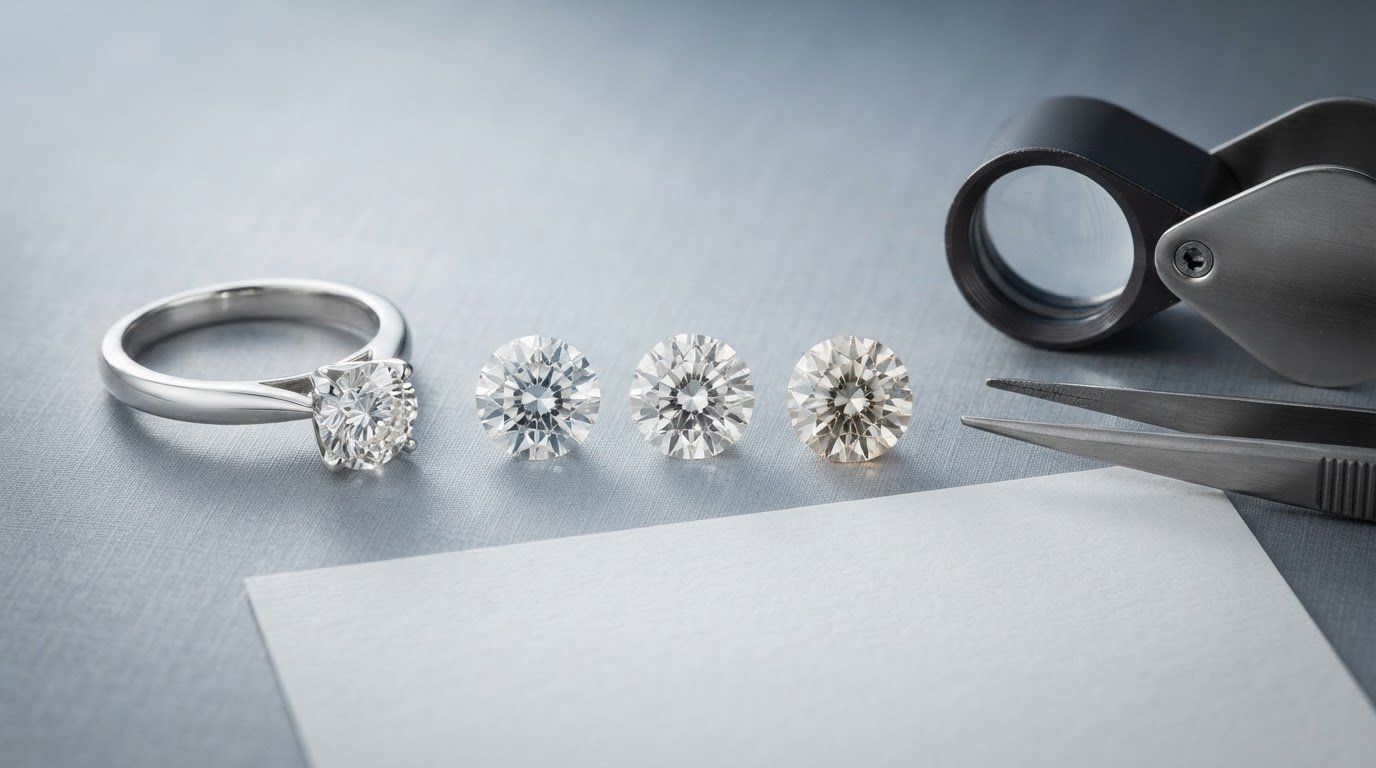
The highest color grade isn’t automatically the best diamond color grade for platinum settings. Platinum’s bright, cool tone can provide a useful contrast when judging a diamond, but it doesn’t change the stone’s color grade. Whether you notice a faint warm tint depends on the individual diamond and how you view it. The practical question is whether a higher grade makes a visible difference to you, and whether that difference is worth the added cost.
Start with the appearance of the exact diamond, not its letter grade alone. In this guide, we’ll explain which grades to compare for platinum, how shape can affect the impression of color, and what to review before buying. Superlight Diamonds specializes in natural earth-mined diamonds only. Our listings include highly magnified photographs, 360° videos, and Special Comments to help you compare the grading report with the individual stone and choose a look that suits your priorities and budget.
Key Takeaways
- Compare D-F, G-J, and K-Z to understand where a diamond sits on the color scale. Platinum does not change its grade.
- Use G-H as a practical starting range when considering the best diamond color grade for platinum settings, then judge the actual appearance and your budget.
- Set a budget, shortlist a few grades, inspect the exact diamond, and compare its grading report with the listing disclosures.
- Superlight Diamonds specializes in natural earth-mined diamonds only, including clarity-enhanced natural stones. Review each listing to understand the specific diamond.
What Diamond Color Looks Like in a Platinum Setting
Diamond color describes how colorless a diamond appears under grading conditions. The standard D-to-Z scale starts at D, which is colorless, and moves toward grades with increasingly visible traces of color. A grade is a useful comparison point, but it can’t predict every detail of how a particular diamond will look once set. For a broader overview of the scale and its terminology, see Diamond color grading.
Platinum is a white metal, so it gives the diamond a cool-toned backdrop. It doesn’t alter the stone’s color grade. The contrast may make warmth easier to notice than it would be against yellow gold, where warmer tones can appear more harmonious. How much that contrast matters varies from person to person.
Does platinum make diamond color more noticeable?
It can, but the result depends on the diamond and the viewing conditions. Shape, size, lighting, and the surrounding metal all contribute to the overall impression. A close-up photograph, a 360° video, and a view in everyday lighting may each show the stone differently. Even diamonds with the same grade can have distinct appearances because a letter summarizes color rather than describing every visual nuance. When comparing diamonds, look at them under similar conditions and focus on whether you can see a difference that matters to you.
Takeaway: The grade describes the diamond’s assessed position on the D-to-Z scale. Apparent color is how that specific stone looks in its setting and viewing conditions. Use the grade to narrow your options, then assess the actual diamond. This distinction helps you find the best diamond color grade for platinum settings without paying more for a difference you don’t value.
How to Compare Diamond Color Grades for Platinum
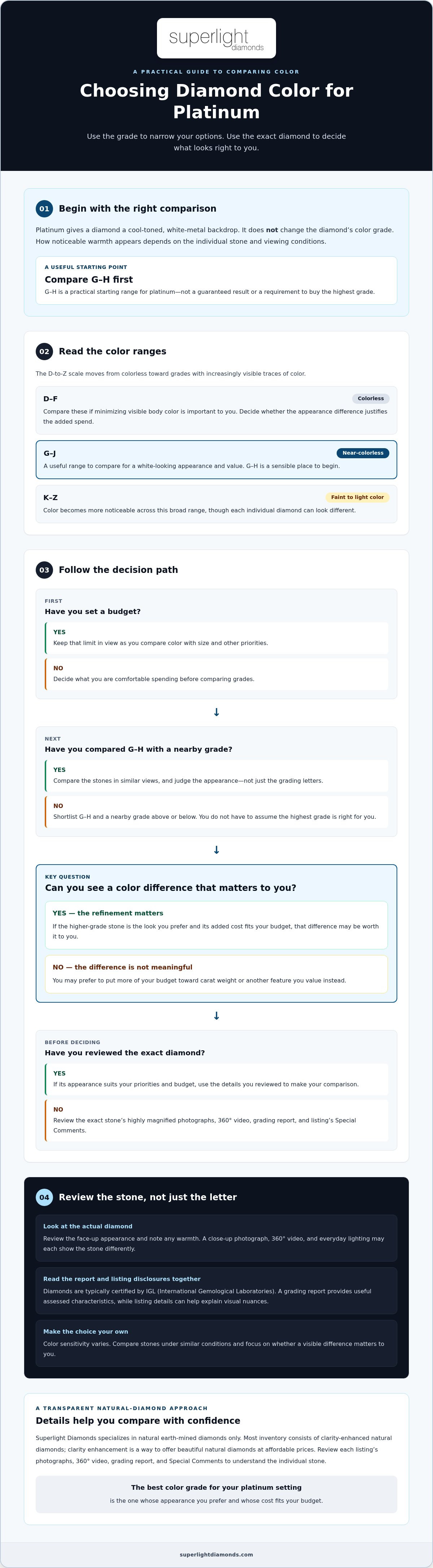
A practical comparison starts with a range, not a requirement to buy the highest grade. G-H is a useful starting point for platinum because these grades fall in the near-colorless category. Compare them with a nearby grade and decide whether the difference is visible and worthwhile to you. The best diamond color grade for platinum settings depends on your preferences, the individual stone, and how you want to balance appearance with budget.
| Color range | Scale category | What to consider |
|---|---|---|
| D-F | Colorless | Compare these if minimizing visible body color is important to you. Then decide whether the appearance difference justifies the added spend. |
| G-J | Near-colorless | A useful range to compare for a white-looking appearance and value. G-H is a sensible starting point, not a guaranteed result. |
| K-Z | Faint to light color | Color becomes more noticeable across this broad range, though the appearance of an individual diamond still varies. |
Which color grades are worth comparing first?
Start with G and H, then compare a nearby grade above or below. Look at the diamonds in similar views and ask yourself whether you can see a difference without relying on the grading letters. If you prefer the higher-grade stone, you’ll know that its added color refinement matters to you. If the difference isn’t meaningful, you may prefer to put more of your budget toward carat weight or another feature you value. Color sensitivity varies, so base your decision on your own comparison rather than someone else’s preference.
For more detail on grade categories, use our diamond color scale guide. Superlight Diamonds specializes in natural earth-mined diamonds only. Compare natural loose diamonds by their individual details instead of treating any grade as a guarantee of appearance.
Choose a Platinum-Setting Diamond by Reviewing the Exact Stone
A grade can narrow your options, but a confident choice comes from reviewing the specific diamond you’re considering. Use this sequence to keep the decision focused on appearance and value:
- Set your budget. Decide what you’re comfortable spending before comparing grades. This makes it easier to weigh color against size and other priorities.
- Shortlist grades. Pick a small range, such as G-H and a nearby grade, rather than assuming you need the highest color grade.
- Inspect the exact stone. Review its highly magnified photographs and 360° video. Look at the face-up appearance and note any warmth you see.
- Compare the report and listing disclosures. Use the grading report for assessed characteristics, then read the listing’s Special Comments for details that may not be obvious from the report alone.
What to check in a diamond listing before deciding
Diamonds are typically certified by IGL (International Gemological Laboratories). A report provides useful grading information, but it doesn’t show every visual nuance. Review it alongside the exact stone’s photographs, video, and disclosures. Our guide to buying loose diamonds online explains how listing details can support your review.
Superlight Diamonds specializes in natural earth-mined diamonds only, and most of our inventory consists of clarity-enhanced natural diamonds. Clarity enhancement is a way to offer beautiful natural diamonds at affordable prices. We disclose details about individual stones so you can make an informed choice. Our clarity-enhanced diamond guide explains more. Browse our natural loose diamonds and compare each stone’s details with your preferences and budget.
Make Your Choice with Confidence
The best diamond color grade for platinum settings is the one that suits your eye and your budget. Before deciding, consider what matters most in the finished ring, then use the exact stone’s details to compare your options. A higher color letter isn’t automatically a better fit if you prefer a different balance of size, appearance, and cost.
Superlight Diamonds has served more than 21,000 customers since its founding in 2001. Our natural earth-mined diamond listings include detailed visuals and disclosures to support an informed comparison. Explore natural loose diamonds and compare each stone’s details to find an option that feels right for you.
Frequently Asked Questions
Is an H-color diamond a good choice for a platinum setting?
Yes, H can be a sensible grade to compare for platinum. It sits in the near-colorless range on the D-to-Z scale, but two H-color diamonds won’t necessarily look identical. Review the exact stone’s magnified images and video alongside its grading report, and decide whether any warmth you notice suits the setting you have in mind.
Can a lower color grade still look appealing in platinum?
Yes. A grade alone can’t predict exactly how a particular diamond will look in every setting or lighting condition. A stone that looks pleasing in one view may show more warmth under different light. Review the actual diamond and decide whether its appearance suits your preferences and budget. A lower grade isn’t inherently poor quality.
Does diamond size affect how much color is visible in a platinum setting?
Size may influence how readily someone notices color, but it doesn’t determine appearance by itself. Diamonds of different sizes can present differently, and lighting and the individual stone matter too. Rather than relying on a rigid size rule, compare the specific diamond’s photographs and video. Look at its overall face-up appearance and decide whether it works for your setting.
Should I choose D color for a platinum setting?
Not necessarily. D is at the top of the colorless range, but you don’t need the highest grade to find a diamond you enjoy. To find the best diamond color grade for platinum settings for your priorities, compare D with nearby grades and review the exact stones. Choose based on visible appearance and budget, not a premium for a difference you may not value.