Loading... Please wait...
 EUR
EUR



Blog
Recent Posts
Pear Shaped Diamond Price Guide: Maximizing Beauty and Value in 2026
Posted on
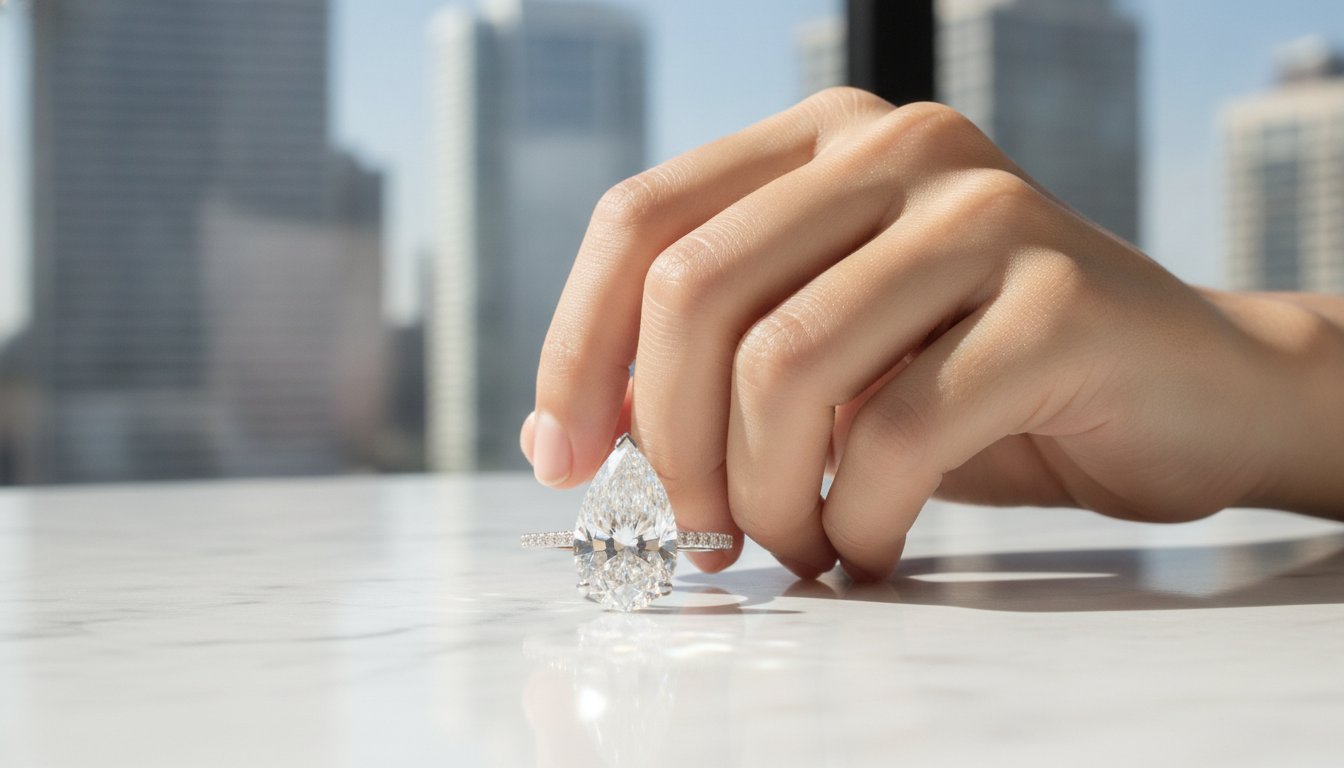
What if the most expensive diamond on your list isn't actually the most beautiful one on your finger? Many buyers assume that higher grading tiers always equal more sparkle, but the reality of the 2026 market is quite different. You've likely felt the frustration of comparing two stones that look identical to the naked eye while wondering why one costs significantly more. It's common to worry about overpaying for invisible specs or ending up with a "bow-tie" effect that dulls your stone's center.
Our 2026 pear shaped diamond price guide is designed to remove that confusion. We'll show you how to navigate pricing to secure a larger, more brilliant natural stone without the traditional retail markup. You'll discover why clarity enhancement is the savvy buyer's secret to getting a visually stunning diamond at a fraction of the cost. We'll also explain which technical details truly matter and how to use 360° videos to buy with total confidence. By the end of this guide, you'll know exactly how to find a large, sparkly natural diamond that fits your specific budget perfectly.
Key Takeaways
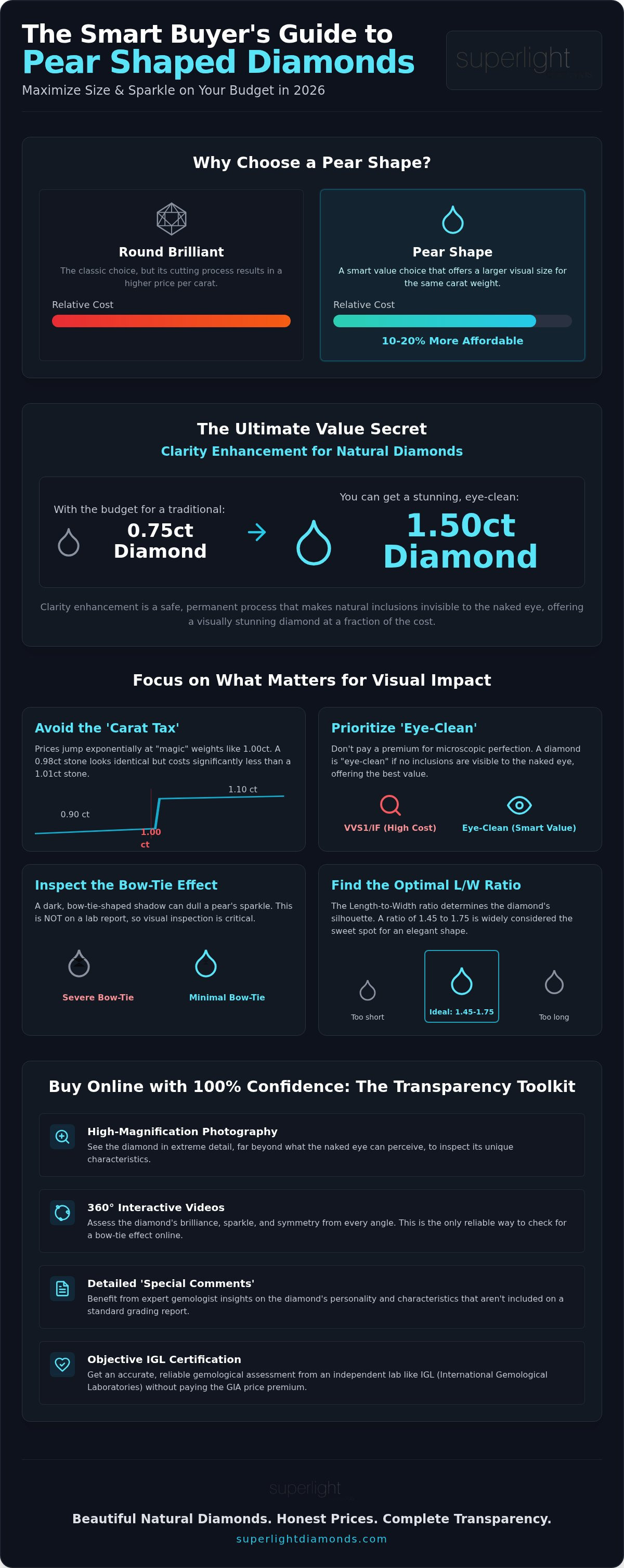
- Learn why pear shaped diamonds typically cost 10-20% less than round brilliants, providing a larger visual profile for your budget.
- Discover how clarity enhancement serves as a savvy buyer's secret to securing a natural 1.50ct stone at a 0.75ct price point.
- Use this pear shaped diamond price guide to find the technical "sweet spots" that prioritize eye-clean beauty over microscopic grading differences.
- Understand why high-magnification photography and 360° videos are essential for identifying the bow-tie effect and ensuring stone symmetry.
- Leverage IGL certification and detailed "Special Comments" to buy with confidence, ensuring total transparency and outstanding value.
Understanding Pear Shaped Diamond Pricing in 2026
Choosing a pear shape is often a strategic decision for the value-conscious buyer. This hybrid cut combines the intense fire of a round brilliant with the elegant, finger-lengthening silhouette of a marquise. In the 2026 market, these stones offer a distinct financial advantage, frequently costing 10-20% less than round diamonds of identical carat weight. This price gap exists because the pear shape allows a cutter to preserve more of the original rough stone compared to the high-waste requirements of a traditional round diamond cut.
Any comprehensive pear shaped diamond price guide must address the concept of "Price per Carat." Diamond pricing isn't linear; it scales exponentially as you cross major weight thresholds like 1.00 and 2.00 carats. A stone weighing 0.98 carats will be significantly more affordable than a 1.01-carat stone, despite having almost no visual difference. The 2026 market outlook remains disciplined, with natural earth-mined stones continuing to be the preferred choice for those seeking lasting value and a tangible connection to nature.
The 'Visual Carat' Advantage of Pear Shapes
Pear diamonds possess a unique "visual carat" advantage because their elongated form occupies more surface area on the finger. A 1.00-carat pear often appears larger than a 1.00-carat round stone. However, it's vital to find a balance between size and sparkle. If a stone is cut too shallow to maximize its footprint, it might lose the internal reflection that creates brilliance. Most experts recommend a Length-to-Width (L/W) ratio between 1.45 and 1.75. This range ensures the diamond looks substantial and elegant without appearing too short or overly narrow.
Market Drivers: Why Prices Vary Between Retailers
The price you pay is heavily influenced by the seller's business model. Traditional luxury retailers carry high overhead costs, such as expensive storefronts and massive branding budgets, which are passed to the consumer through high markups. In contrast, high-volume models like Superlight Diamonds focus on transparency and rapid turnover. By specializing in clarity-enhanced natural diamonds and using IGL certification, we provide a path to a larger stone for your budget. This approach prioritizes the actual beauty of the diamond over the "prestige tax" associated with luxury labels. Using a pear shaped diamond price guide helps you identify these value opportunities, allowing you to invest in a stone that looks far more expensive than its price tag suggests.
The 4 Cs and the Pear-Specific 'Bow-Tie' Effect
Mastering the technical specs of a pear cut is the next step in using a pear shaped diamond price guide to your advantage. While the 4 Cs are standard across the industry, they behave differently in a teardrop silhouette. Savvy buyers often look for stones at the 0.90 or 1.90 carat mark. These stones offer the same visual presence as full-carat weights but avoid the steep price jumps associated with round numbers. Color is another area where you can find significant savings. Because pear diamonds are deeper at the rounded end and narrower at the point, color tends to concentrate in the tip. Selecting a slightly higher color grade or a setting that complements the stone can mask this effect, allowing you to prioritize size over a D-grade premium.
Clarity should always be judged by what's visible to the naked eye. Paying for a VVS1 grade often means paying for perfection that only a microscope can see. We focus on "eye-clean" stones where natural inclusions don't distract from the sparkle. This is where reviewing 360° videos and detailed "Special Comments" becomes more valuable than the certificate itself. You can view our current inventory of pear shaped diamonds to see how eye-clean stones compare across different price points.
Detecting and Pricing the Bow-Tie Effect
The bow-tie effect is a dark, butterfly-shaped shadow across the center of the diamond. It's caused by light escaping through the bottom of the stone instead of reflecting back to your eye. While almost all pear cuts have a slight bow-tie, a severe one significantly lowers a diamond's market value because it interrupts the stone's brilliance. You won't find a "bow-tie grade" on a lab report. This makes visual transparency essential. Using high-magnification media allows you to verify that the light return is consistent across the entire stone before you commit to a purchase.
IGL Certification vs. The GIA Premium
Many retailers push GIA certification as the only gold standard, but this often comes with a significant price markup that doesn't improve the stone's physical beauty. International Gemological Laboratories (IGL) provides objective, reliable grading that allows us to offer much more competitive prices. We follow the FTC Guides for the Jewelry Industry regarding full disclosure and transparency for all our natural earth-mined stones. By choosing IGL-certified stones, you're investing in the diamond's actual quality rather than a lab's brand name. This shift in focus is key to maximizing your budget without compromising on the visual brilliance of your natural diamond.
Clarity Enhancement: The Secret to a Larger Diamond for Less
For many buyers, the biggest hurdle in a pear shaped diamond price guide is the steep cost of higher clarity grades. Clarity enhancement offers a practical solution by making natural inclusions invisible to the naked eye. This gemological process involves filling microscopic feathers within the stone with a substance that shares a similar refractive index to the diamond itself. The result is a natural, earth-mined stone that looks significantly cleaner and more brilliant than its original grading would suggest. Because the diamond remains a natural product of the earth, it retains its unique character while offering the visual appeal of a much more expensive stone.
The financial impact of this choice is substantial. In the 2026 market, clarity enhancement allows you to secure a 1.50-carat pear shaped diamond for roughly the same price as a 0.75-carat non-enhanced stone of similar color. This "carat jump" is the most effective way to maximize your budget. While lab-grown diamonds are available, many of our clients prefer enhanced natural stones because they value the history and rarity of a diamond formed in the earth over a factory-produced alternative. Maintaining these stones is simple. You can keep your enhanced pear diamond sparkling for decades by following standard jewelry care, such as avoiding harsh boiling or acidic chemicals during professional cleanings.
Maximizing Sparkle Without the 'Museum Quality' Cost
We believe that "eye-clean" is the only grade that truly matters for daily wear. Paying for microscopic perfection is often a poor allocation of your budget. Clarity enhancement specifically targets the feathers that disrupt light refraction, allowing the stone to sparkle with maximum intensity. This is particularly effective for 2-carat pear diamonds, where larger surface areas can sometimes make inclusions more noticeable. By choosing an enhanced stone, you prioritize the sparkle and size that people actually notice from across a room.
Transparency in Enhancement Disclosure
Transparency is the foundation of our business model. Every listing we provide includes a detailed "Special Comments" section that explains the specific characteristics of that stone. We want you to understand exactly what you are buying, which is why we provide high-magnification media for every diamond in our inventory. For a deeper look at this process, you can read our full article on Clarity Enhanced Diamonds: The Savvy Buyer’s Guide to Natural Brilliance. This commitment to honesty ensures you can shop with confidence, knowing you are getting the best possible value for a beautiful, natural pear shaped diamond.
How to Evaluate Pear Diamonds Online Using Visual Tools
A paper certificate is a helpful starting point, but it cannot capture the "life" or specific personality of a stone. In our pear shaped diamond price guide, we emphasize that visual tools are the most critical part of your evaluation process. You shouldn't rely solely on a grade because two diamonds with the same certificate specs can look vastly different in person. Follow these four steps to ensure you're getting the best visual value:
- Step 1: Look past the grade. High-magnification photos reveal the true nature of inclusions. An SI1 stone with a white feather on the edge is often a better value than one with a black crystal in the center.
- Step 2: Use 360° videos. This is the only way to spot a distracting bow-tie or judge how the light moves across the stone's facets.
- Step 3: Read the "Special Comments." These provide gemologist insights that a standard IGL report misses, such as whether a stone is truly eye-clean.
- Step 4: Check the dimensions. A diamond's "spread" (the length and width in mm) tells you how large it will actually look on your finger. A 1.00-carat stone that is cut too deep will look smaller than a well-proportioned 0.90-carat stone.
The Power of High-Magnification Media
Most online retailers use stock photos or low-resolution images that hide the stone's true character. We provide highly magnified media for every listing because we believe in total transparency. This allows you to identify "salt and pepper" inclusions versus clean tables through video. It also helps you spot a "well-bellied" pear shape, which has a graceful curve, versus one that is too narrow and looks like a shard. Seeing the actual stone ensures you aren't paying for "hidden" flaws that a certificate might gloss over.
Understanding the "Special Comments" Column
The "Special Comments" section is arguably the most important part of a Superlight Diamonds listing. These notes are written by experts who have physically inspected the stone. They might highlight "Strong brilliance" or note a "Slight bow-tie," giving you the confidence of a gemologist without needing a degree. If a comment says "Eye clean," it means the clarity enhancement has successfully made the inclusions invisible to the naked eye. You can view our selection of natural pear shaped diamonds to see how these comments provide a clearer picture of value than a grading report alone.
Strategy: Capturing Value via Fixed Price and Auctions
Finding the right stone is only half the battle. The other half is choosing the right purchase strategy to maximize your budget. In the 2026 market, you have two primary paths to securing a natural diamond: fixed-price website listings and no-reserve auctions. Fixed-price shopping provides immediate access to a curated, value-priced inventory, making it ideal if you're on a tight timeline. On the other hand, no-reserve auctions on eBay allow the market to dictate the price. This format often creates opportunities for significant savings, especially for buyers who've done their research and know exactly which visual characteristics they prioritize.
Our brand's longevity is a testament to the transparency of these models. With over 20 years of experience and more than 21,000 satisfied clients, Superlight Diamonds has built a reputation for reliability in the high-volume diamond trade. We provide the same level of detailed media and "Special Comments" for an auction stone as we do for our fixed-price inventory. If you're considering the auction route, we recommend reviewing our guide on Mastering the No Reserve Diamond Auction: A Buyer’s Guide to Maximum Value to sharpen your bidding strategy. This pear shaped diamond price guide is most effective when you use these market tools to your advantage.
Bidding Tips for Pear Shaped Diamonds
Success at auction requires a disciplined approach. Start by researching "Sold" listings to get a realistic sense of the current market value for specific carat weights and dimensions. This data prevents you from overbidding in the heat of the moment. Always set a maximum bid based on your "visual carats" goal rather than just the number on the certificate. Because we are a Top-Rated eBay seller, you can bid with the assurance that every stone has been physically inspected and accurately described. This level of transparency is rare in an auction environment and serves as a major advantage for value-conscious buyers.
Closing the Deal: What Happens After You Buy
The process doesn't end when the auction closes. We use standard, highly secure shipping protocols for all our loose natural diamonds to ensure they arrive in pristine condition. Buying a loose stone is a savvy move because it allows you to inspect the diamond's brilliance and clarity enhancement before it's hidden in a setting. It also gives you total control over the custom jewelry design process later. Before you finalize any purchase, run through a final checklist. Verify the millimeter dimensions for the proper spread, confirm the "Eye Clean" status in the comments, and re-examine the 360° video for a balanced teardrop shape. Taking these final steps ensures your investment delivers the maximum visual impact for your specific budget.
Secure Your Ideal Natural Diamond for 2026
Finding a stunning natural stone doesn't require a luxury retail budget. By using this pear shaped diamond price guide, you now understand that visual brilliance and "eye-clean" clarity are the most important factors for daily wear. You've learned how clarity enhancement serves as a savvy buyer's secret to doubling your visual impact without increasing your costs. Remember to prioritize high-resolution media over static paper reports to ensure your diamond has the perfect teardrop symmetry and light return you desire.
We've helped over 21,000 satisfied clients since 2001 find beautiful natural earth-mined diamonds through our transparent business model. As a Top-Rated eBay seller, we provide 360° HD videos on every stone so you can buy with absolute confidence. Whether you choose a fixed-price listing or a no-reserve auction, you're now equipped to make a market-smart decision that balances size, sparkle, and budget. Browse our current selection of value-priced Pear Shaped Diamonds and find the perfect stone today. Your dream diamond is closer than you think.
Frequently Asked Questions
How much does a 1 carat pear shaped diamond cost in 2026?
A natural 1-carat pear diamond in 2026 typically ranges between $2,700 and $4,010, with a fair market average of $3,230 according to recent industry data. These market prices reflect a 16.7% increase since tracking began. To maximize your budget, consult a pear shaped diamond price guide to find stones just under the full carat mark. Choosing a clarity-enhanced natural stone can often provide a much larger visual profile for the same investment.
Is a pear shaped diamond more expensive than a round cut?
Pear shaped diamonds are generally less expensive than round brilliant cuts of the same carat weight and quality. You can expect to pay 10% to 20% less for a pear shape because the cutting process preserves more of the original rough diamond. This allows you to secure a larger stone or a higher color grade for your budget. It's a strategic choice for buyers who want a unique silhouette with a lower price per carat.
What is the best color and clarity for a pear shaped diamond on a budget?
For the best value, look for a color grade in the G to H range and "eye-clean" clarity. Because pear shapes concentrate color at the tip, a near-colorless grade offers the best balance of beauty and cost. You don't need to pay for microscopic perfection. Clarity-enhanced natural diamonds are an excellent budget-friendly choice as they remove visible inclusions, allowing you to prioritize a larger carat size while maintaining a stunning visual appearance.
Does a pear shaped diamond look bigger than other shapes?
Yes, pear shaped diamonds often look larger than round diamonds of the same carat weight. Their elongated form creates a greater surface area or "spread" on the finger. This visual advantage is one of the primary reasons they are the third most popular diamond shape in 2026. To ensure you get the best look, compare the millimeter dimensions rather than just the weight. A well-proportioned pear diamond will maximize its visual impact elegantly.
Are clarity enhanced pear diamonds real natural diamonds?
Clarity-enhanced pear diamonds are 100% natural earth-mined stones. They aren't lab-grown or synthetic. The enhancement process simply targets internal inclusions, such as feathers, to make them invisible to the naked eye. This allows you to own a genuine natural diamond that looks much more expensive than its price tag. We've served over 21,000 satisfied clients since 2001 who prefer the history and rarity of natural diamonds combined with the value of enhancement.
What should I look for in a pear diamond's symmetry?
When evaluating a pear diamond, look for a balanced teardrop shape where the shoulders and wings are identical on both sides. The point should align perfectly with the center of the rounded end. Poor symmetry can make the stone look lopsided or "stubby." Because grading reports don't show the full picture, you should always review 360-degree videos. Our "Special Comments" section provides expert notes on symmetry that go beyond what you'll find on a standard IGL report.
Is IGL certification reliable for pear shaped diamonds?
IGL certification is a reliable and objective way to grade pear shaped diamonds. It provides a detailed assessment of the stone's characteristics without the high brand premium associated with GIA. This allows us to pass those savings directly to you. In our pear shaped diamond price guide, we advocate for focusing on the stone's actual visual performance. IGL grading ensures you are getting a verified natural stone while keeping your purchase within a value-conscious price range.
How do I avoid a bad bow-tie effect in a pear diamond?
To avoid a distracting bow-tie effect, you must use visual inspection tools like 360-degree high-definition videos. A bow-tie is a dark shadow across the center caused by light leakage. While most pear cuts have a slight shadow, a severe one ruins the stone's brilliance. Since lab reports don't grade this effect, our detailed "Special Comments" on every listing are essential. They disclose the severity of any bow-tie so you can buy with total transparency.
Loose Diamond Buying Mistakes: 10 Pitfalls to Avoid in 2026
The biggest mistake you can make isn't choosing the wrong grade on a certificate; it's paying for microscopic perfection you'll never see with the naked eye. Most shoppers feel a deep sense of anxiety when they see two identical-looking stones with vastly different price tags. You want a natural diamond that captures the light and [...]
Princess Cut Diamonds: 2026 Value-First Buyer's Guide
Why would you pay double the price for a diamond just to satisfy a grading report that requires a microscope to verify? Most buyers feel the sting of high retail prices, especially when looking for a princess cut that actually has presence on the hand. It's frustrating to see your budget swallowed by invisible quality [...]
Are Loose Diamonds a Good Investment? 2026 Resale Value Guide
If you bought a diamond today at a traditional retail store, you could lose up to half its value before you even leave the parking lot. Most buyers feel a deep sense of anxiety about these high markups and the fear that their stone might have zero resale value in the future. It's a valid [...]
Round Brilliant Diamond Prices: 2026 Market Guide
Why are you being asked to pay a massive premium for a stone that looks identical to one available through a professional auction? As of July 2026, the landscape for round brilliant diamond prices is shifting rapidly due to new 10% to 12.5% tariffs on imports from major hubs like India and China. You likely [...]
Guide to Buying Round Brilliant Loose Diamonds Online in 2026
You don't need a massive retail budget to own a natural diamond that commands attention across a room. Selecting round brilliant loose diamonds online often feels like a gamble because traditional retailers hide high markups behind confusing technical jargon. You're likely worried about overpaying for a stone that looks dull in person or struggling to [...]