Loading... Please wait...
 USD



Recent Posts
Princess Cut Diamond Length to Width Ratio and Shape
Posted on
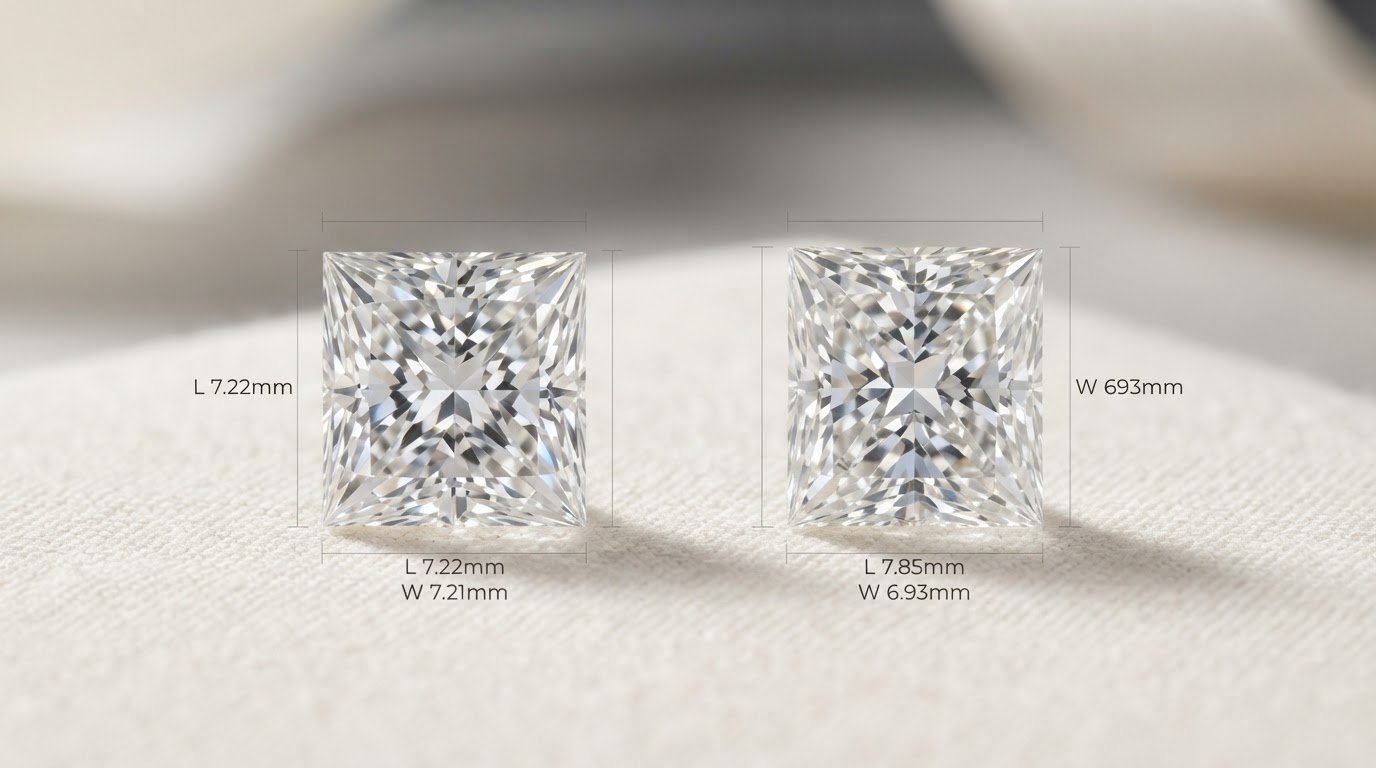
A princess cut diamond’s length-to-width ratio can tell you whether it will look square or elongated. This princess cut diamond length-to-width ratio guide explains the simple calculation: divide the diamond’s length by its width. A ratio of 1.00 means equal length and width, while a ratio from 1.00 to 1.05 generally appears square; higher ratios create a more noticeable rectangular shape.
It’s easy to focus on a princess cut’s sharp corners and brilliant facets, but its outline also shapes its overall look. Understanding the ratio helps you compare diamonds by their measurements rather than relying on shape names alone. Here’s how to read the number, assess different proportions, and decide whether a square or elongated princess cut suits your preferences.
Key Takeaways
- Compare a diamond’s length and width measurements to understand its outline, rather than relying on the shape name alone.
- Consider depth percentage alongside the outline: it can affect how much of the diamond’s weight is visible face-up.
- Decide whether you prefer a balanced square look or a more elongated silhouette before comparing stones.
- Use the grading report for measurements, then review the exact diamond’s images and video to assess its appearance.
What Is a Princess Cut Diamond Ratio?
A princess cut diamond length to width ratio guide explains how the stone’s length compares with its width. The ratio describes the face-up outline, while depth and table percentages provide additional information about the diamond’s proportions.
Depth and Table Proportions
Depth percentage compares a diamond’s total depth with its width; table percentage compares its top facet with its width. One common recommendation for princess cuts is 71% to 75% depth and 68% to 72% table. Other guidance uses 69% to 76% depth and 63% to 69% table, so treat these as reference ranges, not one universal standard. The table percentage should be less than or equal to the depth percentage.
Ratio, Depth, and Light Performance
Ratio describes the face-up outline, while depth percentage describes how much of the diamond extends below its top. Neither figure alone establishes how brilliantly a fancy cut performs, because the proportions work together. A princess cut shallower than 65% may allow light to leak through its pavilion, while one deeper than 80% may appear dark in the center. Depth can also affect face-up spread compared with carat weight.
Comparing Proportions on a Grading Report
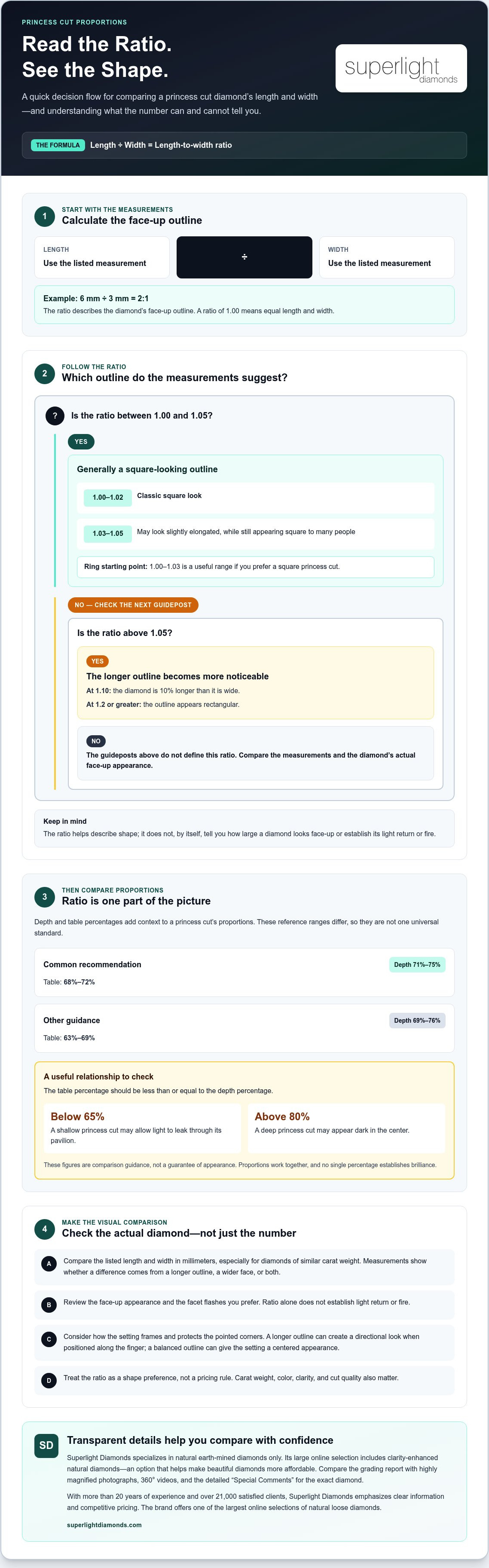
A grading report provides measurements and proportion percentages for comparing individual diamonds. Divide the listed length by the width to calculate the ratio; for example, 6 mm divided by 3 mm equals 2:1. GIA provides table and depth percentages for princess cuts, and its report measurements use hundredths of a millimeter. Use a princess cut diamond length to width ratio guide as a framework, then compare the report’s figures. Ratio preferences don’t change simply because carat weight changes; choose the outline you like and compare proportions among diamonds you’re considering.
Square versus rectangular princess cut proportions
A princess cut’s ratio determines whether its face-up outline looks square or elongated. When choosing a diamond for a ring, decide which appearance you prefer, then compare the stone’s other proportions.
Visible Elongation and Appearance
A ratio near 1.00 means the length and width are nearly equal, creating a square visual shape. For a classic square look, aim for 1.00 to 1.02; ratios from 1.03 to 1.05 can look slightly elongated while still appearing square to many people.
Above 1.05, the longer outline becomes more noticeable, while a ratio of 1.2 or greater appears rectangular. For example, a 1.10 ratio means the diamond is 10% longer than it is wide. Princess cuts with more length can create a distinct silhouette, but the outline alone doesn’t determine how large the diamond looks face-up.
For a princess cut engagement ring, a ratio of 1.00 to 1.03 is a useful starting point. Compare the actual measurements and visual appearance, then consider how the setting’s prongs frame the pointed corners.
Proportions, Light Return, and Fire
A diamond’s proportions describe how its facets and dimensions work together, affecting its appearance and outline. The length-to-width ratio indicates shape, but it does not establish light return or fire on its own. Those visual effects depend on the diamond’s overall cut proportions and facet arrangement.
During buying comparisons, look beyond whether a princess cut is square or rectangular. Compare its measurements and face-up appearance, and consider whether the facets show the flashes of light you prefer. A diamond’s origin does not set its ratio; its cut proportions determine whether it appears square or elongated.
How ratio affects a princess diamond’s shape
The ratio helps you compare how a princess cut’s length and width shape its face-up outline. For two diamonds of similar carat weight, compare their measurements in millimeters as well as their ratios. This reveals whether the difference comes from a longer outline, a wider face, or both, rather than relying on carat weight alone.
This comparison also helps you picture how the diamond will sit in a setting. A longer outline can create a directional look when positioned along the finger, while a more balanced outline gives the setting a centered appearance. The pointed corners need protection, whatever ratio you choose, so consider how the setting will cover them.
Does a princess cut diamond’s length-to-width ratio affect its price? It can help you compare stones, but the ratio alone does not determine price. Carat weight, color, clarity, and cut quality also matter, so consider the complete specifications instead of treating a shape preference as a pricing rule.
To compare individual stones against the look you want, review diamond details alongside their measurements and full specifications.
Superlight Diamonds: Round Brilliant Diamonds
Superlight Diamonds specializes in natural earth-mined diamonds, with a large online selection that includes Princess Cut Diamonds and Round Brilliant Diamonds. Competitive pricing and transparent details help shoppers compare options. Clarity-enhanced natural diamonds are also available as a way to make beautiful stones more affordable.
With more than 20 years of experience and over 21,000 satisfied clients, Superlight Diamonds supports informed choices through highly magnified photographs, 360° videos, and detailed “Special Comments” on individual listings. Review the exact diamond’s visuals and disclosures alongside its grading report to understand its characteristics.
Explore the diamond selection or contact Superlight Diamonds with your questions.
Choose a Diamond That Feels Right for You
Let your preferred look guide your choice. A square or elongated outline is a personal style decision, and the most useful comparison is the diamond’s face-up appearance alongside the details that matter to your budget. Use this princess cut diamond length to width ratio guide to keep the shape in perspective as you explore your options.
Superlight Diamonds specializes in natural earth-mined diamonds only, including Princess Cut Diamonds and Round Brilliant Diamonds. Clarity-enhanced natural diamonds offer another way to consider beauty and value. Review each listing’s photographs, 360° video, and Special Comments to understand the individual stone before deciding.
For a straightforward next step, explore natural diamond options and compare the styles that appeal to you. Choose at your own pace, with the information that helps you feel confident in your decision.
Frequently Asked Questions
What Is the Length-to-Width Ratio?
The ratio expresses a diamond’s outline by comparing its length with its width. For shoppers, it works best as a screening tool: use it to narrow choices by shape before comparing other qualities. Treat the number as a proportion, not a beauty grade or a complete picture of how the diamond looks in person.
What is the ideal length-to-width ratio for a square princess cut diamond?
A ratio of 1.00 to 1.02 is a practical target for a square princess cut. If you’re comparing candidates, check that the listed length and width measurements support the displayed ratio, since rounding can make close proportions appear identical. Then consider the actual face-up view, because small measurement differences may not be equally noticeable in every stone.
How do you calculate a princess cut diamond's length-to-width ratio?
Divide the longer measurement by the shorter one, using the same units for both. If a report gives dimensions in millimeters, use both figures in millimeters. The result compares the measurements; it does not measure area. If a listing rounds the ratio, use the underlying dimensions for a more precise comparison between stones with similar proportions.
What length-to-width ratio makes a princess cut diamond look rectangular?
A ratio of 1.20 or higher generally gives a princess cut a clearly rectangular outline. A measurement near that point may look less distinct than a more elongated stone, so use the ratio as a guide rather than a substitute for viewing the diamond. The setting can also influence how strongly the outline reads once the stone is mounted.
How does length-to-width ratio affect a princess cut diamond's appearance and face-up size?
The ratio indicates whether the outline looks balanced or stretched, but it does not show how much surface area the diamond presents from above. Two stones can have the same ratio but different face-up dimensions because their overall measurements differ. To assess visible size, compare those dimensions directly and consider how the outline will look in your preferred setting.