Loading... Please wait...
 USD



Blog
Recent Posts
Emerald Cut Diamond Step Cut Windowing Test: What to Look For
Posted on
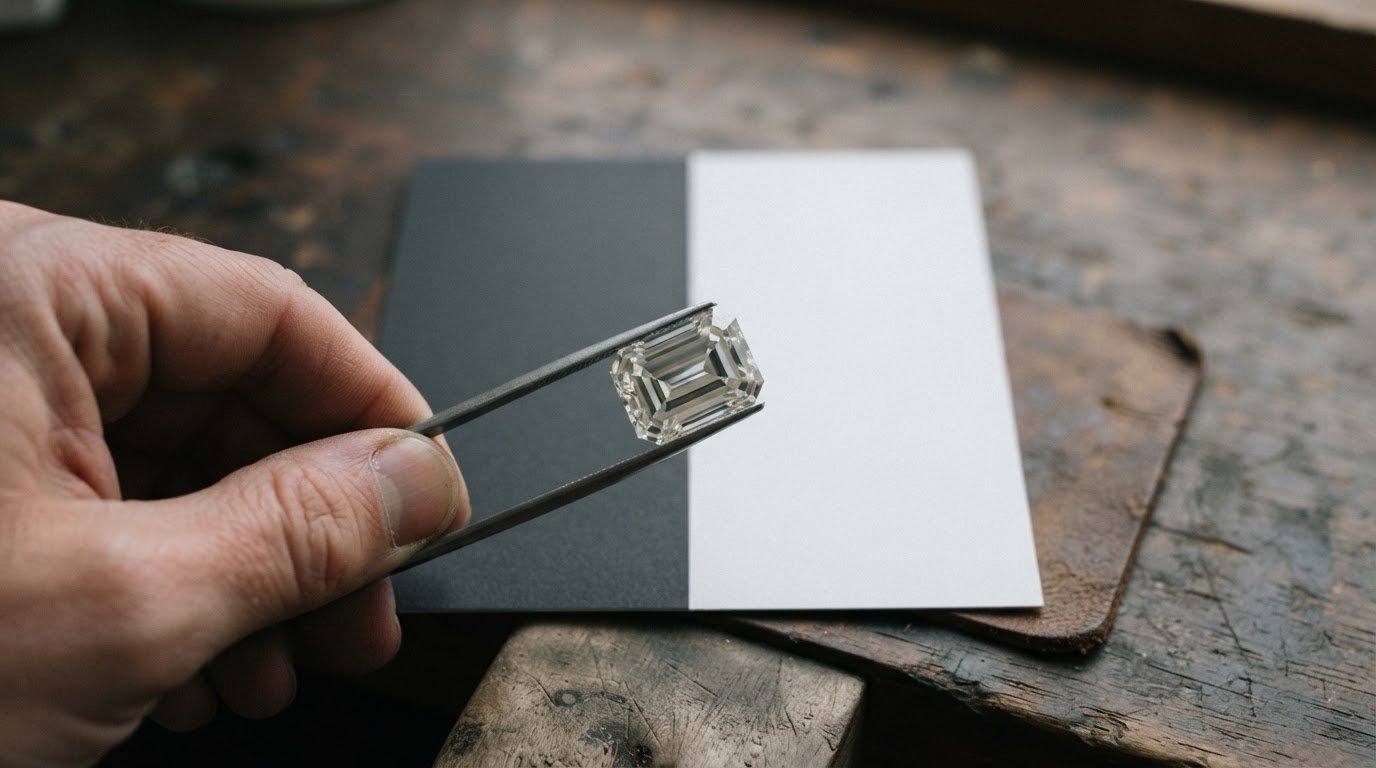
A transparent-looking center can be more than a subtle sparkle pattern. In an emerald-cut diamond, windowing is an area where light passes through the stone instead of reflecting back to your eye. An emerald cut diamond step cut windowing test checks for transparency that stays visible face-up, rather than a brief flash that changes as the diamond moves.
Emerald cuts are known for broad, orderly flashes, not the intense sparkle of a round brilliant, so a calm appearance alone is not a flaw. The key is distinguishing a genuine window from ordinary reflections, shadows, or momentary background changes. This guide explains what to look for in a video and in person, and how tilting the diamond and changing its surroundings can help you judge whether the see-through effect persists.
Key Takeaways
- Learn why emerald-cut step facets can let light escape instead of returning it to your eye.
- Use slow video movement and changing backgrounds to distinguish persistent transparency from ordinary reflections.
- Recognize how face-up appearance, tilt, and dark areas can affect your assessment of a stone.
- Know why a grading report alone can’t show how an individual emerald cut performs visually.
What is Windowing in an Emerald-Cut Diamond?
Windowing is an area where light passes through an emerald cut instead of returning to the eye. Its step facets can make persistent transparency visible, unlike the moving flashes of a brilliant cut.
Pavilion Angles and Light Return
Pavilion angles control whether light striking the lower step facets reflects back through the crown or escapes through the diamond’s base. For an emerald cut with a 1.30 to 1.40 length-to-width ratio, a pavilion angle range of 39.5 to 40.8 degrees is cited as a useful light-performance reference. Angles above 40.5 degrees can make broad step facets more susceptible to windowing, so inspect the actual stone rather than relying on an angle alone.
Facet Alignment and Light Performance
Facet alignment describes how evenly the parallel step facets meet and reflect light across the stone. Emerald cuts typically have 57 to 58 facets, and misaligned steps can interrupt the hall-of-mirrors effect with dark spots or uneven flashes. Compare the rows face-up, then tilt the diamond slowly; clean reflections should shift in an orderly pattern rather than leaving a persistent dark or transparent zone.
Light Leakage and the Critical Angle
Light leakage occurs when internal reflections reach pavilion facets at an angle that lets light escape through the bottom instead of returning through the crown. The critical angle for diamond is 24.4 degrees; light entering at angles exceeding it can pass out of the stone. This helps explain why a visible window looks like background showing through, not simply a dim reflection or temporary shadow.
Causes of Windowing
A shallow cut can let light escape before it reflects internally, while pavilion geometry and facet alignment also affect the result. For a 1.30 to 1.40 length-to-width ratio, cited references include a 60 to 65% table, 42 to 45% pavilion depth ratio, and 11 to 14% crown height. These measurements offer context, not a visual verdict. Assess face-up transparency under different lighting; standardize video with the same holder, camera distance, exposure, and slow movement. Online, read the seller’s written return and inspection policies before buying so you understand the stated terms for examining the diamond.
Using video and in-person viewing to assess windowing
Video helps you see how an emerald cut’s step pattern changes, while viewing the diamond in person lets you assess it in its intended setting. The emerald cut diamond step cut windowing test is most useful when it reveals a repeated visual pattern, rather than an effect in a single frame.
Windowing and Dead Steps on Video
Windowing and dead steps look different on screen: a window shows the background through the stone, while a dead step stays dark. In a clear video, check whether the center reveals recognizable background detail or merely reflects a dark object near the camera. A pale patch that changes with the scene is not the same evidence as persistent transparency. This distinction helps you judge what the video actually shows.
Tilt Testing for Windowing
Tilting helps reveal whether a transparent area appears only at an unusual angle or remains visible during ordinary movement. Follow the same central facet as the stone turns. Does it change into a clean flash, or does it continue to reveal the background? This second emerald cut diamond step cut windowing test can help distinguish an angle-dependent glimpse from a face-up concern.
For a matched-video comparison, lock brightness and white balance, then view the candidates side by side. This prevents camera settings from making one stone look brighter or warmer than another. Focus on how much of the center appears transparent and whether the step pattern stays distinct. Similar outlines can make differences in light performance easier to assess.
In person, view the diamond loose and, if possible, in its setting; metal and skin can alter the surrounding reflections. Consider whether the appearance you observed loose remains noticeable in the jewelry context. Reviewing emerald-cut diamond videos can help you assess a stone’s recorded appearance before making your selection.
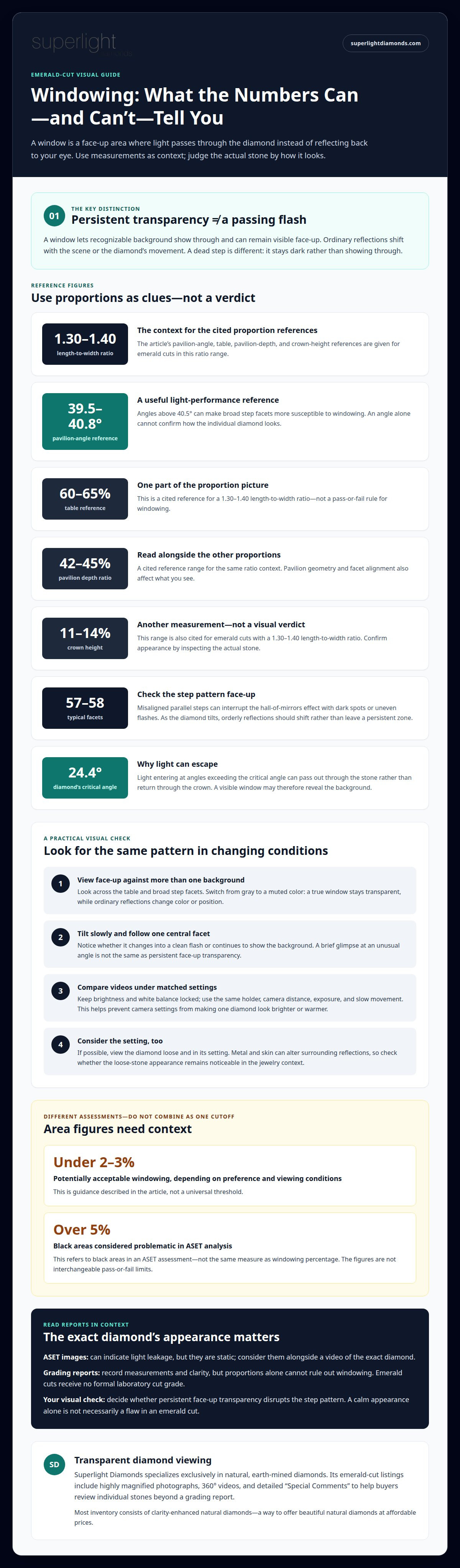
How windowing appears in emerald-cut diamonds
In an emerald step cut, a window is a face-up area that appears transparent instead of reflecting light. Unlike a moving mirror-like flash, it allows the background to show through the center or another part of the stone.
Visible Signs of Windowing
Look face-up across the table and broad step facets for a persistent view of the background. Then switch the background from gray to a muted color. A true window remains transparent against both; ordinary reflections change color or position. Step cuts should show orderly flashes and a hall-of-mirrors effect, not a fixed see-through patch. Dark areas are different: they may indicate extinction, facet-alignment issues, or inclusions, rather than transparency.
Acceptable Windowing
There is no single visual threshold that suits every buyer. Some guidance describes windowing under 2 to 3% of surface area as potentially acceptable, depending on preferences and viewing conditions. By contrast, professional gemologists consider black areas exceeding 5% of a diamond’s total surface area in ASET analysis problematic. These figures refer to different assessments, so don’t treat them as interchangeable pass-or-fail limits. A persistent face-up window matters more than a brief transparent flash at a steep angle.
ASET images can indicate light leakage, but they’re static; use them alongside a video of the exact diamond. A grading report records measurements and clarity, yet proportions alone can’t rule out windowing, and emerald cuts receive no formal laboratory cut grade. For a practical decision, judge the face-up appearance and decide whether the center’s transparency disrupts the step pattern. Review emerald-cut diamond videos to assess how a stone’s reflections change in motion.
Superlight Diamonds: Emerald Cut Diamonds
Superlight Diamonds offers emerald-cut diamonds so you can review individual stones with windowing and light performance in mind. We specialize exclusively in natural, earth-mined diamonds, and provide highly magnified photographs, 360° videos, and detailed “Special Comments” on individual listings. Review the exact diamond’s images and video alongside its grading report, since a report alone can’t show how its facets look as the stone moves.
Most of our inventory consists of clarity-enhanced natural diamonds. This process helps make beautiful natural diamonds available at affordable prices, with relevant characteristics disclosed for informed buying. Compare the stone’s face-up appearance and moving reflections with your preferences before deciding.
For help reviewing an emerald-cut diamond, please contact Superlight Diamonds.
Choose the Diamond Look That Fits You
Treat the visual result as one factor when choosing a diamond you’ll enjoy in everyday settings. Decide which look matters most to you: the long, orderly flashes of an emerald cut or the brighter facet pattern of another shape. An emerald cut diamond step cut windowing test can inform your choice, but your preference for appearance and budget should guide the decision.
If your priorities change, Superlight Diamonds also offers Round Brilliant and Princess Cut diamonds, as well as clarity-enhanced diamonds. Compare the styles that best match your preferences for shape and light return rather than assuming one cut suits everyone.
For help weighing your options, ask Superlight Diamonds about your diamond choices. Take your time and choose the appearance that feels right for you.
Frequently Asked Questions
Can a grading report rule out windowing?
No. A grading report can’t rule out windowing in an individual diamond. It remains useful for confirming the stone’s recorded measurements and matching its identity to the listing. Emerald cuts don’t receive a formal laboratory cut grade, so treat the report as specification information, not a visual performance assessment. A report and a video of the actual diamond serve different purposes.
What is windowing in an emerald cut diamond?
Windowing is an area where light passes through an emerald cut instead of returning to the viewer. One practical diagnostic is the newspaper test: place the loose diamond over printed text and look at it face-up. Readable letters through the table can indicate transparency. Use this as an observation aid, not a substitute for assessing the diamond’s full appearance.
How can you test an emerald cut diamond for windowing in person?
View the loose stone face-up over printed text, then inspect it from a normal viewing distance. The newspaper test can make light transmission easier to notice, while a closer look helps you locate the affected facet. If you’re assessing a mounted diamond, remember that the setting changes the scene around the stone; compare its appearance with a loose-stone view when available.
What lighting conditions should you use to check an emerald cut for windowing?
Don’t base your decision solely on intense jewelry-case spotlights, which can emphasize bright flashes. Assess the diamond under soft, even illumination and in a separate everyday indoor setting. In each environment, note whether the same part of the stone stays transparent or its appearance changes. This gives you a more useful sense of how the diamond may look beyond display lighting.
How can you distinguish windowing from normal emerald-cut reflections?
Normal contrast can look dark without being a window. At close range, your head may block light and cast a shadow across the diamond, even while its facets return light. Shift your viewing position: a shadow should move with you, while background visible through the stone behaves differently. This check helps prevent mistaking ordinary contrast for transparency.