Loading... Please wait...
 EUR
EUR



Blog
Recent Posts
How Diamond Auction Reserve Prices Work: A Buyer’s Guide
Posted on

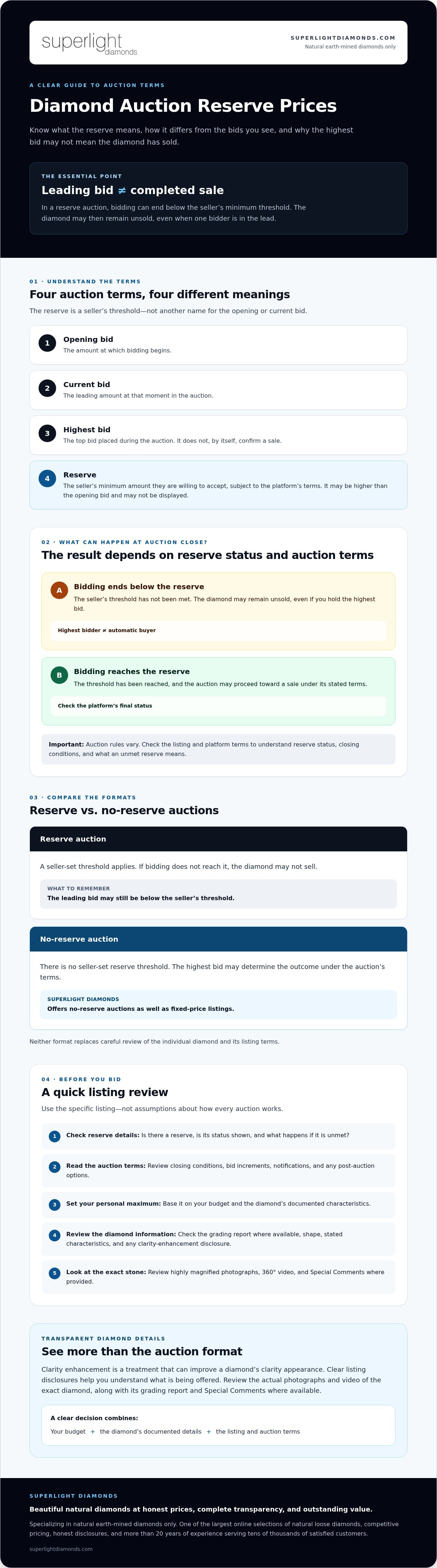
The highest bid doesn’t always buy the diamond. Understanding how diamond auction reserve prices work can help you avoid confusing the seller’s minimum threshold with the opening bid or current bid. In a reserve auction, bidding can end below that threshold, leaving the diamond unsold even if one bidder is leading.
This guide explains how reserve and no-reserve auctions differ, what an unmet reserve may mean for the highest bidder, and which listing terms to check before bidding. Superlight Diamonds offers no-reserve auctions as well as fixed-price listings. In either format, review the terms for the specific listing and assess the diamond’s details, including its photographs, 360° video, and Special Comments where provided.
Key Takeaways
- Learn how diamond auction reserve prices work, and why the leading bid may not mean the diamond has sold.
- Before bidding, check the individual listing and platform terms to understand what happens if the reserve isn’t met.
- Compare reserve auctions with no-reserve auctions to decide which bidding format suits your approach.
- Superlight Diamonds offers no-reserve auctions and fixed-price listings; review each diamond’s details and the listing terms before you buy.
How Diamond Auction Reserve Prices Work, and What They Mean for Bidders
To understand how diamond auction reserve prices work, distinguish the seller’s minimum threshold from the bids displayed during an auction. A reserve price is the minimum amount the seller is willing to accept for the diamond, subject to the platform’s terms. If bidding doesn’t reach it, the diamond usually isn’t sold, even if someone holds the highest bid.
For example, imagine an auction with an opening bid below the seller’s reserve. One bidder places the opening bid, another raises it, and the second bidder becomes the current highest bidder. If that bid remains below the reserve when the auction ends, the sale may not go through. The auction reserve price is separate from the amounts bidders enter.
Reserve price vs. starting bid: the distinction that matters
The opening bid sets where bidding begins. The current bid is the leading amount at that moment, while the highest bid is the top bid placed during the auction. The reserve is the seller’s sale threshold. It may be higher than the opening bid, and it isn’t necessarily displayed.
Platforms can show reserve status in different ways, and auction rules vary. Before bidding, check the listing and platform terms to find out whether a reserve applies, whether its amount is shown, and what an unmet reserve means for the result.
Superlight Diamonds uses no-reserve auctions, so its auction listings do not have a seller-set reserve threshold. That is one auction format, not a rule for every seller or listing.
What Happens When Diamond Bidding Reaches, or Misses, the Reserve?
As bidding progresses, the reserve indicates whether the seller’s threshold has been met, but the final result depends on the auction’s rules. If bidding ends below the reserve, the diamond may remain unsold. If bidding reaches the reserve, the auction may proceed toward a sale under its stated terms. Check the platform’s final status rather than assuming that placing a bid completes a purchase. Christie's explains the reserve price and how reserve status can affect bidders.
The highest bid is not necessarily a completed purchase if the reserve remains unmet. Before placing a bid, read the auction’s end conditions so you know what different outcomes may mean.
How to interpret reserve status before placing a bid
Review the current bid, any reserve-status indicator, the closing time, and the stated buyer terms. A status indicator may show whether the threshold has been reached without revealing the reserve amount. Platform rules also determine bid increments, notifications, and whether any post-auction option is available, so check the terms rather than assuming these details are the same across auctions.
Set a personal maximum before bidding, based on your budget and the diamond’s documented characteristics. Then review the specific listing: check the grading report where available, the diamond’s shape and stated characteristics, and whether it is described as clarity enhanced. Photographs, 360° video, and Special Comments can provide additional information where included. Superlight Diamonds offers loose diamonds through auction and fixed-price listings. You can explore our diamond listings and check the terms for the individual item before bidding or buying.
Reserve vs. No-Reserve Diamond Auctions: How to Choose Your Next Step
A reserve auction has a seller-set threshold, so the diamond may not sell if bidding doesn’t reach it. A no-reserve auction has no seller reserve threshold, and the highest bid may determine the outcome under the auction’s terms. In either format, review the diamond and decide what you’re comfortable bidding before participating.
Understanding how diamond auction reserve prices work can help you choose a format that matches your preferences. Superlight Diamonds offers no-reserve auctions, while auction formats vary by seller and listing. If you are comparing auction formats, read our no-reserve diamond auction guide.
A transparent diamond listing is more than its auction format
Look beyond the bidding format and review the information provided for the specific diamond. Check the grading report where available, along with any highly magnified photographs, 360° video, and Special Comments. Confirm whether the listing identifies the diamond as clarity enhanced. Clarity enhancement is a treatment that can improve the appearance of a diamond’s clarity; the listing’s disclosures help you understand what is being offered. Our clarity-enhanced diamond guide explains more.
Compare the listing details with your priorities, check the auction terms, and decide whether the diamond fits your budget before bidding. Superlight Diamonds offers loose diamonds, including clarity-enhanced stones, through auction and fixed-price listings. Explore diamond listings.
Bid with Clarity and Confidence
Knowing how diamond auction reserve prices work helps you distinguish the leading bid from a completed sale. In a reserve auction, the seller’s threshold may still need to be met; a no-reserve auction follows a different format. Before bidding, confirm the auction’s terms, set a budget, and review the exact diamond’s available documentation and disclosures.
Superlight Diamonds sells loose diamonds, including clarity-enhanced stones, through no-reserve auctions and fixed-price listings. Individual listings may include highly magnified photographs, 360° videos, and detailed Special Comments. Review the available information and the listing terms, then choose a diamond that suits your preferences and budget.
Explore Superlight Diamonds’ diamond listings and review the details before you bid or buy.
Frequently Asked Questions
What is a reserve price in a diamond auction?
A reserve price is the seller’s minimum acceptable amount for a diamond, subject to the auction platform’s terms. It’s separate from the opening bid, which sets where bidding starts, and the current bid, which shows the leading amount. Understanding how diamond auction reserve prices work helps you recognize that a visible bid may still be below the seller’s threshold.
What happens if the highest bid does not meet the reserve price?
If bidding ends below the reserve, the diamond usually remains unsold, and the highest bidder doesn’t necessarily have to complete a purchase. The precise outcome depends on the auction’s rules and listing terms. Check the platform’s final status and any stated next steps rather than assuming that being the leading bidder means the sale is complete.
Can a seller accept a bid below the reserve price?
That depends on the auction platform’s rules and the seller’s options; a below-reserve bid doesn’t automatically become a sale. Some platforms may provide a way for a seller and bidder to proceed after the auction, but availability and conditions vary. Read the listing and platform terms, and rely on a confirmed sale notice rather than assuming an offer has been accepted.
Is a no-reserve diamond auction different from a reserve auction?
Yes. A reserve auction has a seller-set minimum threshold, while a no-reserve auction has no reserve threshold, and the highest bid may determine the outcome under the auction’s terms. Superlight Diamonds offers no-reserve auctions as well as fixed-price listings. Check each listing’s terms, since formats and platform rules can differ.