Loading... Please wait...
 EUR
EUR



Blog
Recent Posts
What to Tell Your Jeweler Before Resizing a Clarity Enhanced Ring (2026 Checklist)
Posted on
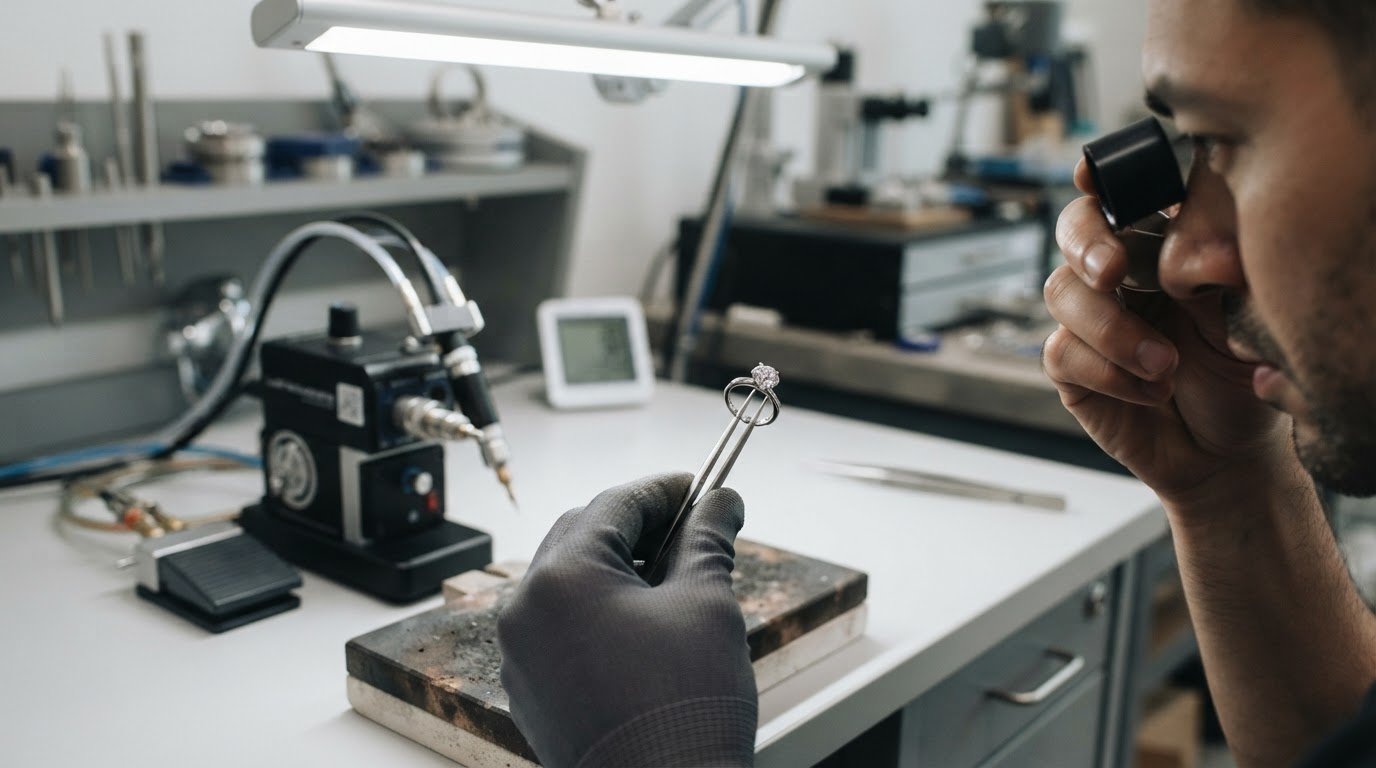
Will resizing your clarity enhanced diamond ring ruin the stone if your bench jeweler uses high heat? It's the primary fear for owners, especially because standard torch soldering easily exceeds the 212°F threshold where optical fracture fillings can soften. Knowing exactly what to tell your jeweler before resizing a clarity enhanced ring is the key to protecting your natural earth-mined stone and preserving its brilliance.
You probably worry that an unfamiliar jeweler will misunderstand the treatment, charge inflated fees, or refuse service outright. That concern is valid, but routine alterations are completely safe when guided by transparent communication. This 2026 checklist gives you the precise technical vocabulary and bench requirements to hand your jeweler, explaining how modern cold techniques and laser welding protect your diamond every step of the way.
Key Takeaways
- Understand how fracture-filling compounds react to high temperatures so you can request protective bench methods like laser welding or thermal barriers.
- Follow our step-by-step checklist on what to tell your jeweler before resizing a clarity enhanced ring to ensure clear instructions regarding stone unmounting and cold sizing techniques.
- Learn how transparent disclosure eliminates guesswork, preventing unexpected bench delays while safeguarding your natural earth-mined diamond.
- Master the quick counter-side inspection using a 10x loupe to verify prong security and confirm your stone retains its full brilliance before leaving the shop.
Why Resizing a Clarity Enhanced Ring Demands Special Jeweler Precautions
Fracture filling is an advanced optical treatment where a microscopic glass-like compound infuses surface-reaching feathers inside a natural diamond. Because this optical filler shares virtually the identical refractive index of natural diamond crystal, light travels uninterrupted through the stone, dramatically elevating apparent clarity. It is an intelligent way to maximize everyday diamond size on a reasonable budget. However, standard jewelry modifications introduce significant bench heat. Understanding diamond enhancements reveals why traditional torch procedures require modified bench protocols.
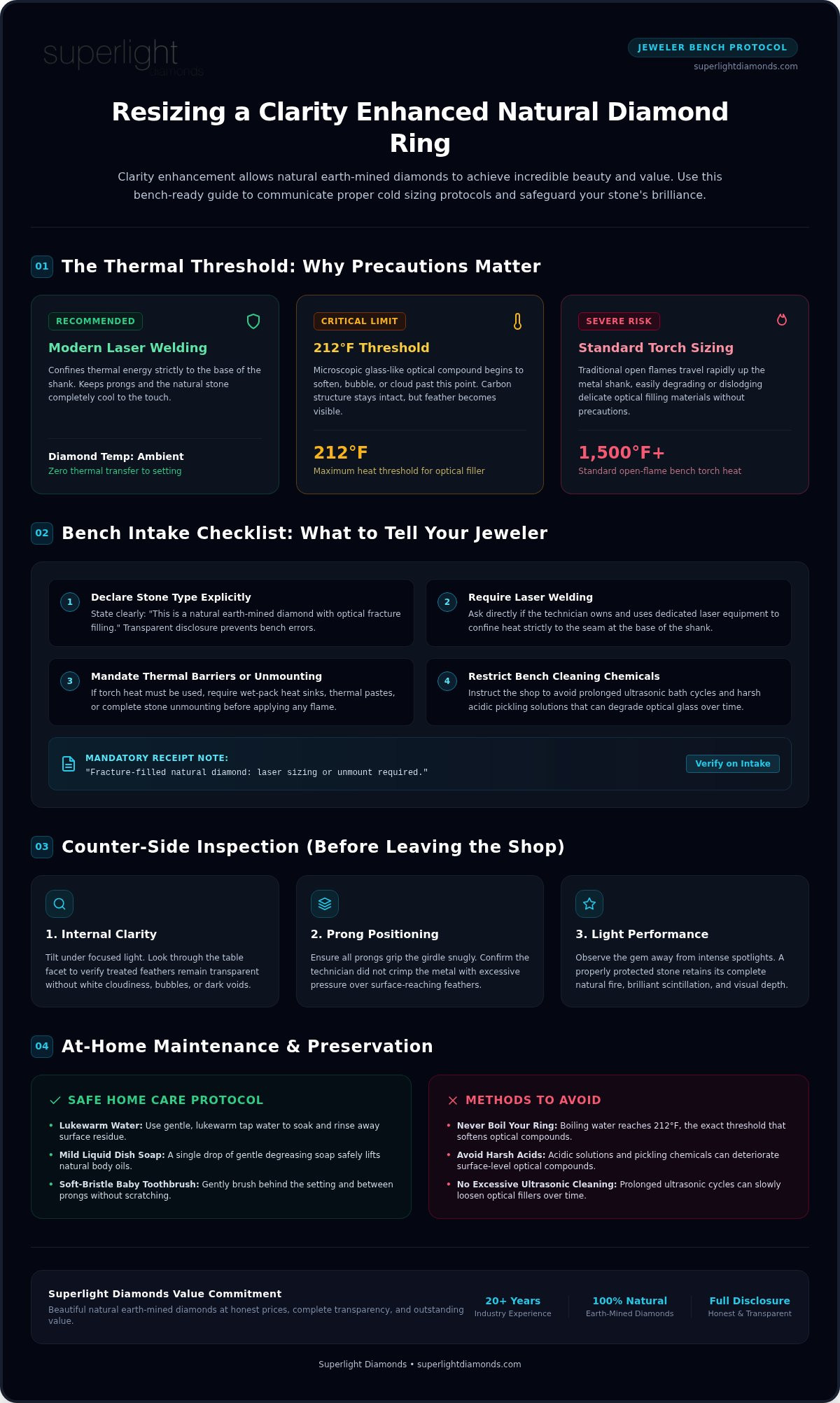
While natural earth-mined diamonds easily survive extreme heat, the optical glass compound does not. Traditional jewelers commonly utilize open-flame torches that reach well over 1,500°F during shank cutting and soldering. Without proactive precautions, this intense heat travels up the metal setting, easily liquefying, degrading, or dislodging delicate filling materials.
The Thermal Sensitivity of Fracture-Filled Natural Diamonds
Direct exposure past 212°F causes microscopic filling substances to cloud, bubble, or drain entirely from the host gem. The underlying natural carbon structure remains completely intact and undamaged, but the feather becomes visible again, returning the stone to its pre-treated clarity grade. Knowing what to tell your jeweler before resizing a clarity enhanced ring prevents this entirely. Our educational guide on clarity enhanced diamonds outlines the fundamentals of this treatment, proving that straightforward transparent instructions allow bench craftsmen to protect your gem using modern cold-sizing methods or focused laser welders.
What to Tell Your Jeweler Before Resizing: Checklist
Walking into a repair shop prepared removes all guesswork. To protect your setting and stone, hand this direct bench protocol to the staff:
- Declare the stone type: State clearly that your center stone is a natural earth-mined diamond with optical fracture filling.
- Require thermal barriers: Ask the bench jeweler to use protective wet-pack heat sinks, thermal pastes, or unmount the stone entirely before applying heat. Trade publications specifically caution bench jewelers never to expose these gems to high heat from a torch.
- Restrict cleaning chemicals: Mandate that the bench avoids prolonged ultrasonic cycles and acidic pickling solutions, both of which can degrade optical compounds over time.
Following this precise script for what to tell your jeweler before resizing a clarity enhanced ring ensures the shop handles your jewelry with proper care.
Demanding Laser Welding Over Traditional Open-Flame Torch Sizing
Modern laser welders focus a microscopic beam of energy strictly at the base of the shank. This confines thermal energy entirely to the seam, keeping the diamond prongs completely cool to the touch. Ask directly if their bench technician owns and uses dedicated laser equipment. Once confirmed, ensure their intake receipt explicitly notes "fracture-filled natural diamond: laser sizing or unmount required." Transparent disclosure keeps routine alterations stress-free. If you want to explore more stunning natural earth-mined options with complete disclosure, browse our collection at Superlight Diamonds.
How to Inspect and Protect Your Resized Ring After Bench Work
Before leaving the jeweler's counter, ask for a 10x gemological loupe. Inspecting the ring immediately ensures the bench followed your instructions and confirms your natural stone maintained its optical performance.
- Examine internal clarity: Tilt the diamond under focused light. Look through the table facet to verify that treated feathers remain transparent without white cloudiness, bubbles, or dark voids.
- Assess prong positioning: Ensure all prongs grip the girdle snugly. Confirm the technician did not crimp the metal with excessive pressure over surface-reaching inclusions.
- Check light performance: Observe the stone away from intense spot lighting. A properly treated gem keeps its natural fire, brilliant scintillation, and visual depth.
Pairing a systematic inspection with clear guidelines on what to tell your jeweler before resizing a clarity enhanced ring keeps the entire alteration process transparent and dependable.
Ongoing Care Routine for Resized Clarity Enhanced Rings
Preserving your resized ring at home requires straightforward maintenance. Clean your jewelry using lukewarm water, a drop of mild liquid dish soap, and a soft-bristle baby toothbrush to remove surface oils. Never boil your ring, and avoid household cleaners with concentrated ammonia or harsh acids. Transparent communication at the repair counter, paired with gentle everyday home cleaning, ensures your natural diamond continues delivering outstanding brilliance and exceptional value for a lifetime of daily wear.
Resize With Confidence and Total Transparency
Clear communication protects your investment. Knowing exactly what to tell your jeweler before resizing a clarity enhanced ring turns a stressful shop visit into a straightforward procedure. By requesting targeted laser welding, demanding written intake notes, and performing a quick 10x loupe inspection before heading home, you ensure your setting fits comfortably while preserving your center stone's optical integrity.
At Superlight Diamonds, we believe complete disclosure is the foundation of lasting confidence. Backed by over 20 years of trusted industry experience and more than 21,000 satisfied clients nationwide, we provide high-magnification photography, 360-degree videos, and honest specifications on every earth-mined stone. Ready to discover extraordinary brilliance and honest value? Explore genuine natural diamonds with total transparency at Superlight Diamonds and find your perfect ring today.
Frequently Asked Questions
Can a clarity enhanced diamond ring be resized safely?
Yes, resizing is safe when bench jewelers utilize proper cold-working protocols or modern laser welders. Knowing what to tell your jeweler before resizing a clarity enhanced ring guarantees they avoid open torches near the head. Protecting the gem with thermal barriers or temporarily unmounting it ensures the natural stone retains its optical properties and visual fire throughout the alteration.
Will an ultrasonic cleaner damage a clarity enhanced diamond ring?
Prolonged exposure to ultrasonic waves can compromise the treatment. Gemological research shows extended ultrasonic cycles loosen or draw out optical compounds over time. Always ask retail technicians to clean your piece by hand using lukewarm soapy water and a soft brush rather than dropping the ring into a commercial ultrasonic tank or steam jet.
What happens if a jeweler accidentally heats a fracture-filled diamond?
Intense heat causes microscopic filling compounds to melt, discolor, or vaporize from internal feathers. While the natural earth-mined diamond itself remains unharmed, the internal inclusions turn visible again, reverting the gem to its pre-enhanced clarity state. Clear disclosure on your intake receipt prevents bench errors and holds the repair service accountable.
Does laser ring sizing cost more than standard torch soldering?
Laser sizing sometimes carries a modest surcharge compared to torch work due to specialized equipment requirements. However, laser technology prevents accidental thermal exposure and avoids stone unmounting fees entirely. Reviewing what to tell your jeweler before resizing a clarity enhanced ring helps you select qualified repair shops equipped with dedicated laser machinery.