Loading... Please wait...
 EUR
EUR



Blog
Recent Posts
The Marquise Diamond Carat Illusion: How to Maximize Visual Size in 2026
Posted on
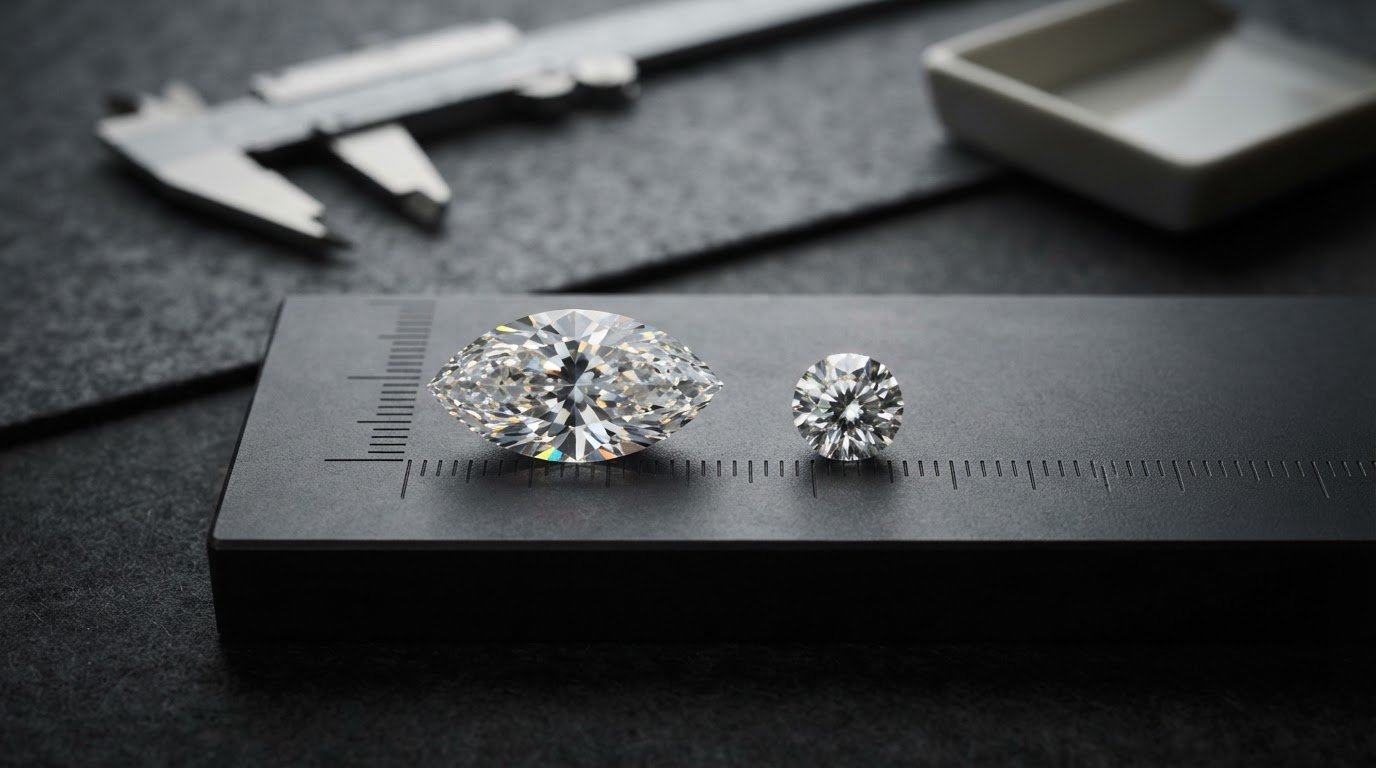
What if a diamond that looks larger isn’t the one with the higher carat weight? If you’re comparing stones, the marquise diamond carat illusion is a useful reminder to look beyond the number on the scale. A marquise’s long outline can make more of its surface visible from above, but the effect depends on the individual diamond’s measurements, proportions, and appearance.
Superlight Diamonds offers loose diamonds, including marquise and clarity-enhanced stones, through its website and no-reserve auctions on eBay. This guide explains how to compare face-up size and proportions, what to look for in a marquise’s appearance, and how to assess clarity enhancement. Before buying, check the details provided for the specific diamond, including its measurements, any grading report, and treatment disclosure.
Key Takeaways
- Understand the marquise diamond carat illusion by comparing face-up dimensions, not carat weight alone, when judging how large a stone may look.
- Use length-to-width ratio as a starting point, then assess the diamond’s appearance for a balance of spread and sparkle, including any bow-tie effect.
- Learn how clarity enhancement can make a larger natural, earth-mined diamond more accessible, and what details to review before choosing one.
- Compare each diamond’s available listing details and media, and consider no-reserve auctions as another way to explore value.
What is the Marquise Diamond Carat Illusion?
The marquise diamond carat illusion comes from the outline of a single diamond, not from a setting that combines smaller stones to imitate a larger one. Its elongated shape can make the diamond appear long and prominent from above. That does not mean every marquise looks large for its weight: compare the measurements and inspect the individual stone before deciding.
Surface Area vs. Carat Weight
Carat measures weight, not length, width, or visible size. Face-up area is the visible surface of a diamond when viewed from the top. Two diamonds weighing 1.00 carat can therefore have different visual footprints because of their shape and proportions. A 1.00-carat marquise will generally look longer than a 1.00-carat round brilliant, though the exact comparison depends on each stone’s dimensions and cut. The history of diamond cutting offers background on how cutting choices create distinct shapes and proportions.
The marquise’s pointed ends extend its outline, so its weight can appear spread along its length rather than concentrated in depth. But a long outline alone does not prove that a diamond is well-proportioned or bright. Compare the listed length and width, then look at the diamond face-up to see whether its visible spread matches your expectations.
The Finger Coverage Factor
When worn, a marquise’s length creates a strong line along the finger and can provide noticeable coverage. Its two pointed ends give it a more tapered, dramatic look than an oval’s rounded outline. A pear shape has one rounded end and one point, so it creates a different visual balance. If you are choosing between shapes, compare their actual dimensions and consider which outline you prefer rather than relying on carat weight alone.
Superlight Diamonds offers marquise diamonds alongside other loose diamond shapes. Compare the measurements and any available listing images or video to judge the appearance of the specific stone.
Optimizing Length-to-Width Ratios for Maximum Visual Impact
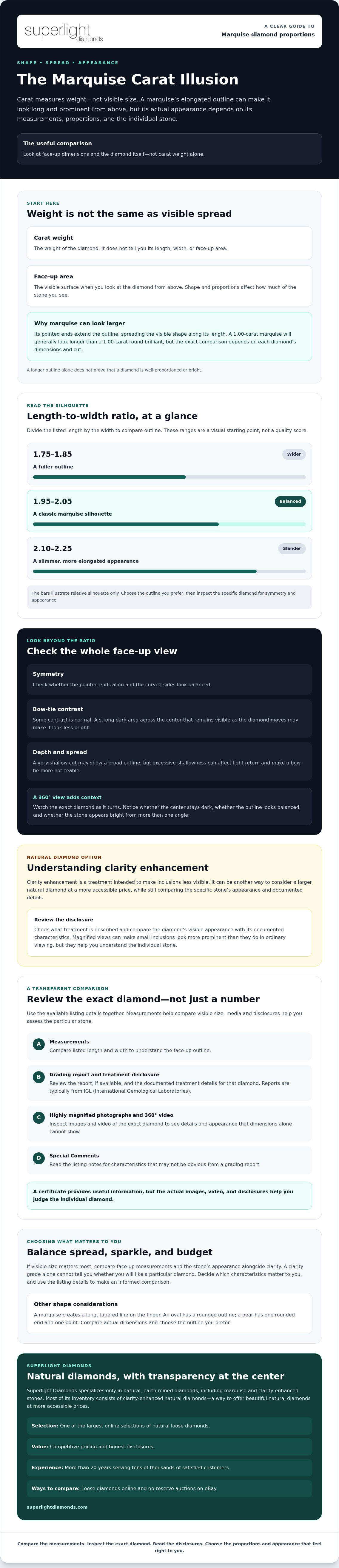
A marquise diamond’s length-to-width ratio compares its length with its width. A range of about 1.75 to 2.15 is often used as a visual reference, but the right silhouette is a matter of preference. Ratio alone cannot confirm sparkle, symmetry, or cut quality. For more context on the visual appeal of polished diamonds, consider how proportions affect the overall appearance, not just the outline.
The L/W Ratio Cheat Sheet
- 1.75–1.85: A wider, fuller outline.
- 1.95–2.05: A balanced, classic marquise silhouette.
- 2.10–2.25: A slimmer, more elongated appearance.
Use these ranges as a starting point, not a quality score. To compare stones, divide the length by the width shown in the listing, then check whether the outline looks as expected. Also inspect symmetry: the two ends should align, and the curved sides should look balanced. A ratio can describe a shape, but it cannot tell you whether you will like that particular diamond.
Assessing Bow-Tie and Depth
A very shallow cut may create a broad face-up outline, but excessive shallowness can affect light return and make a dark bow-tie across the center more noticeable. Some contrast is normal and can give the stone definition. A strong shadow that remains visible as the diamond moves may make it look less bright. The marquise diamond carat illusion is most appealing when the visible spread also works with the diamond’s overall appearance.
If a listing includes a 360° video, watch the exact diamond as it turns. Look for how much of the center stays dark, whether the outline appears balanced, and whether the diamond seems bright from more than one angle. Measurements can help you compare size, but the video can reveal visual features that dimensions do not capture. Superlight Diamonds offers natural marquise diamonds; compare the available details for each stone before choosing. Explore natural marquise diamonds and assess their proportions and appearance.
Clarity Enhancement: The Secret to Affordable High-Carat Looks
Clarity enhancement is a treatment intended to make inclusions less visible. It can give buyers another option when comparing diamond size and appearance, but it does not remove the need to review the specific stone and its disclosure. If you are considering one, check what treatment is described and compare the diamond’s visible appearance with its documented characteristics.
Maximizing Your Budget with Natural Stones
When comparing diamonds, decide which characteristics matter most to you. If visible size is a priority, compare face-up measurements and appearance alongside clarity, rather than focusing on a clarity grade in isolation. Magnification can make small inclusions look more prominent than they do in ordinary viewing, but it is still useful for understanding what is disclosed. Review the listing information and any available images, video, or grading report before deciding. Superlight Diamonds offers clarity-enhanced diamonds as well as other loose stones. The clarity enhanced diamonds buyer’s guide explains the process in more detail.
Comparing Enhanced and Unenhanced Pricing
Prices depend on the individual diamond and its characteristics. In some comparisons, a larger clarity-enhanced diamond may cost less than a smaller diamond without enhancement. Treat that as a possibility, not a standard price rule. Compare stones with similar characteristics, review treatment disclosures, and decide whether the larger stone’s appearance suits your preferences.
Clarity enhancement is a treatment intended to improve visual transparency. Treatment type and care considerations can vary, so do not assume every enhancement is permanent or has identical care requirements. Check the documentation and listing details for the specific diamond, and ask a qualified jeweler if you need help understanding them. This gives you a clearer basis for deciding whether a marquise diamond carat illusion, combined with clarity enhancement, fits your priorities and budget.
Beyond the Certificate: Using Magnified Media to Verify Size
A grading report can provide measurements and grading information, but it cannot show every part of a marquise diamond’s visual impression. Dimensions help you compare the outline, while symmetry and polish describe aspects of the stone’s finish. A report alone may not show how prominent the bow-tie looks or how the diamond appears as it moves. Assess the marquise diamond carat illusion using both documented details and available views of the specific stone.
Read the Report Alongside the Images
Superlight Diamonds offers both certified and non-certified stones, so report availability can vary by listing. If a report is provided, check the listed dimensions and grading details, then compare them with the listing images or video. Look at the stone face-up and, where available, from different angles. Magnification can help you examine small characteristics, but it also makes them appear larger than they do to the unaided eye. For another guide to a grading detail, see our diamond color scale guide.
Use Special Comments to Add Context
Read each listing’s description carefully for details that help explain the individual diamond’s characteristics. A note about how a stone faces up, for example, is useful context, but it should not replace checking the measurements and available images. Assess the details together rather than relying on a single comment or report. That makes it easier to compare one listing with another on the qualities that matter to you.
Review the available documentation and listing details together, then explore our natural marquise diamonds to compare their documented characteristics and visual appearance.
Maximizing Your Marquise Value at Superlight Diamonds
A larger-looking diamond is a good value only if its proportions, appearance, and disclosures fit your priorities. Superlight Diamonds sells loose diamonds through its website and no-reserve auctions on eBay. Compare each stone’s details rather than assuming that a lower price or higher carat weight tells the whole story.
Direct Sourcing and No-Reserve Auctions
In a no-reserve auction, bidding begins without a preset reserve price, and the final price depends on bidding. An auction does not guarantee a particular deal or establish a definitive value for a diamond. Before bidding, review the listing’s available information, including its measurements, any grading report, treatment disclosure, and images or video. Our guide to no-reserve diamond auctions explains what to consider.
Superlight Diamonds was founded in 2001 and has served more than 21,000 clients. Whether shopping through the website or an auction listing, use the details for the specific stone to make your comparison. There is no guarantee that a particular marquise will create a specific visual effect, so use this checklist to focus on the factors you can assess:
- Compare face-up measurements and length-to-width ratio.
- Watch the exact diamond’s 360° video, if available, for bow-tie and overall appearance.
- Read any grading report alongside the listing’s other details.
- Confirm that any clarity enhancement is disclosed and understood.
- Choose the balance of size, appearance, and budget that feels right to you.
Browse marquise cut diamonds for sale and compare each stone’s details to find a marquise diamond carat illusion that suits your preferences.
Choose a Marquise That Delivers the Look You Want
The marquise diamond carat illusion comes from the shape’s elongated outline and visible spread, but carat weight alone cannot tell you how large a stone will look. Compare dimensions and proportions, then assess the specific diamond using the listing details and any available images or video. If you are considering clarity enhancement, review its disclosure and decide whether the stone’s appearance and characteristics meet your needs.
Superlight Diamonds offers marquise and clarity-enhanced diamonds, along with a selection of other loose diamond shapes. Its website and eBay listings provide different ways to compare available stones, including no-reserve auctions. Check the details of each listing and compare the stones on the qualities that matter most to you.
Find your high-impact marquise diamond at Superlight Diamonds. Compare available stones by their measurements, disclosures, and appearance.
Frequently Asked Questions
Does a marquise diamond really look larger than a round diamond?
Often, a marquise diamond appears larger than a round diamond of the same carat weight because its elongated shape can show more surface area from above. The exact visual difference depends on each stone’s measurements and proportions. Compare actual dimensions and view the specific diamonds, since carat measures weight, not how large a diamond looks face-up.
What is the best length-to-width ratio for a marquise diamond carat illusion?
A ratio near 2:1 is a common choice for a balanced, elongated marquise look, while ratios from about 1.75 to 2.25 offer a range from fuller to slimmer outlines. There is no single best ratio for every buyer. Compare measurements and inspect the diamond’s symmetry and appearance to find the silhouette you prefer.
Are clarity enhanced marquise diamonds real natural diamonds?
Clarity-enhanced marquise diamonds are natural diamonds that have undergone a treatment intended to make inclusions less visible. Enhancement does not change the diamond’s origin, and the treatment should be disclosed. Superlight Diamonds offers clarity-enhanced diamonds. Review the listing details and any documentation so you understand the individual stone and its treatment.
How much can I save by choosing a clarity enhanced marquise stone?
Savings vary by diamond, including its carat weight, color, clarity, proportions, and overall appearance, so there is no single amount to expect. In some comparisons, a larger clarity-enhanced diamond may cost less than a smaller untreated one. Compare individual listings and focus on whether the stone’s appearance and disclosed characteristics suit you.
What is the “bow-tie” effect in marquise diamonds and should I avoid it?
The bow-tie is a dark, bow-shaped area of contrast that can appear across the center of a marquise diamond. A faint bow-tie can be normal, but a pronounced shadow may reduce the stone’s brightness. Review the exact diamond in available video or images from different angles to judge how noticeable it is, rather than relying on a grading report alone.
Why does Superlight Diamonds use IGL certification instead of GIA?
Superlight Diamonds offers both certified and non-certified stones, so check the individual listing to see whether a report is provided and which laboratory issued it. If the diamond has an IGL report, review the details on that report alongside the listing information. A laboratory report is one part of your assessment; also compare the stone’s measurements, treatment disclosure where relevant, and appearance.
Can I see the actual diamond before I bid or buy?
Check the individual listing for images, video, and other available details of the diamond before deciding. Review those materials alongside any certificate or grading report: images can help you assess appearance, while a report records graded information. If a detail you need is not shown in the listing, seek clarification before bidding or buying.
Is the marquise cut durable enough for an everyday engagement ring?
A marquise diamond can be worn every day, but its pointed ends may be more exposed to knocks than a rounded shape. A protective setting can help shield those tips. Ask a qualified jeweler about suitable protection and care for the specific diamond and setting, and remove the ring during activities that could expose it to impact.
Compare marquise diamonds at Superlight Diamonds and review each listing’s details to find a stone that fits your preferences.