Loading... Please wait...
 EUR
EUR



Blog
Recent Posts
The Science of Diamond Sparkle: Brilliance, Fire, and Scintillation Explained
Posted on
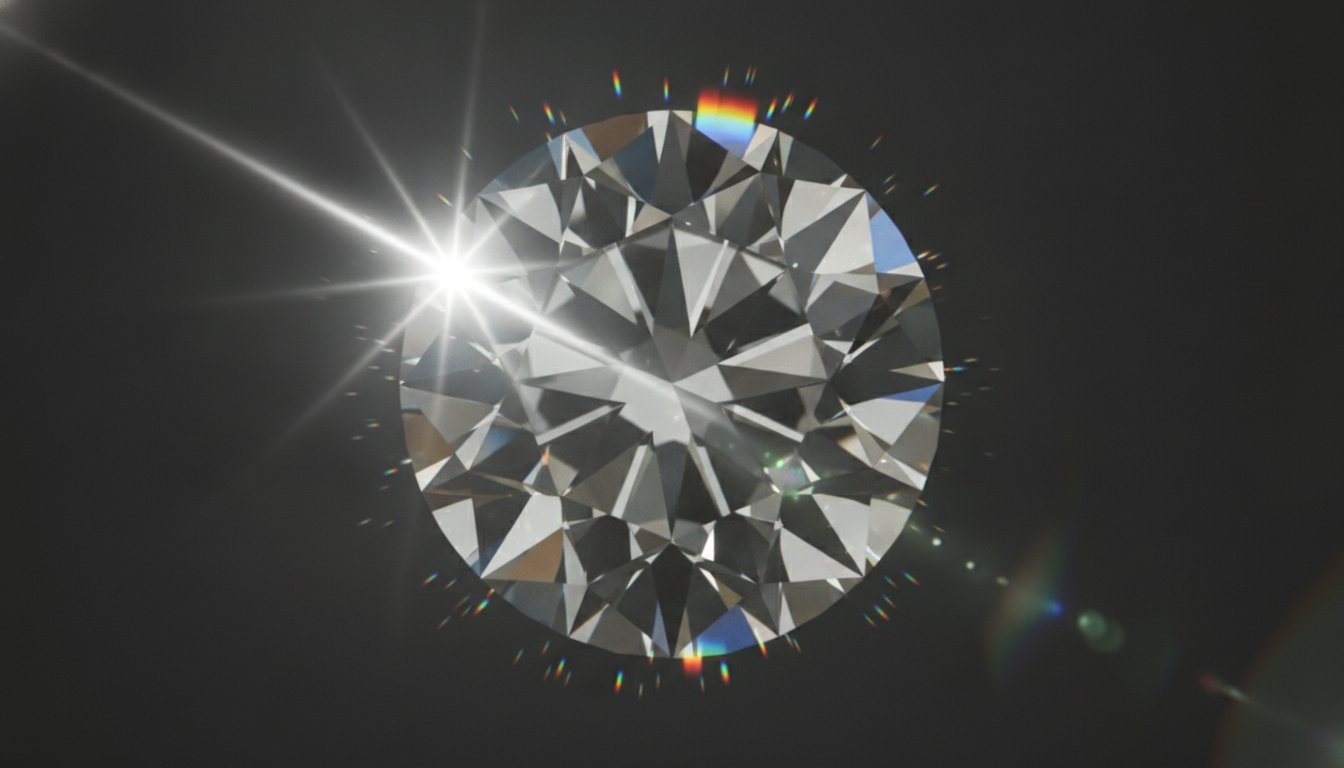
What if the size of your diamond matters less than the way it handles light? Many buyers assume that a higher carat weight automatically leads to more presence, but a poorly cut two-carat stone will often look smaller and duller than a well-proportioned one-carat gem. The secret lies in the technical precision of diamond sparkle, which is a measurable result of light physics rather than a subjective quality. You don't have to be a gemologist to avoid buying a dead stone online; you just need to understand the specific geometric factors that drive light return.
We recognize that technical terms like scintillation and fire can be confusing when you're trying to make a significant investment. This article provides a clear framework for evaluating light performance so you can choose a stone that truly stands out. We'll explain the three pillars of diamond optics, compare which cuts offer the best performance, and explore how clarity enhancement allows you to maximize your budget for significantly better value. By the end of this guide, you'll have the confidence to select loose diamonds at wholesale prices that consistently outperform retail alternatives.
Key Takeaways
- Distinguish between the technical definitions of brilliance, fire, and scintillation to accurately describe a stone's visual performance.
- Understand why cut quality is the most significant factor in maximizing diamond sparkle and preventing light leakage through the bottom of the gem.
- Identify which diamond shapes, such as the Round Brilliant, are mathematically engineered for the highest levels of light return.
- Discover how clarity enhancement provides approximately 30% better value by removing internal inclusions that would otherwise block light.
- Establish a logical framework for evaluating light performance so you can purchase high-quality loose diamonds at wholesale prices with confidence.
What is Diamond Sparkle? Defining Brilliance, Fire, and Scintillation
To the untrained eye, a diamond's beauty is a singular, dazzling effect. However, gemologists identify diamond sparkle as a complex interplay of light physics occurring within the stone's internal structure. This visual performance isn't magic; it's the result of light entering the diamond, striking the facets at specific angles, and returning to the observer's eye. Total internal reflection serves as the fundamental engine behind all diamond sparkle, ensuring that light is trapped and redirected rather than leaking through the bottom of the stone. By mastering the technical vocabulary of light performance, savvy buyers can move beyond vague descriptions and communicate precise preferences when dealing with wholesale suppliers.
Gemologists break down the overall visual impact of a stone into three distinct technical categories:
- Brilliance: The total amount of white light reflected back to the viewer.
- Fire: The dispersion of light into spectral, rainbow colors.
- Scintillation: The pattern of light and dark flashes seen when the stone moves.
Brilliance: The Foundation of White Light
Brilliance represents the bright white light that reflects from both the surface and the interior of the diamond. It's the most immediate indicator of a stone's health and quality. This effect is primarily dictated by the precision of the pavilion facets, which must be cut at exact angles to ensure light doesn't "leak" out of the sides. Historically, the Brilliant cut was engineered specifically to maximize this return of white light. When a diamond possesses high brilliance, it maintains a bright, lively appearance even in low-light environments like a dimly lit restaurant, where a poorly cut stone would appear dark or "dead."
Fire and Scintillation: The Rainbow and the Flash
While brilliance provides the white light, fire adds the character. Fire refers to the dispersion of light into its component spectral colors, creating the vivid rainbow flashes often seen in high-quality stones. This occurs when light is refracted as it exits the crown facets. Scintillation, on the other hand, is the dynamic "on-off" flash pattern observed when the diamond, the light source, or the viewer moves. It creates the sense of movement and life within the gem.
The balance between these two effects is often a result of facet size and placement. Larger facets generally produce more concentrated bursts of fire, while smaller facets tend to increase the frequency of scintillation flashes. A well-balanced stone provides a harmonious blend of both, ensuring the diamond looks spectacular from every angle. Understanding these distinctions helps you decide if you prefer the bold, colorful flashes of fire or the rapid, twinkling effect of high scintillation. This level of technical precision is what separates a standard retail stone from a high-performance gem curated for maximum diamond sparkle.
The Role of Cut Quality in Maximizing Light Return
While many consumers focus on carat weight or color, cut quality remains the primary driver of diamond sparkle. It's the only one of the 4Cs that is directly controlled by human skill rather than nature. A diamond with perfect color and clarity will still appear dark and lifeless if the cut is poor. When a stone is cut with incorrect proportions, light enters through the crown but "leaks" out through the pavilion instead of reflecting back to the eye. This loss of light results in a dull appearance that significantly diminishes the stone's value and visual appeal.
Standardized grading scales from laboratories like the GIA provide a baseline for evaluating this performance. Grades such as Excellent, Very Good, and Good help buyers identify stones with the best optical potential. For savvy wholesale buyers, prioritizing an "Excellent" cut grade is non-negotiable. This ensures that the stone has been engineered to capture and return the maximum amount of light, creating the intense scintillation that makes a diamond stand out. If you are looking for high-performance stones, browsing the Round Brilliant Diamonds available in professional auctions is an effective way to see these cut grades in action.
Proportions and Symmetry
The path light takes through a stone is determined by specific measurements, specifically the table percentage and depth ratio. These proportions dictate how a diamond's cut maximizes sparkle by reflecting light internally before directing it back out through the top. Symmetry is equally vital; it ensures that every facet is mirrored perfectly across the stone. When a diamond achieves the "Triple Excellent" designation, it means the cut, symmetry, and polish have all reached the highest industry standard. This synergy creates a consistent, high-energy diamond sparkle that is visible even from a distance.
The "Hearts and Arrows" Phenomenon
Achieving a perfect "Hearts and Arrows" pattern requires a level of precision that goes beyond standard Excellent cuts. This effect is visible only through a specialized viewer, showing eight symmetrical hearts from the bottom and eight arrows from the top. While some retailers use this as a marketing label to justify higher prices, it's a genuine indicator of superior optical symmetry. A hearts and arrows diamond doesn't necessarily have more "total" light return than a standard Excellent cut, but the light it does return is distributed with extreme uniformity. Identifying this level of symmetry in loose stones ensures that the sparkle pattern is crisp, balanced, and free of "dead" facets.
Diamond Shapes Compared: Which Cuts Sparkle the Most?
While cut quality determines how efficiently a stone uses light, the physical shape of the diamond dictates the specific personality of that light. Not all shapes are created equal when it comes to diamond sparkle. The way a stone's facets are arranged changes the balance between white light return and rainbow dispersion. Understanding these geometric differences allows you to prioritize the visual effects you value most, whether you're looking for a blinding flash or a more subtle, sophisticated glow. For example, Round Brilliant Diamonds were mathematically engineered specifically for maximum brilliance, while step cuts like Emerald Cut Diamonds prioritize clarity and a "hall of mirrors" elegance over intense flash.
Round Brilliant vs. Princess Cut
The Round Brilliant remains the undisputed king of light return because its 58 facets are aligned to reflect light directly back to the viewer. It's the standard against which all other shapes are measured. In contrast, Princess Cut Diamonds offer a modern, square silhouette with a different light performance profile. They utilize chevron facets on the pavilion to create a high degree of fire, or spectral color dispersion. While a round stone typically offers more total brilliance, a princess cut provides a unique, intense scintillation that many find appealing. From a value perspective, princess cuts are often more affordable per carat than rounds, allowing buyers to secure a larger stone with significant diamond sparkle for the same budget.
Radiant and Cushion Cuts: The Modern Sparkle
Radiant Cut Diamonds are a hybrid choice, combining the elegant outline of a rectangular stone with the facet structure of a brilliant cut. With up to 70 facets, radiants are designed to maximize fire and are often the top choice for those who want the silhouette of an emerald cut without sacrificing light performance. They produce what is often called a "crushed ice" effect, where light twinkles rapidly across the stone's surface.
Cushion Cut Diamonds offer a softer, "pillowy" aesthetic and come in two primary sparkle styles. The "Crushed Ice" cushion features many small facets that create a continuous, twinkling scintillation. Conversely, "Chunky" or antique-style cushions have larger facets that produce broader, slower flashes of light. When choosing a fancy shape, you can avoid sacrificing the performance of a round stone by looking for stones with excellent symmetry and depth. This ensures that even non-round shapes maintain the high-energy scintillation required to stand out in any setting.
Practical Tips to Maximize Sparkle on a Budget
Achieving a high-performance look doesn't require an unlimited budget or a flawless stone. Many buyers mistakenly believe they must purchase an Internally Flawless (IF) or VVS grade diamond to ensure it looks spectacular. In reality, clarity grades primarily measure the rarity of the stone rather than its ability to reflect light. As long as a diamond is eye-clean, meaning its inclusions aren't visible to the naked eye, the microscopic imperfections won't hinder the diamond sparkle. By shifting your focus from rarity to light performance, you can secure a larger, more impressive stone without overpaying for invisible characteristics.
Clarity Enhancement and Light Performance
Clarity enhancement acts as a bridge between affordability and elite light performance. Techniques like laser drilling and fracture filling are specifically designed to clear the path for light to travel through the stone. Laser drilling removes dark carbon spots that would otherwise absorb light; fracture filling uses a microscopic amount of specialized resin to make internal "feathers" invisible. These processes don't just improve the look of the stone; they allow for approximately 30% more visual brilliance for the same price as a non-enhanced natural stone. At Superlight Diamonds, we prioritize transparency in this process, helping savvy buyers find Clarity Enhanced Diamonds that offer a high-clarity appearance at wholesale market rates.
Settings and Maintenance
The way you mount your diamond significantly impacts how much light it can capture. A 4-prong setting is often superior to a 6-prong or bezel setting because it leaves more of the diamond's surface area exposed. This allows light to enter the stone from more angles, which is essential for maintaining consistent diamond sparkle. Additionally, adding a pavé band can create an illusion of greater overall brilliance by surrounding the center stone with smaller, highly reflective points of light.
Even the best-cut diamond will lose its fire if it isn't maintained. Diamonds are naturally lipophilic, meaning they attract skin oils, lotions, and soaps like a magnet. This creates a thin film over the facets that disrupts the path of light. To maintain that "new diamond" flash, follow a simple three-step routine: soak the stone in warm water with a few drops of mild dish soap, gently scrub the pavilion with a soft-bristle toothbrush, and rinse thoroughly. Keeping the facets clean ensures that the light physics we've discussed can work at 100% efficiency, keeping your investment looking its best every day.
Buying Sparkle: Why Superlight Diamonds is the Expert Choice
Selecting a stone that exhibits peak diamond sparkle requires more than just reading a grading report; it demands a source with deep gemological expertise. Since 2001, Superlight Diamonds has specialized in curating stones that prioritize light return over inflated rarity metrics. Our team vets every stone for the specific proportions that guarantee brilliance and fire, ensuring our inventory of loose diamonds meets the high-performance standards discussed throughout this guide. By focusing on volume and transparency rather than high-pressure retail tactics, we provide a reliable path to owning a world-class gemstone.
The Advantage of No-Reserve Auctions
Our no-reserve eBay auctions provide a unique, transparent platform where the market determines the true value of high-sparkle stones. This high-volume turnover ensures a constant stream of fresh inventory, allowing buyers to choose from the latest cuts and shapes. When you're bidding on diamonds with high scintillation potential, the transparency of the auction process is a major asset. You can view certified details and high-resolution media to evaluate how light interacts with the facets before placing a bid. This model removes the arbitrary markups found in luxury showrooms, passing the savings directly to the consumer.
A Legacy of Trust and Transparency
With a history of serving over 21,000 satisfied clients, we've built our reputation on being a transparent educator in the gemstone industry. We recognize that terms like clarity enhancement can be intimidating for first-time buyers. That's why we prioritize clear, business-like communication regarding every stone's history and grading. Our goal is to empower you to make an informed decision based on facts and technical performance. Whether you are looking for a classic round stone or a modern fancy shape, our inventory is curated to offer the best possible light return for your investment. Browse our current no-reserve diamond auctions for maximum sparkle and experience the difference that 25 years of expertise makes in your purchase.
Secure Maximum Brilliance for Your Investment
Understanding the physics of light return transforms the diamond buying process from a stressful gamble into a calculated decision. You now have the technical framework to evaluate cut proportions and shape-specific scintillation patterns with professional confidence. By prioritizing light performance over invisible rarity grades and considering the significant value offered by clarity enhancement, you can secure a stone that commands attention in any setting. This scientific approach ensures that your investment is focused on the visual qualities that truly matter.
Since 2001, Superlight Diamonds has served over 21,000 satisfied clients by providing transparent access to high-performance loose diamonds and certified gems. Our top-rated eBay seller status and focus on wholesale market pricing ensure that you don't have to sacrifice diamond sparkle to stay within your desired budget. We invite you to explore our extensive inventory of Round Brilliant and fancy cut stones to see how technical precision meets exceptional value. Your path to a brilliant, high-performance diamond starts with making an informed choice grounded in science and market transparency.
Find your perfect high-sparkle diamond at Superlight Diamonds
Frequently Asked Questions
Which diamond cut has the most sparkle?
The Round Brilliant cut is the industry standard for maximum light return. Its 58 facets are aligned to ensure light reflects directly back to the eye rather than leaking through the bottom or sides. While fancy shapes like Radiant or Princess cuts offer significant scintillation, the mathematical precision of the round cut ensures it remains the most effective shape for achieving consistent diamond sparkle across various lighting environments.
Do clarity enhanced diamonds sparkle less than natural diamonds?
Clarity enhanced diamonds typically exhibit superior light performance compared to untreated stones with visible inclusions. These enhancements, such as laser drilling or fracture filling, remove internal obstacles that would otherwise block or absorb light. By clearing these paths, the stone allows for better total internal reflection. This process effectively boosts the brilliance of the stone, providing a high-performance look at a lower price point than a naturally flawless gem.
Why does my diamond look dull in certain lighting?
Diamonds require a direct light source to perform, and diffused lighting often masks their true potential. In environments with soft, overcast light or fluorescent office tubes, the stone may lack the sharp flashes known as scintillation. To see your stone's full diamond sparkle, you need point-source lighting, such as sunlight or halogen spotlights, which allows the facets to catch and reflect individual beams of light with high intensity.
How often should I clean my diamond to keep it sparkling?
You should aim to clean your diamond at least once a week to maintain its optical performance. Diamonds are naturally lipophilic, which means they attract oils from your skin, lotions, and hair products. Even a thin layer of grease on the pavilion facets can disrupt the path of light, causing a high-quality stone to appear dead. A simple soak in warm, soapy water followed by a gentle scrub will restore its original flash.
Can a lower clarity grade diamond still have great sparkle?
A lower clarity grade does not prevent a stone from having exceptional sparkle as long as the inclusions are not light-blocking. Stones graded as SI1 or SI2 can be eye-clean, meaning the imperfections are invisible without magnification. Because cut quality is the primary driver of light return, an SI grade stone with an Excellent cut will consistently out-sparkle a Flawless stone with a Fair or Poor cut grade.
What is the difference between fire and brilliance?
Brilliance refers to the total amount of white light reflected back to your eye, while fire is the dispersion of light into spectral rainbow colors. Brilliance provides the foundational brightness of the stone, whereas fire adds the vivid, colorful flashes seen when the diamond moves. A high-quality cut balances these two effects, ensuring the stone looks both bright and colorful rather than having only one dominant characteristic.
Is a bigger diamond guaranteed to have more sparkle?
Carat weight is a measurement of mass, not a guarantee of visual performance. A larger diamond with poor proportions will often look smaller and duller than a smaller, perfectly cut stone because it leaks light through the sides or bottom. For maximum impact, it's better to prioritize cut quality over carat weight. This ensures the stone has the necessary geometry to return light efficiently to the observer.
How do I know if a diamond cut is Excellent when buying online?
You can verify a diamond's cut grade by reviewing its official gemological grading report from an authority like the GIA. Look specifically for the Cut Grade category, where Excellent represents the highest level of precision. When buying online, it's also essential to check the polish and symmetry grades. At Superlight Diamonds, we provide these certifications and use high-resolution media to demonstrate the stone's actual light performance before you bid.