Loading... Please wait...
 USD
USD



Recent Posts
Does Ultrasonic Cleaning Damage Fracture-Filled Diamonds? Essential Care Guide
Posted on
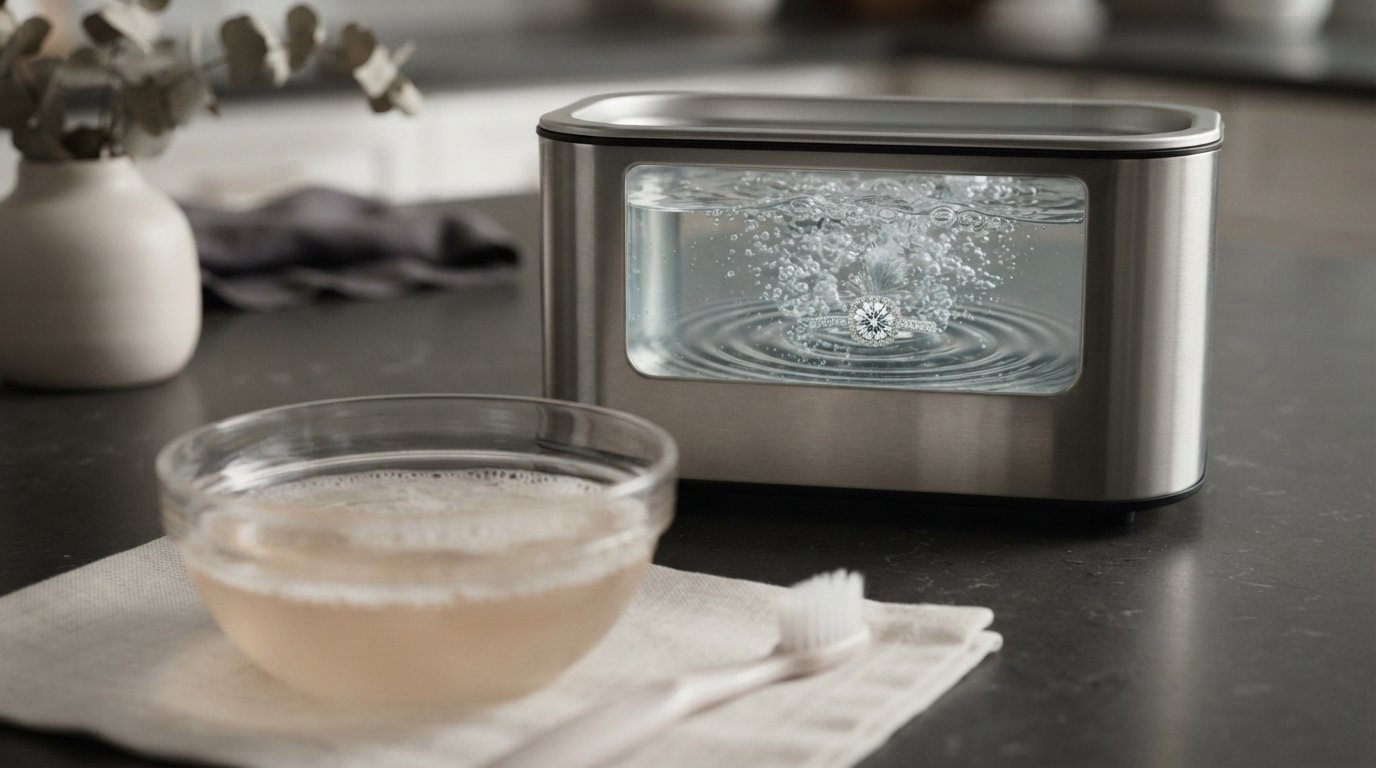
A high-tech ultrasonic jewelry bath promises effortless sparkle, but pairing it with the wrong stone can quickly lead to heartbreak. If you cherish an enhanced natural stone, you are likely asking: does ultrasonic cleaning damage fracture filled diamonds? The definitive answer is yes. While the natural earth-mined diamond itself remains remarkably durable, rapid acoustic sound waves can shatter, cloud, or dislodge the optical glass used to feather-fill natural surface inclusions.
Fortunately, you don't need an impossible care routine to keep your favorite jewelry dazzling. In this guide, we explain exactly how ultrasonic cavitation impacts clarity-treated gems and share simple, jeweler-approved steps to clean your ring safely on your own counter. Here is everything you need to protect your diamond's brilliant fire with complete confidence.
Key Takeaways
- Understand why the direct answer to whether does ultrasonic cleaning damage fracture filled diamonds is yes, and how acoustic cavitation alters optical glass treatments.
- Discover simple, highly effective at-home cleaning methods using warm water and mild dish soap that protect your stone's brilliance without harsh equipment.
- Learn the proper technique for using an ultra-soft baby toothbrush to lift daily oils from behind prongs and pavilion facets safely.
- Find out the essential intake instructions to share with your local bench jeweler before ring resizings or routine prong retipping to safeguard thermal stability.
How Ultrasonic Cleaners Affect Fracture-Filled Diamonds
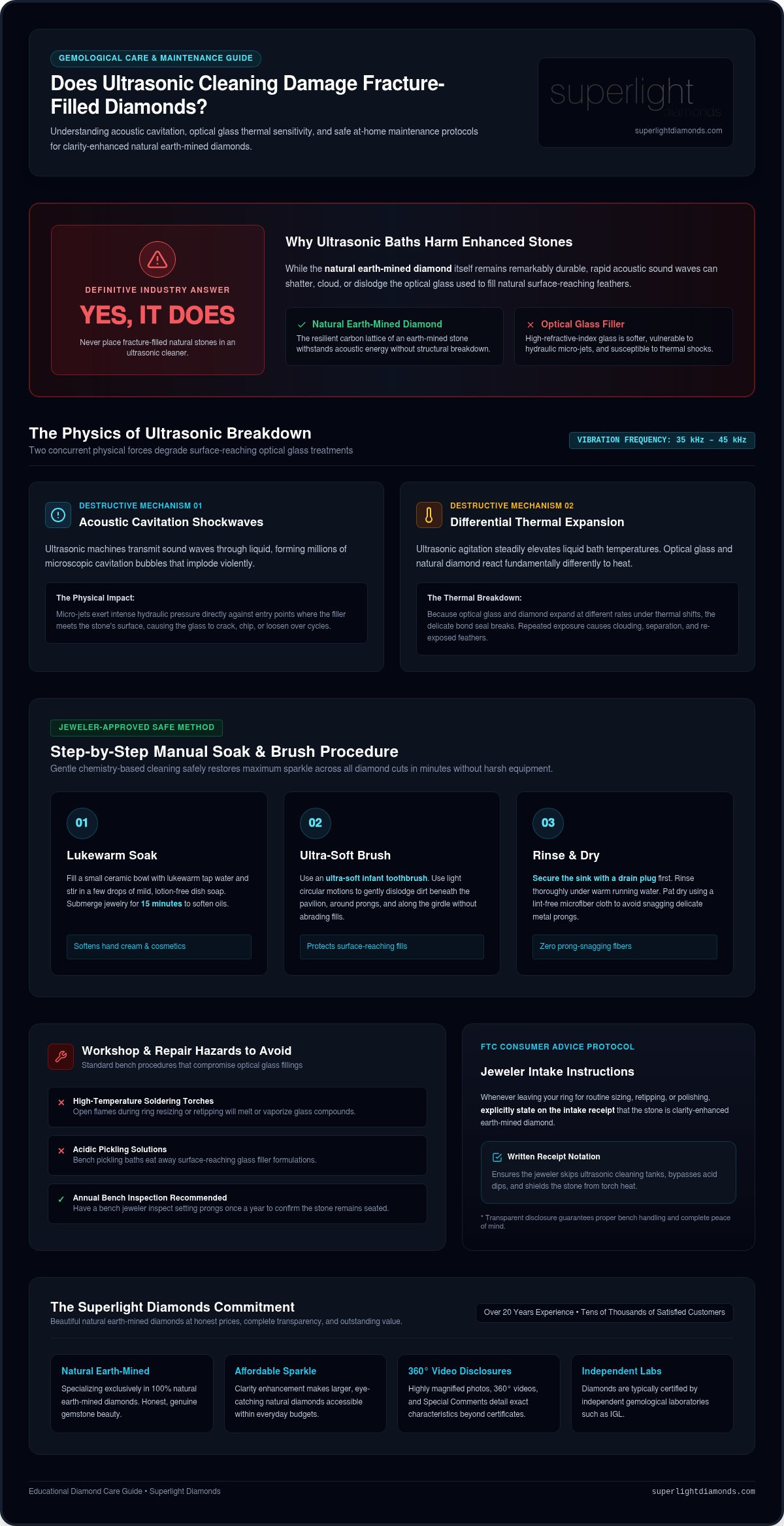
Fracture filling is an innovative optical glass enhancement that infuses a specialized, high-refractive-index compound into surface-reaching natural feathers, rendering internal characteristics virtually invisible to the naked eye. Ultrasonic machines clean jewelry by transmitting high-frequency sound waves, typically vibrating between 35 kHz and 45 kHz, through a liquid bath. This process generates millions of microscopic cavitation bubbles that implode violently to scrub away grime. So, does ultrasonic cleaning damage fracture filled diamonds over routine maintenance cycles? Yes, it does. While the natural stone remains completely safe, cavitation shockwaves and bath temperatures place direct physical strain on the optical glass, causing it to cloud, crack, or dislodge, as outlined in detailed overviews of fracture filling diamond treatments.
Cavitation Mechanics and Filler Thermal Sensitivity
Cavitation micro-jets exert intense hydraulic pressure directly against the microscopic entry points where the filler meets the stone's surface. The resilient carbon lattice of an earth-mined diamond easily withstands acoustic energy, but the softer glass filling can't absorb identical mechanical force. Ultrasonic agitation also steadily elevates liquid temperatures. Because optical glass and natural diamond expand at different rates under thermal shifts, this differential expansion breaks the filler's delicate seal. Over time, repeated exposure causes the compound to cloud or separate, re-exposing the pre-existing feather. Understanding these simple physical properties ensures you protect your ring properly, as detailed in our clarity enhanced diamonds guide.
Safe At-Home Cleaning Routines for Enhanced Stones
Keeping an enhanced natural gem radiant doesn't demand complicated equipment or harsh commercial formulas. Everyday cosmetics, hand creams, and sebum cling to diamond surfaces naturally, muting their brilliance over time. Knowing that the answer to whether does ultrasonic cleaning damage fracture filled diamonds is an absolute yes, adopting a gentle, chemistry-based cleaning method at home ensures your ring stays bright without risking the clarity treatment. Reliable trade standards, including official GIA guidance on ultrasonic jewelry cleaners, consistently recommend simple non-invasive soaking to safeguard treated natural diamonds.
Step-by-Step Manual Soak and Brush Procedure
This straightforward process safely restores maximum sparkle across all natural diamond cuts in minutes:
- Prepare a gentle soak: Fill a small ceramic bowl with lukewarm tap water and stir in a few drops of mild, lotion-free dish soap. Submerge your jewelry for fifteen minutes to soften accumulated oils.
- Brush with care: Take an ultra-soft infant toothbrush and gently clean around the setting. Light circular motions dislodge dirt beneath the pavilion, around prongs, and along the girdle without abrading surface-reaching fills.
- Rinse and dry: Secure the sink basin with a drain plug before rinsing your piece thoroughly under warm running water. Pat dry using a lint-free microfiber cloth to avoid snagging delicate metal prongs.
Practicing this regular maintenance routine preserves lifelong fire. For buyers seeking impressive natural earth-mined stones with exceptional transparency, explore the curated inventory at Superlight Diamonds to discover remarkable value.
Long-Term Maintenance and Bench Jeweler Care Protocols
Maintaining fine natural gemstone jewelry requires an occasional professional checkup alongside your weekly at-home wash. Having a local bench professional inspect setting prongs once a year guarantees your natural diamond remains firmly seated without shifting. While owners frequently investigate whether does ultrasonic cleaning damage fracture filled diamonds before cleaning rings at home, professional workshop environments present their own distinct hazards. High-temperature soldering flames and acidic pickling solutions will quickly compromise optical fillings if proper bench protocols are ignored. Choosing sturdy prong or bezel mountings, such as those examined in our round brilliant loose diamonds guide, provides reliable, long-term stone protection for daily wear.
Communicating With Jewelers Before Ring Repairs
Whenever you leave your ring for routine sizing, retipping, or polishing, explicitly state on the intake receipt that the natural earth-mined stone is clarity enhanced. Under official FTC consumer advice on treated gemstones, transparent disclosure ensures proper handling across every service level. Bench jewelers routinely manage clarity-treated diamonds without incident by applying these standard safety measures:
- Shielding against open flame: Soldering torches exceed 1,000°C, well above the 300°C to 400°C threshold where glass compounds soften. Jewelers apply specialized thermal barrier paste or unmount the diamond entirely before heating the metal shank.
- Bypassing industrial pickling acids: Jewelers avoid sulfuric or hydrofluoric acid baths, which etch glass fillers, using gentle neutralizing rinses instead.
- Opting out of commercial sonics: Workshop staff wash the finished mount manually, respecting the fact that does ultrasonic cleaning damage fracture filled diamonds during back-room finishing steps.
Transparency creates effortless ownership. At Superlight Diamonds, we certify our inventory through independent labs like IGL and pair listings with detailed Special Comments and 360-degree videos, ensuring you know every attribute of your natural stone.
Preserving Your Natural Diamond's Lifelong Fire
Caring for clarity-enhanced jewelry doesn't require difficult maintenance or costly equipment. Knowing that does ultrasonic cleaning damage fracture filled diamonds gives you the clear insight needed to protect your ring, while gentle dish soap and an ultra-soft brush keep your pavilion facets dazzling. Proactively alerting your jeweler to your diamond's treatment ensures seamless bench repairs for life.
Since 2001, Superlight Diamonds has served over 21,000 satisfied customers seeking stunning natural earth-mined diamonds at transparent prices. As a top-rated seller hosting no-reserve auctions, we verify every stone through independent IGL certification, 360-degree videos, and detailed Special Comments. Ready to discover extraordinary size and value? Explore Certified Natural Diamonds at Superlight Diamonds with total confidence today.
Frequently Asked Questions
Can an ultrasonic cleaner ruin a fracture-filled diamond permanently?
No, the natural diamond itself cannot be ruined, but acoustic cavitation can permanently dislodge or fracture the optical glass filler. While the underlying earth-mined crystal lattice remains intact, the original surface-reaching feather will reappear. Fortunately, clarity enhancement isn't irreversible, meaning a specialty laboratory can clean out the damaged compound and re-treat the natural stone to restore its original appearance.
What should I do if my enhanced diamond was cleaned ultrasonically?
Inspect the stone immediately under good lighting with a magnifying loupe to check for cloudiness or visible white lines. If you notice structural changes, stop wearing the piece to prevent dirt from packing into exposed crevices. Because does ultrasonic cleaning damage fracture filled diamonds by fracturing the glass, contact a reputable dealer specializing in treated natural diamonds to assess re-enhancement options.
Can steam cleaners damage clarity-enhanced natural diamonds?
Yes, pressurized commercial steam cleaners pose serious risks to clarity-treated stones. High-pressure steam nozzles create rapid thermal spikes and forceful bursts of hot vapor. This sudden heat can cause optical glass filling compounds to soften, sweat out, or crack along facet junctions. Stick to mild soaking and manual brushing to maintain your natural diamond's visual appeal safely.
How do professional bench jewelers clean fracture-filled diamond jewelry safely?
Bench jewelers wash clarity-treated pieces using warm water baths, gentle degreasing detergents, and manual brush work instead of high-frequency immersion tanks. Knowing that does ultrasonic cleaning damage fracture filled diamonds, seasoned professionals also skip acidic pickling pots and ultrasonic finishing baths. Instead, they apply steam-free, low-temperature drying protocols to ensure the optical seal remains completely stable.